
Commercial Roof Leak Repair in Scottsdale, AZ
Home / Commercial Roofing Services / Commercial Roof Leak Repair
Commercial roof leak repair in Scottsdale traces reported water to examined roof details, with clear repair boundaries and follow-up questions.
A ceiling mark can appear below an intact section of roof because water may travel along a deck, seam or insulation joint. Commercial roof leak repair in Scottsdale, AZ starts with the reported timing and location, then follows accessible roof details that could explain it. We identify the entry connection the examination supports and distinguish it from equipment, piping or interior sources that require another representative. The correction follows the roof finding rather than the stain’s outline.
At an assigned property in Scottsdale Airpark, give us the building address, affected room and roof access contact. Scottsdale Airpark includes industrial, office and retail occupancy categories; that context does not locate a leak at any particular property. We examine the actual roof and explain what can be repaired during the visit and what requires further investigation.
Connect the interior report to roof construction
We ask when the water appeared, whether the condition recurred and what recent roof or equipment work may relate to it. Those details help direct inspection, but they do not establish the entry point. On the roof, we inspect accessible seams, field membrane, drains, parapet transitions, curbs and nearby penetrations. A low area can carry water away from the opening where it entered, so we compare possible paths rather than patch the roof directly above the ceiling mark.
Where an equipment condensate line or plumbing connection is also involved, its representative may need to test that component. We document the roof condition that can be addressed and keep that separate inquiry visible. An examination of the commercial roof can record the surrounding details and observations supporting the proposed repair. If no accessible condition explains the report, we state what further examination would be useful before opening the assembly.
Repair the material that admitted water
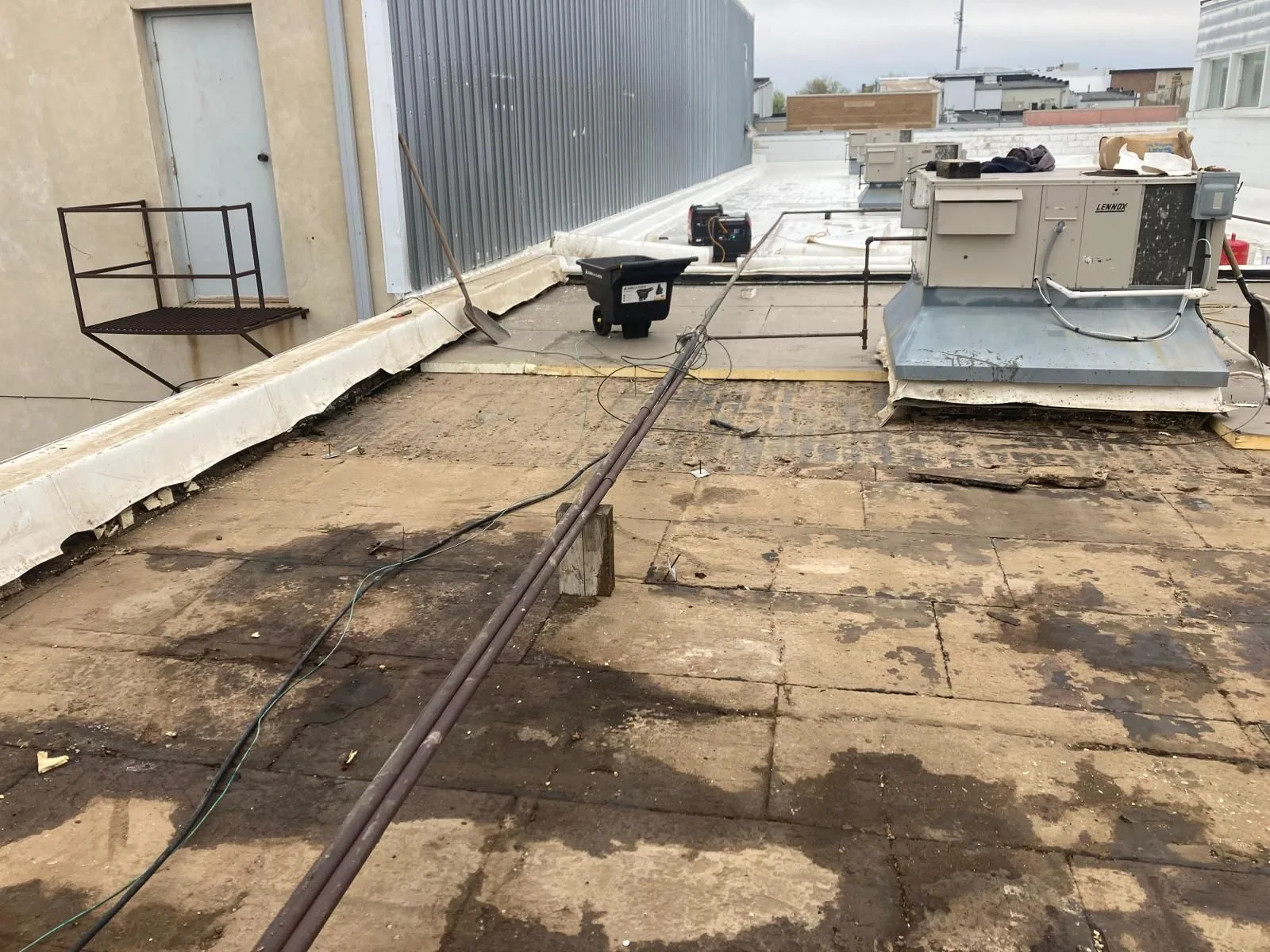
A split membrane seam needs preparation and a compatible joining method over usable surrounding material. A puncture patch needs a prepared edge that can be completed to the existing system. Failed flashing at a wall or curb may require removal through the vertical transition and a finished termination above it. We explain the operation for the actual roof material, including what failed material must come out and which connection the completed repair restores.
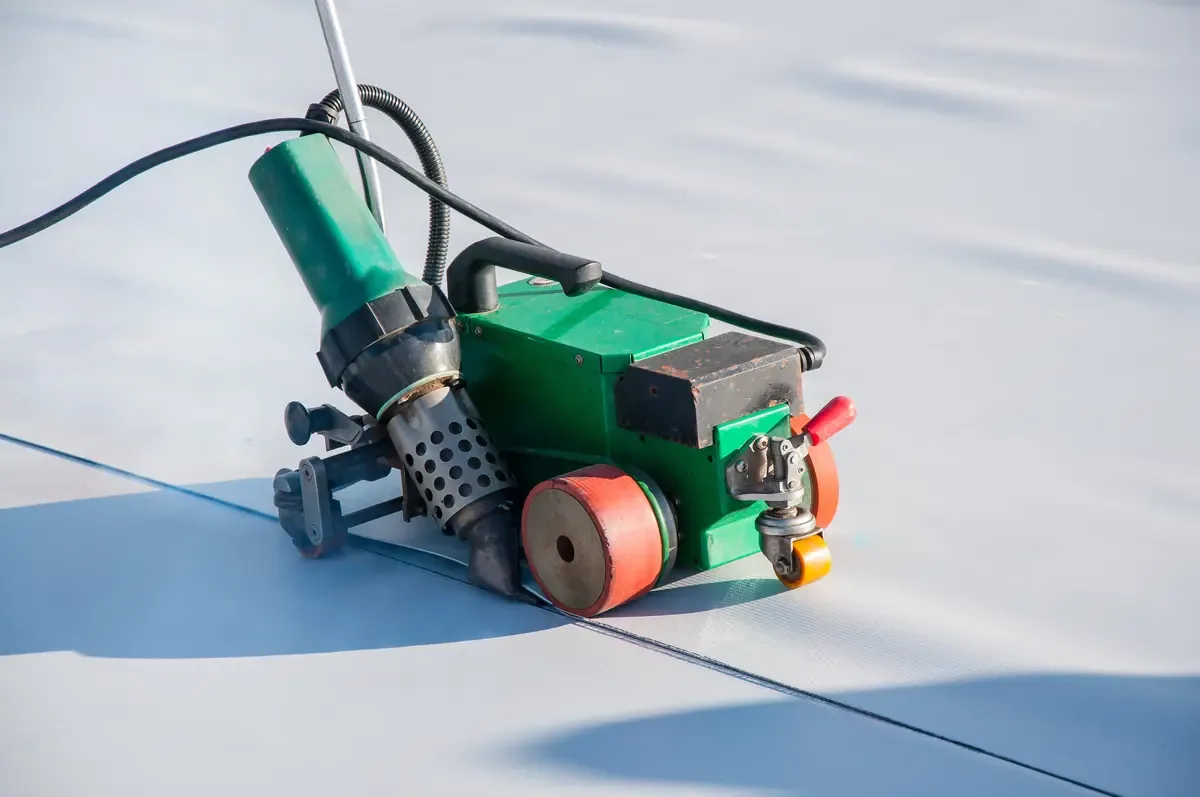
For PVC membrane roofing, the membrane condition and system-compatible joining method affect repair preparation. EPDM, TPO and modified bitumen require different materials and work. We identify the roof system before specifying the detail. A surface bead over a separated seam can hide an opening without reconnecting it. A failed seam correction should address the joint and its termination, with surrounding layers examined where water may have entered beneath the sheet.
Investigative openings
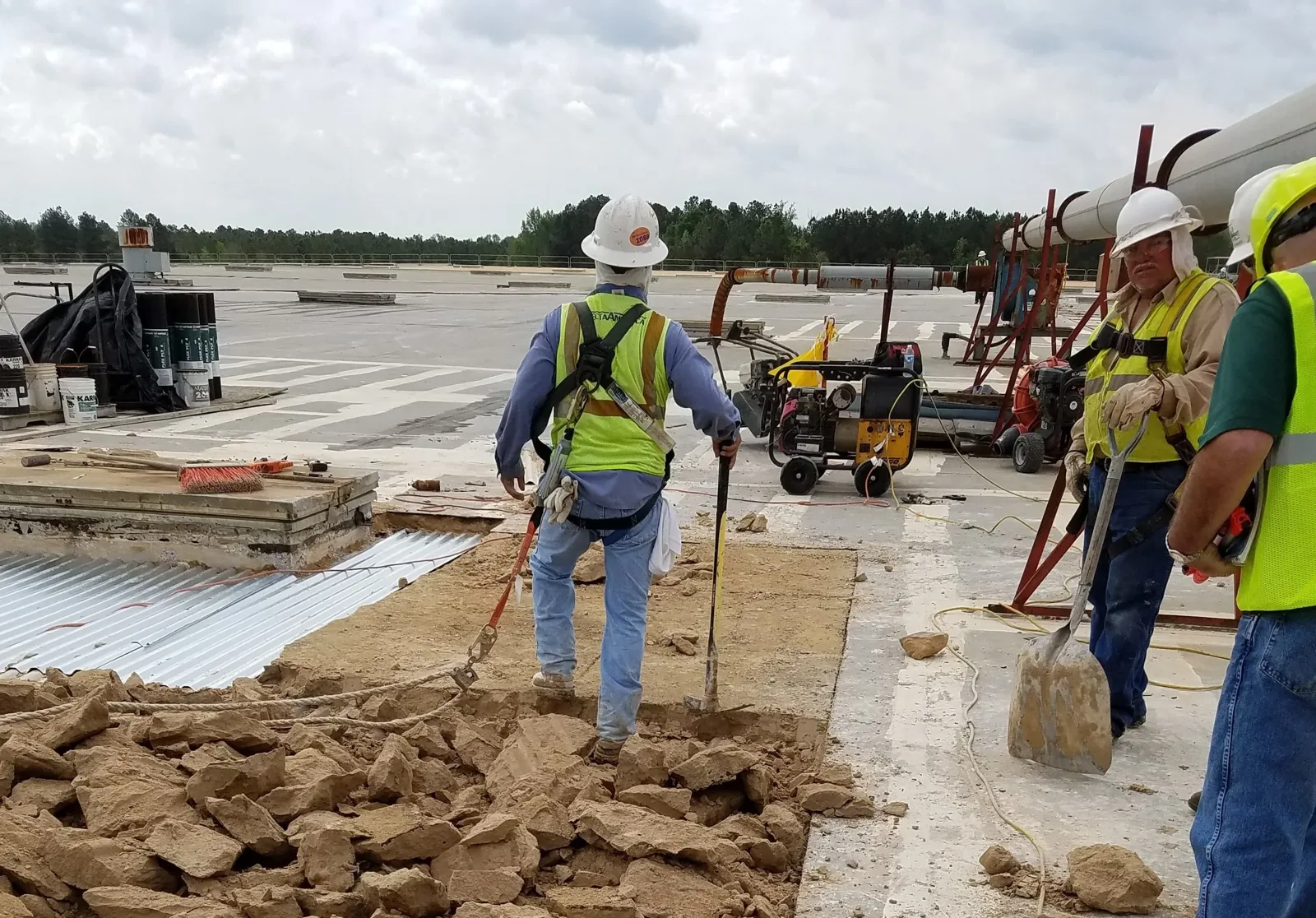
If surface examination cannot distinguish between a wet layer and a sound assembly, we discuss an investigative opening with the owner. We place it where it can distinguish the possible paths and explain why that opening is useful. We explain the permission needed, what material will be removed and how the opening can be closed at the end of the work. Once exposed, insulation, cover board and deck condition can show whether the proposed repair boundary remains appropriate or needs a change.
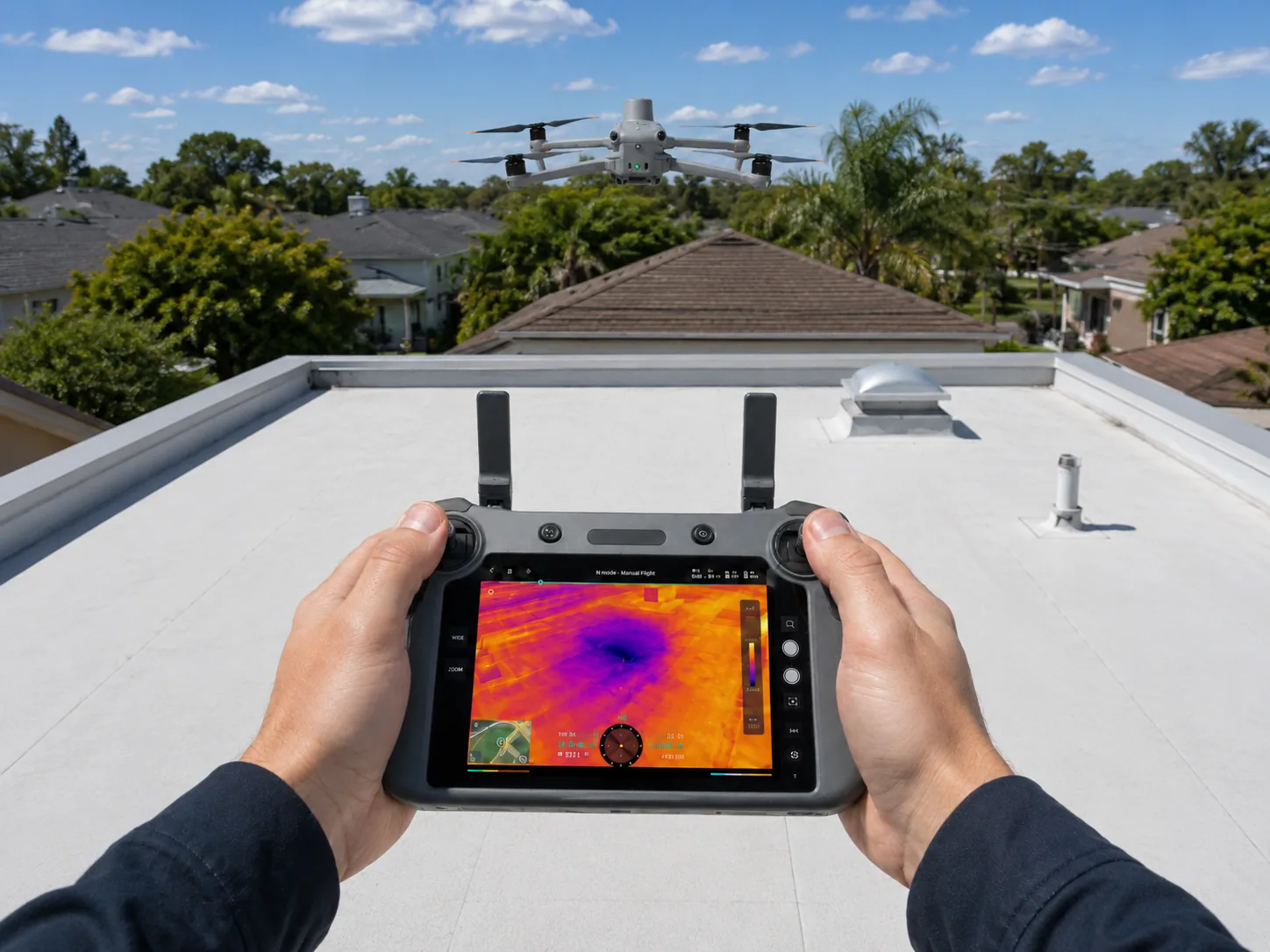
Where concealed moisture extends beyond the visible area, an infrared moisture survey may help direct further examination under suitable conditions. The result needs confirmation against the roof assembly and any opened material. It does not set a removal boundary on its own. If wet insulation or cover board requires replacement, we describe the removal and transition into retained material. A changed quantity is brought to the approval contact while the opening remains suitably protected.
Separate water entry from drainage symptoms
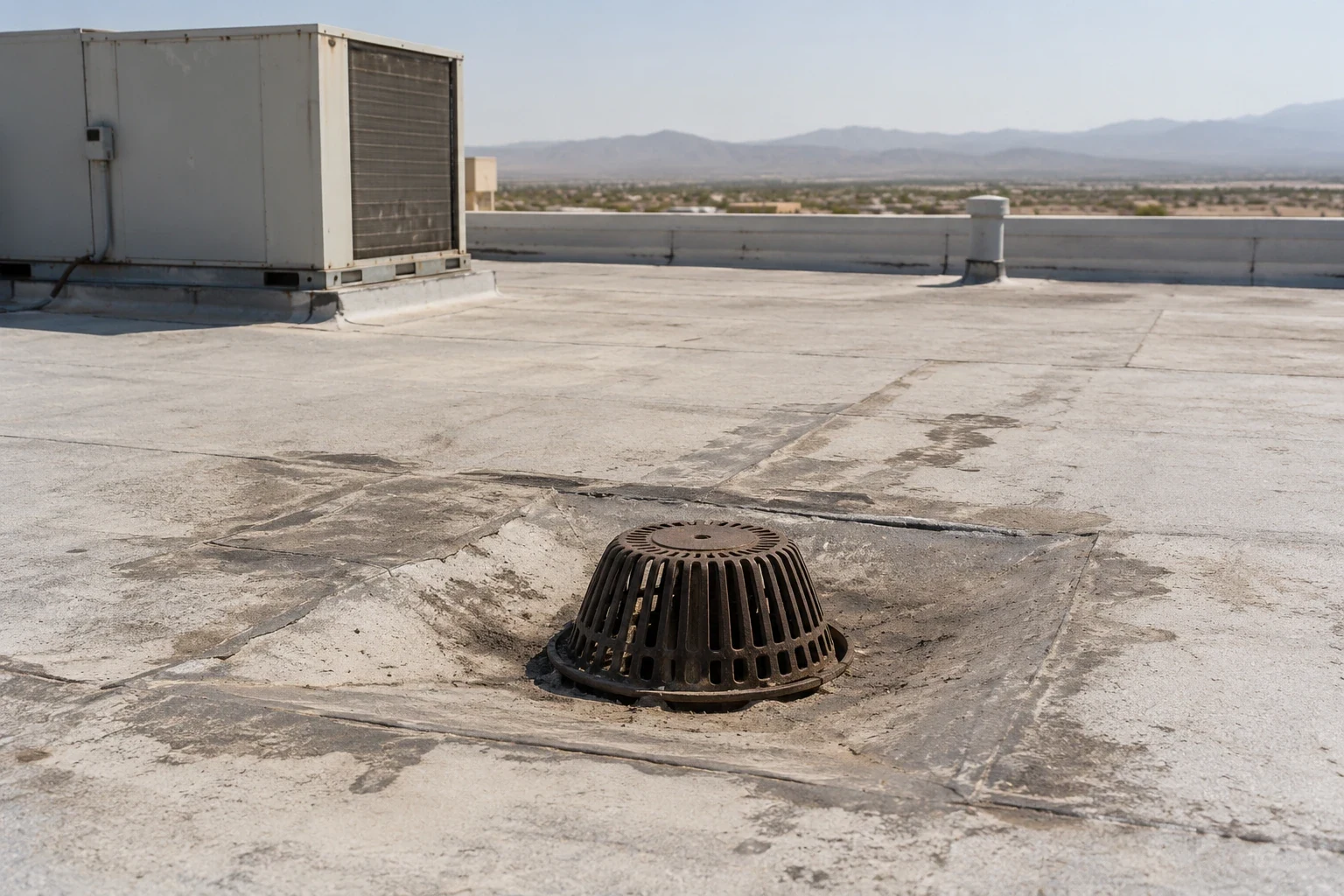
Water remaining around a drain may reflect a blocked opening, a damaged membrane connection or roof shape that directs water poorly. Each calls for a different correction. We examine the outlet and nearby material, then explain whether the proposed work addresses debris, drain flashing or another connection. Plumbing farther below the roof can need a separate test. We keep any pipe correction outside the roofing scope until its responsible trade examines it.
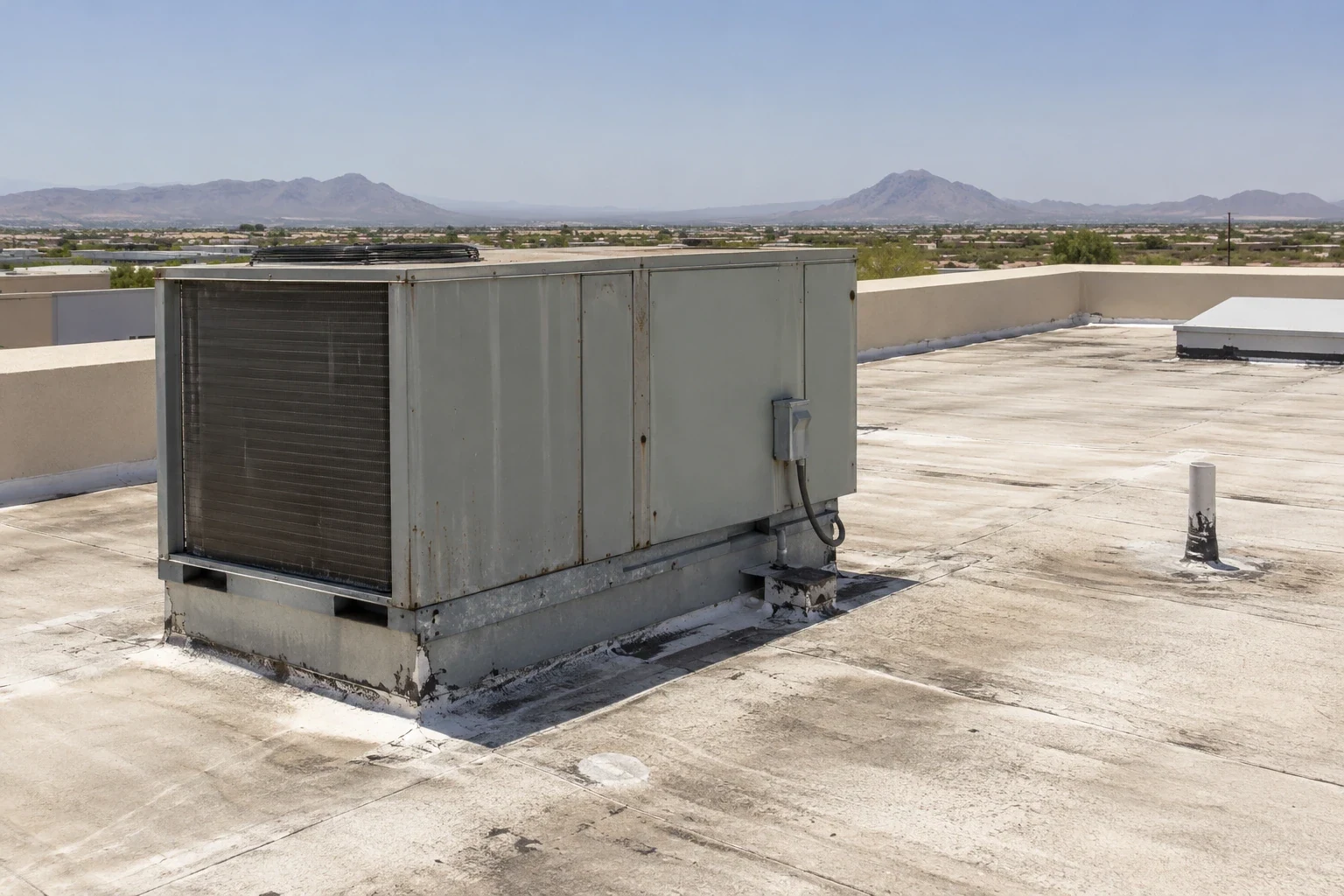
At a curb, a failed membrane transition and leaking equipment housing are also different conditions. We inspect the flashing and receiving surface while the equipment representative examines the component where needed. Repairing a drain or scupper connection may restore the roof detail while leaving a separate low-area or downstream question for follow-up. The owner should know exactly what source the repair addresses and which reported symptom still needs investigation.
Repair sequence and closure
When removal reveals material damage, we define the opening limit and the layers required to finish the connection. The work period needs the replacement material and any prerequisite component task ready. If permanent repair cannot be completed during the visit, temporary protection may be required. We describe its attachment to the existing construction, the area protected and the additional permanent work needed on return. The interim condition is separate from a finished repair.
For an occupied building, the property contact supplies access and interior preparation instructions relevant to the affected room. We explain the roof area being opened and the likely path for debris or material. If a curb needs equipment work first, we identify who will prepare it and how we can verify it is ready to receive new flashing. Those steps help the owner arrange one useful work period instead of paying for an opening that must remain incomplete while another task is found.
The repaired detail record
We inspect the finished seam, patch, drain or flashing connection and photograph its location with nearby roof features. The record names the material operation and any layers replaced. If a separate leak observation remains unexplained, we keep it as an open question with its next examination identified. One repaired entry does not establish that every mark in the building has the same source.
A property near Scottsdale Airport and Airpark still needs its own address and affected detail in the record. We can compare a later report with the repair location and examine new evidence without repeating an unrelated patch. The owner should understand the water source supported by the findings, the completed roof work and any equipment or drainage follow-up. That makes the repair record useful if the symptom returns or another area begins to show water.
For a multi-tenant property, coordinate access to the reported room and roof zone before the visit. The manager can note when the symptom appears, whether it follows equipment use or rain, and if ceiling or electrical work is already underway. Those details help us choose a useful examination path, while the roof evidence determines the repair. If the affected area must remain occupied, agree on interior protection and a debris route before an investigative opening. The resulting scope can then distinguish the roof correction from any interior restoration or mechanical test handled by another trade.
Commercial Roofing Questions
Can the roof leak be repaired from the room below?
The interior location helps direct the investigation, but the roof connection needs examination to identify the material work. Water can move along layers before appearing inside.
Why inspect more than the area directly above the stain?
A seam, deck or insulation joint can carry water laterally. We compare accessible roof paths and locate the detail that supports the repair.
When is an investigative opening needed?
We discuss an opening when concealed layer condition could change the repair boundary. Its location, permission, purpose and closure are established before removal.
Does a new drain repair resolve all ponding nearby?
Not necessarily. The outlet connection and roof shape are separate conditions. We explain which one the proposed repair addresses and what further examination is needed.
What if water returns after one roof detail is repaired?
We compare the new report with the recorded repair and examine its path. A different entry, equipment condition or drainage issue may need a separate correction.
Trace the reported roof leak
Provide the property address, affected room, timing and available roof access contact. We can examine possible entry details and explain the repair or further investigation supported.
Call or Email
Helpful to have ready:
The property address and a building contact
Where water or damage shows up inside
The roof type and age, if you know them
Photos and any past roof reports