Roof Drain and Scupper Repair in Scottsdale, AZ
Home / Commercial Roofing Services / Roof Drain and Scupper Repair
Roof drain and scupper repair in Scottsdale examines outlet connections, obstructions and supporting roof layers to define the necessary removal and repair.
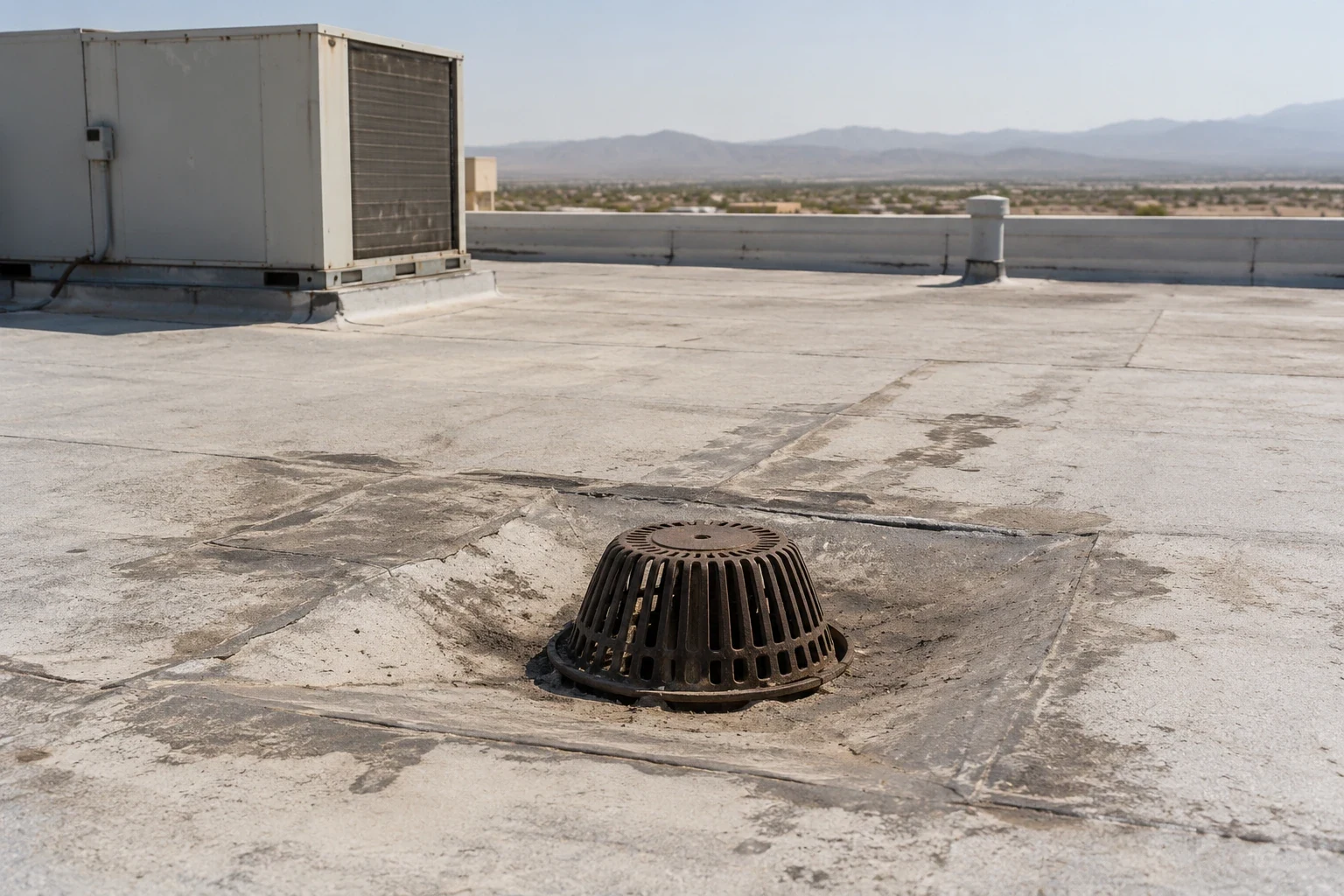
Replacing a broken drain flange can require opening the roof around the bowl, while clearing an obstructed strainer may leave the assembly intact. For roof drain and scupper work in Scottsdale, AZ, we establish which operation the outlet needs before you schedule access or approve removal. Water remaining on the surface is a reason to investigate. It does not, by itself, establish whether the outlet, its piping or the shape of the roof has failed.
Office and retail properties in Old Town Scottsdale can have different outlet arrangements. We inspect the requested building and identify the affected connection, with the property contact helping locate any interior symptoms. A repair amount should describe what is being corrected and what remains outside the roofing operation. Where the problem extends into the roof assembly, removing damaged material and reconstructing its connection can be necessary before a working drain can be left in place.
Outlet examination
A drain strainer covered by debris provides a visible starting point. After accessible debris is removed, we examine the surrounding membrane, drain bowl, attachment and clamping components where present. Water may pass into the assembly at a deteriorated connection even when the outlet itself appears open. We look for displaced material, failed seals, corrosion and other accessible signs that explain the proposed roofing repair. Clearing the visible opening does not prove the downstream pipe is unobstructed.
For a scupper through a parapet, the receiving material at the sides and sill is part of the examination. A split membrane corner or loose metal throat can let water enter the wall or roof layers around the opening. We distinguish that construction from the exterior conductor head and downspout. The condition may require a related plumbing or sheet-metal task, rather than another surface application of sealant. Investigating the area where water remains also helps establish whether an outlet repair will address the reported concern.
Drain removal boundary
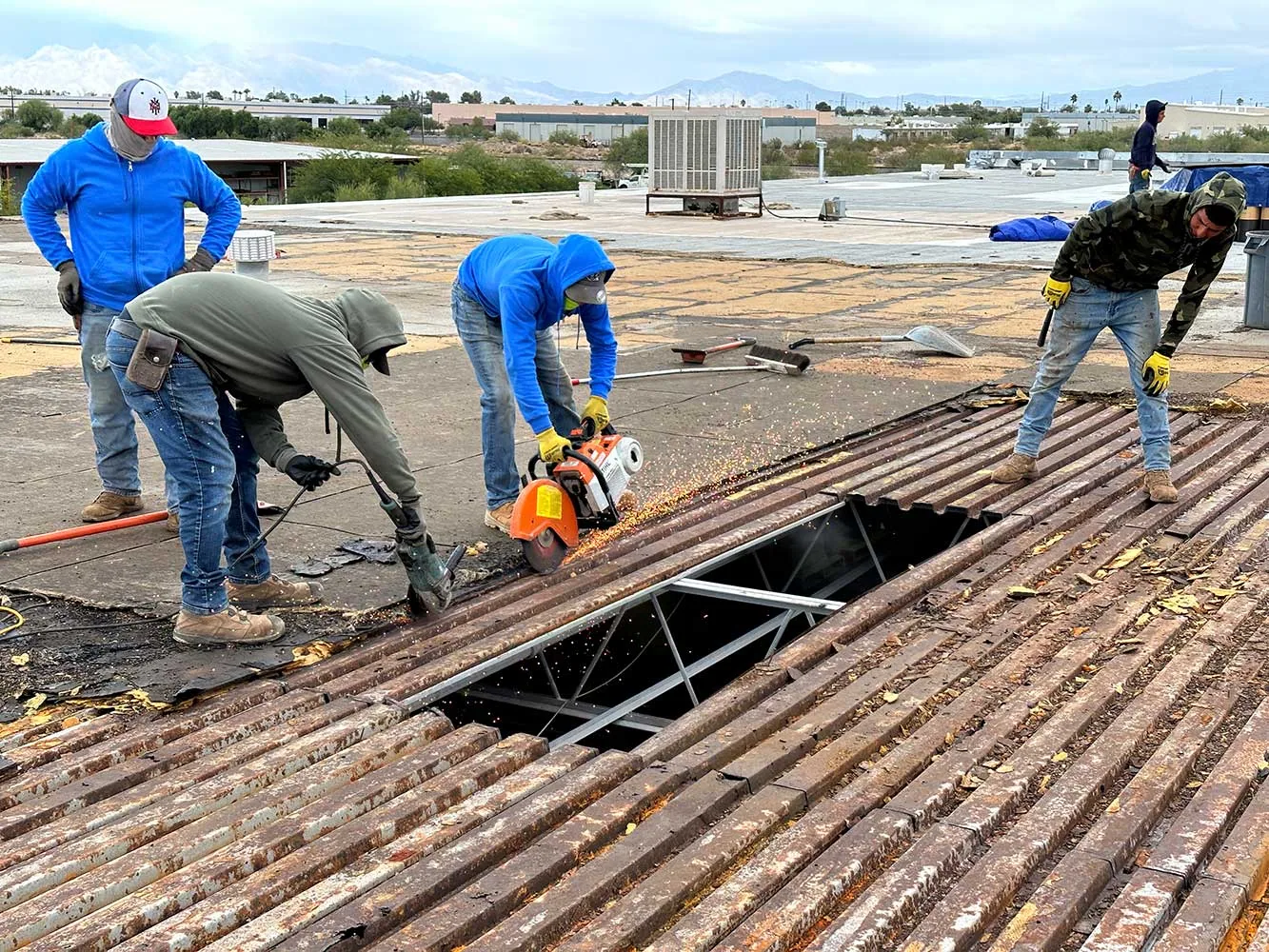
Wet insulation around a drain changes the repair from a surface connection to a layered reconstruction. We determine how much material needs removal and what sound construction can receive the replacement. The opening has to allow the new flashing or membrane to be installed correctly; an arbitrarily narrow cut can leave damaged material beneath the repair. The work description should identify the retained layers, replacement layers and transition, with further removal subject to an explained change.
A damaged drain body may require access to its underside and a plumbing connection that roofing work alone cannot complete. We discuss that dependency before the existing assembly is detached. Temporary protection over the roof opening is a separate construction task if the drain replacement cannot be completed during the available work window. For PVC roofing at the outlet, membrane condition and compatible detailing govern the connection to retained material. The roof product and the drain arrangement both matter.
Interior coordination
A drain located above a finished ceiling can need interior access as well as roof access. The property representative should identify the rooms beneath the outlet and the party responsible for work on the piping. We describe the roofing operation and discuss where that work could expose the building to water or debris. Removing a drain without a replacement connection and a closure method ready can create an avoidable delay.
Scottsdale’s economic-development tables group Airpark industrial, office and retail occupancy separately. A distribution building with stored goods beneath a drain needs the actual affected location identified so its representative can arrange suitable protection. Neither the address nor the building label establishes the drain construction. We examine the assembly and plan removal against its supporting condition. Where the roof cannot safely be opened within the proposed visit, the next step may be arranging the related work and materials before that operation begins.
Slope and receiving details
A sound outlet at a local high point will not collect water from an adjacent low area. We examine the surrounding roof shape and any signs of settlement or displaced insulation. Correcting the outlet connection and correcting the approach to it are distinct tasks. Local insulation changes may improve a particular path, but their extent and transitions need examination; adding a small raised patch can divert water toward another detail instead of resolving the original low point.
We explain how the proposed repair meets the existing roof and whether additional layer replacement is required. A scupper also needs a durable transition at its wall opening and an appropriate discharge arrangement. Where edge metal is involved, reconstructing the affected metal and membrane joint should be coordinated with the outlet work. We do not present a larger redesign as a small flashing repair. The amount and work window should reflect the construction actually needed, including related piping or supporting work.
Drainage closeout
The completed detail should be inspected for its membrane connection, attachment and unobstructed accessible outlet. We photograph the repaired area and describe any remaining concern, including a downstream obstruction that needs another trade. A limited water check may be appropriate for the particular repair, with its method and limitations understood. It cannot establish the performance of every pipe, roof low point and overflow arrangement during future weather.
Keep the repaired location identifiable for subsequent maintenance. A new accumulation of debris is a different condition from a repeated failure at the membrane-to-drain joint, and the next inspection should distinguish them. For a property near the Scottsdale Airport and Airpark area, provide the specific building and roof access information when reporting the concern. We can then examine the same outlet and compare its current condition with the recorded repair, rather than reopening an unrelated section of roof.
Drainage work needs a defined check after debris is removed and the connection is rebuilt. We look for an open path through the strainer and outlet, confirm the membrane termination remains secure, and record any low area that continues to retain water. A brief flow check can show whether the repaired outlet accepts water at that moment; it cannot establish how the entire roof drains during every storm. If water persists away from the outlet, the manager receives a separate observation and a recommendation for evaluating roof slope or another contributing condition.
Commercial Roofing Questions
Can you tell whether the roof drain pipe is blocked from the roof?
An accessible outlet check can identify debris at the opening. It cannot establish the entire pipe condition. If water does not discharge as expected, further piping investigation belongs with the appropriate trade.
Why does the repair include insulation around an otherwise intact drain?
Damaged or wet layers cannot provide the intended support for a new connection. We describe the examined extent and replacement needed, rather than covering those layers with another surface patch.
Can a scupper be repaired without replacing the exterior downspout?
Yes, where the throat, membrane transition and discharge components can be treated separately. Examination determines whether a damaged conductor head or attachment must be corrected as part of the same work.
Will a new outlet remove the low area beside it?
Not necessarily. A roof-shape problem can remain after the outlet works correctly. We separate outlet repair from any proposed slope correction and explain their different removal boundaries.
What changes the work window for drain replacement?
Interior access, the piping connection and the roof layers requiring removal can change the sequence. We identify those dependencies before scheduling an opening that cannot yet be completed.
Review the affected roof connection
Provide the property address and affected roof location. We can examine the detail, explain the necessary construction and discuss the access needed to complete it.
Call or Email
Helpful to have ready:
The property address and a building contact
Where water or damage shows up inside
The roof type and age, if you know them
Photos and any past roof reports