Scottsdale Logistics Facility Commercial Roofing
Home / Industries We Serve / Logistics Facilities
Plan Scottsdale logistics roofing with operator-provided loading directions, useful repair boundaries, staged material work and clear end-of-period handback.
A roof connection above a loading canopy can need examination separately from the main building field. For assigned logistics roofing in Scottsdale, AZ, Commercial Roofing Contractors Scottsdale locates the reported water and examines the accessible edge, wall and drainage details relevant to it. We explain the material correction supported by those findings. The operator supplies applicable loading or dispatch directions for our work area, allowing the owner to review the permanent repair and the practical arrangements it needs. Another component question gets its own responsible contact before roofing depends on that work.
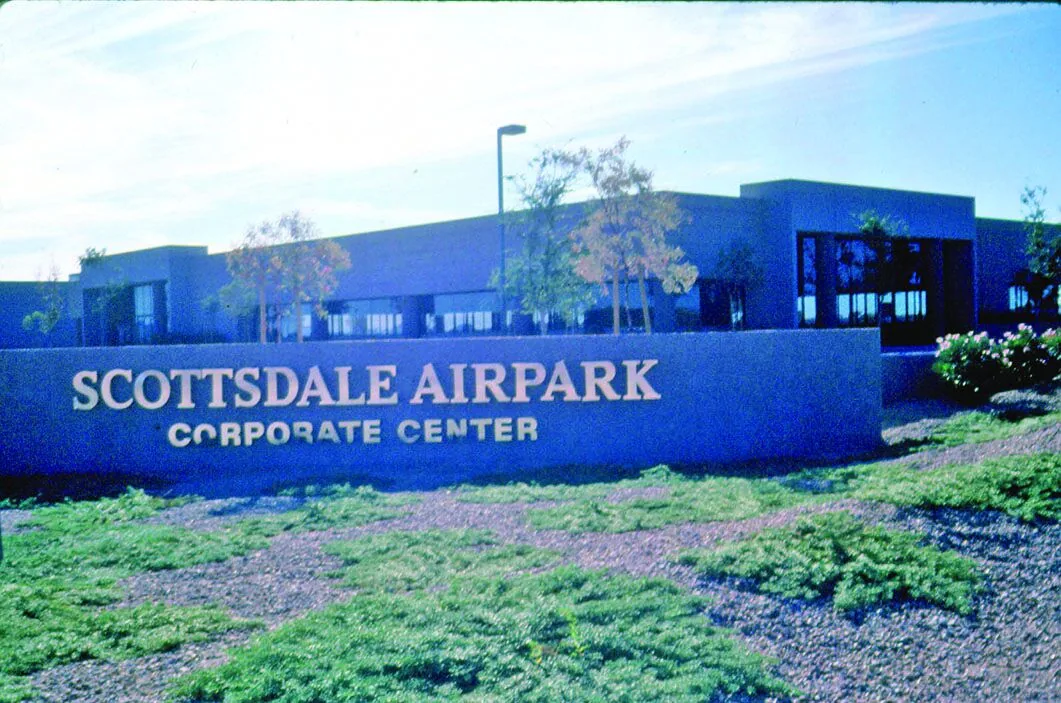
Scottsdale Airpark is an employment submarket with industrial occupancy. For an assigned logistics task there, provide the actual building address and affected roof area. Another roof assigned in Old Town Scottsdale needs separately located findings and supplied instructions. We discuss each property's repair extent and receiving arrangements through its actual construction, keeping the next useful task clear where further examination or approval is necessary.
Canopy edges and building transitions
If a loading canopy is part of the requested task, we identify where its covering meets the wall or main building. The canopy field, edge metal and transition flashing can have different deterioration, and an interior or underside water mark does not isolate one of them. We examine accessible connections before selecting a correction. Detached edge material may need its attachment and adjoining roofing assessed; a deteriorated wall transition may require failed material removed and the flashing rebuilt. We describe the affected connection through the actual condition rather than combine every canopy concern into one surface patch.
For commercial roof leak repair, we record the repaired entry detail and retain a separate account of observations that need further investigation. We ask the operator for applicable loading-access and occupied-area directions affecting our footprint below or beside the work. If an adjoining wall component needs another representative first, we identify the prerequisite for permanent closure. The owner should understand the useful roof correction and suitable temporary protection while that separate operation is arranged.
Drain groups and the surrounding membrane
Where several roof drains are present, we locate the drainage concerns by outlet rather than assume every low area has the same cause. We examine accessible membrane around each affected connection and the condition of the drain interface. Debris, a deteriorated flashing detail and a downstream restriction call for different actions. A drainage component that needs another representative's examination remains separate from our membrane correction. We explain the finding supported by the accessible view and further inquiry where it cannot establish the work needed.
Commercial roof repair should describe how the corrected membrane joins the affected drain detail, including preparation and any material to remove. A local repair does not settle a separate question about broader drainage configuration. We discuss that remaining inquiry with its purpose and arranging contact. Useful photographs and located findings let the operator follow which outlet was addressed and which condition remains open. The owner receives an understandable construction result, with the next decision available before another repair amount relies on an unresolved drainage question.
Field damage and reported roof traffic
A puncture in an open membrane area needs its boundary and adjoining material assessed before a patch is applied. We inspect accessible damage and identify preparation needed for a compatible connection. If roof traffic or wheeled equipment is reported, we ask where it traveled and examine the relevant area; that report does not establish the cause of every defect. Damage may be localized or may expose another material question below the covering. We explain what the visible condition supports and any further opening needed to determine the correction extent.
The responsible operator supplies applicable roof access and equipment-movement directions for the assigned task. Coordination with property management companies should keep those directions with the actual affected area. A related appointment near Scottsdale Airport and Airpark needs its own building instructions and examined material. We retain repair locations and useful photographs so later work can distinguish a corrected puncture from another reported field concern. Where another area needs review, its follow-up purpose is explained separately from the completed patch.
Removal staging and retained insulation
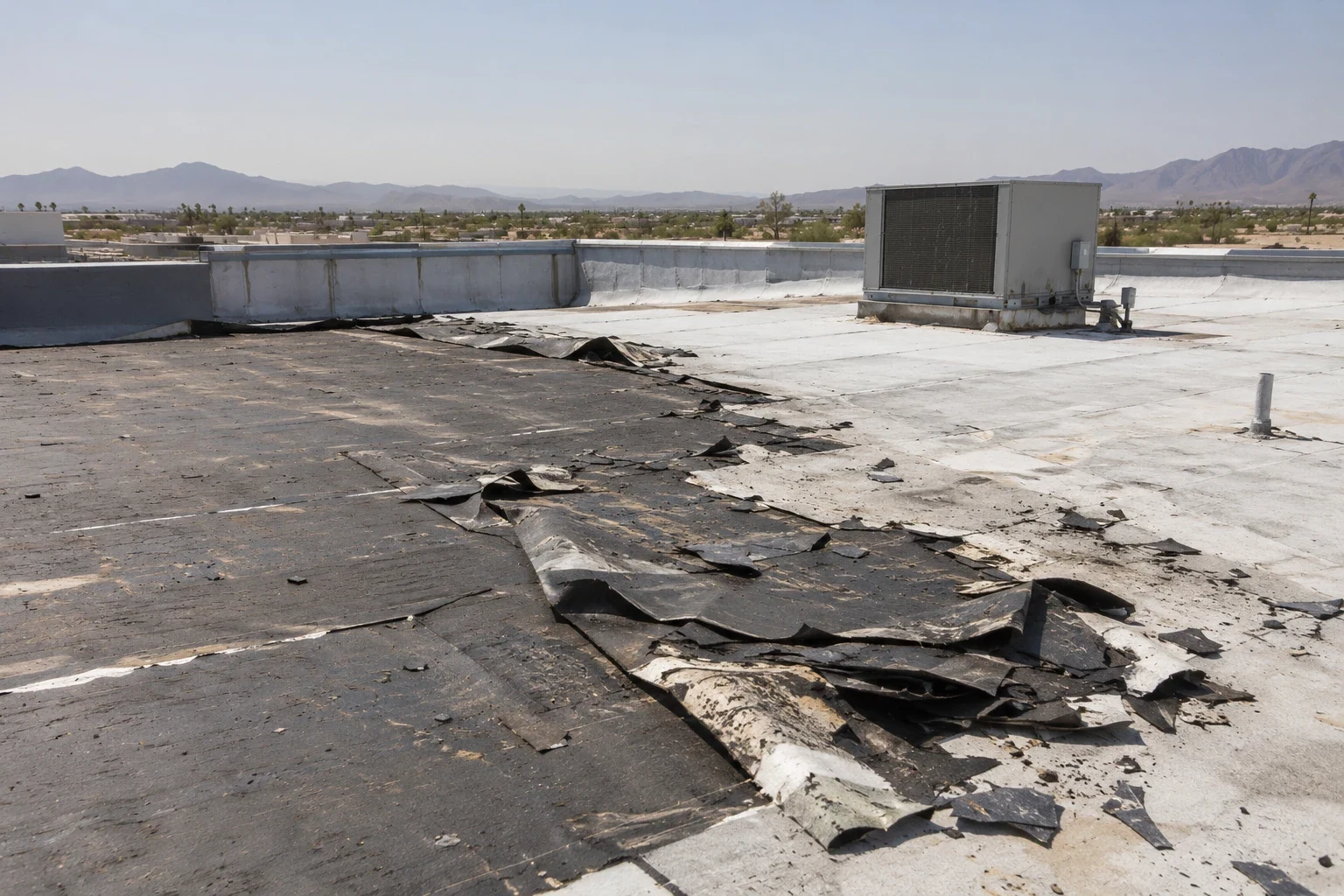
If examination finds wet or deteriorated insulation, we assess the extent relevant to the proposed roof method. A sound surface appearance alone does not establish the condition of concealed layers. We discuss a controlled opening where further information is needed, with suitable closure and the decision its findings will support. Material unsuitable for retention may need removal and rebuilding before the membrane correction can finish. The owner should understand that construction through the affected area and the additional handling required, including a reviewed extension where exposed deterioration lies beyond the authorized boundary.
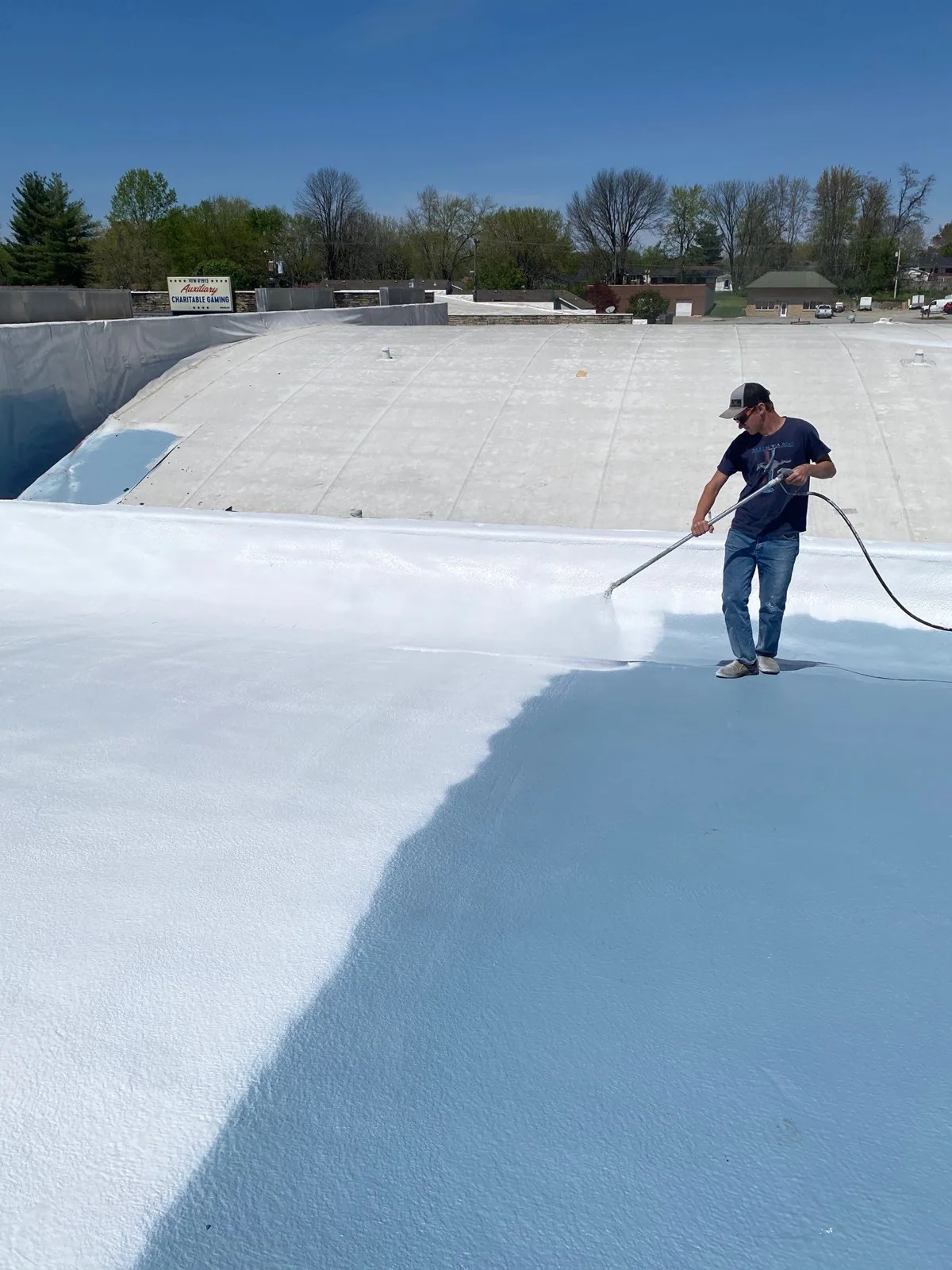
Commercial roof replacement assessment identifies the removal portion and material needed to rebuild it. We discuss debris receiving space separately from inbound roofing delivery, asking the operator which loading or dispatch arrangements must remain available under supplied directions. A phase needs a protected stopping condition and an opening limit that matches the work planned. Roof coating restoration may be considered only after its relevant membrane and retained-layer condition are understood; surface preparation cannot resolve material that needs removal beneath it.
Separate equipment penetrations
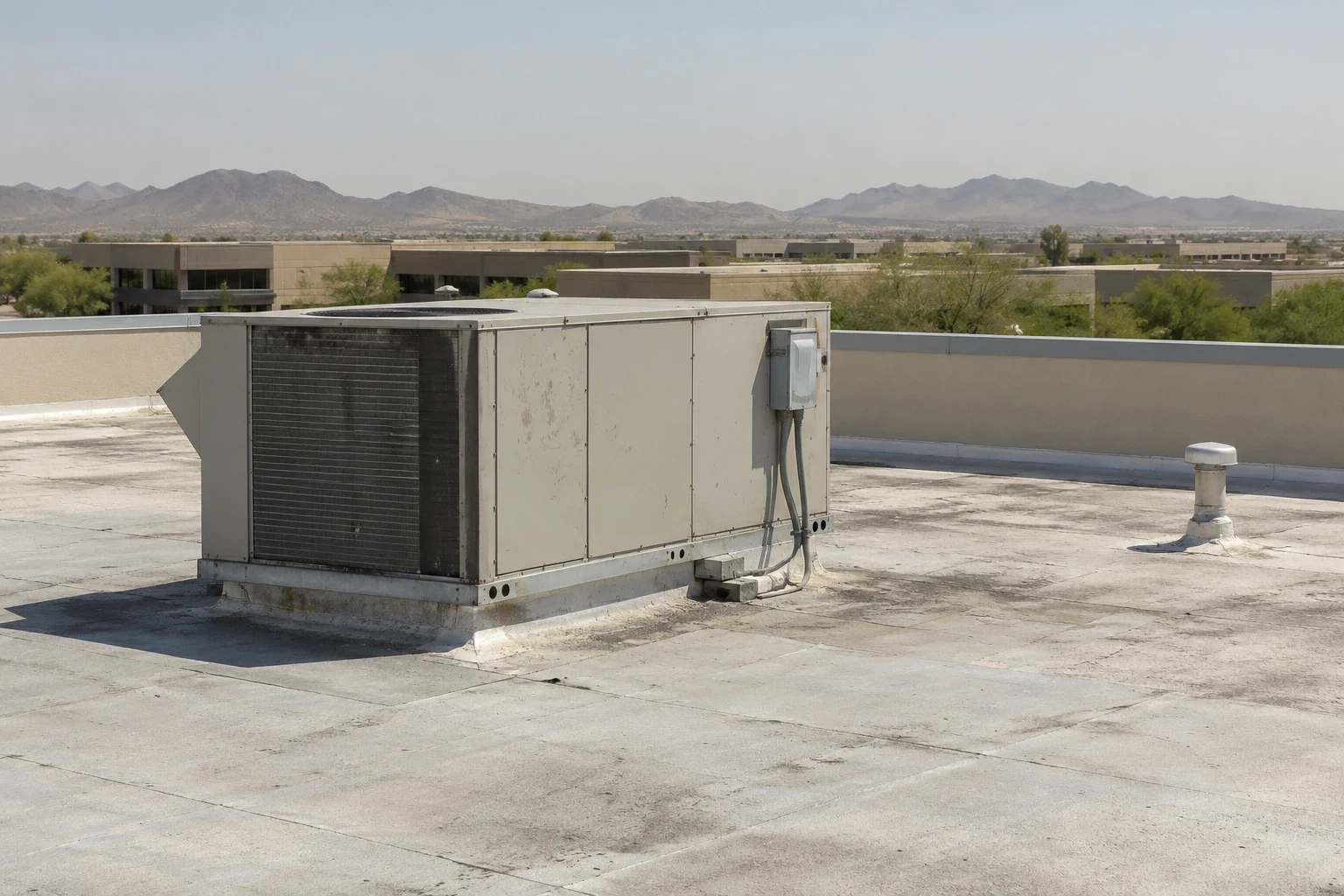
An equipment curb or pipe penetration can require a different correction from a field patch or canopy edge. We examine its accessible membrane flashing, termination and adjoining component. An equipment-related condensate concern may need the equipment representative's investigation rather than a roof surface repair. We explain which finding supports roofing work and the component question still requiring another party. A deteriorated transition may need removal and reconstruction, with a sound joining area established before the selected material can complete the permanent connection.
Coordination with general contractors should identify the adjoining task and ready condition needed for our flashing operation. If that work cannot finish during the assigned period, temporary protection may be a separate roofing task. We explain its practical limit and who receives the condition. We describe the remaining permanent connection and the prerequisite that allows our next operation to complete it. The operator supplies applicable access and occupied-area directions for that changed sequence, keeping the affected connection available for the approved construction when its prerequisite is ready.
Dry-in and the received roof condition
Before opening roofing, we discuss how the authorized area will be left suitably weather-tight or protected when work stops. A permanent detail and temporary tie-in have different completion points. We identify the protected area, any limitation and the contact receiving it if another finding interrupts reconstruction. An approval or component issue needs a named arranging representative and the material task required for resumption. The owner retains the amount and timing implications of that decision, while the operator understands the roof condition carried across the interval.
At turnover, we provide located corrections and useful photographs taken during removal or preparation. Approved scope changes and applicable warranty documents stay with that account. An unresolved drainage, water or concealed-material question has its next examination stated separately. If another representative receives a connection for further component work, we explain what remains unfinished. The operator and property manager should know who organizes the return and the supplied loading or access arrangement relevant to it, so later roofing decisions can use the actual construction record.
Commercial Roofing Questions
What determines a canopy repair?
The examined field, edge or wall connection guides the correction. We locate the affected detail and identify separate component work before selecting permanent roofing.
How are several drain concerns reviewed?
Each outlet needs its accessible membrane and component condition assessed. We distinguish roofing corrections from a remaining drainage inquiry and record the connections addressed.
Does reported traffic establish puncture cause?
A traffic report guides examination of the affected area. We assess actual membrane damage and compatible repair needs without assuming every defect has that cause.
Why examine insulation before choosing the wider method?
Concealed condition can change suitable retained material. We discuss controlled inquiry and rebuilding where wet or deteriorated layers cannot remain beneath the proposed correction.
What is received between construction periods?
The protected opening and interim limits need explanation. We identify the receiving contact and the approval or component task required before permanent work resumes.
Arrange the logistics roof examination
Tell us the building address and where the roofing concern was observed. We can examine the affected connection and discuss permanent material work, suitable temporary protection and applicable operator-supplied loading arrangements.
Call or Email
Helpful to have ready:
The property address and a building contact
Where water or damage shows up inside
The roof type and age, if you know them
Photos and any past roof reports