Commercial Roof Recover in Scottsdale, AZ
Home / Commercial Roofing Services / Commercial Roof Recover
Commercial roof recover in Scottsdale examines retained layers, repairs, drainage height, connections and access before a new assembly is installed.
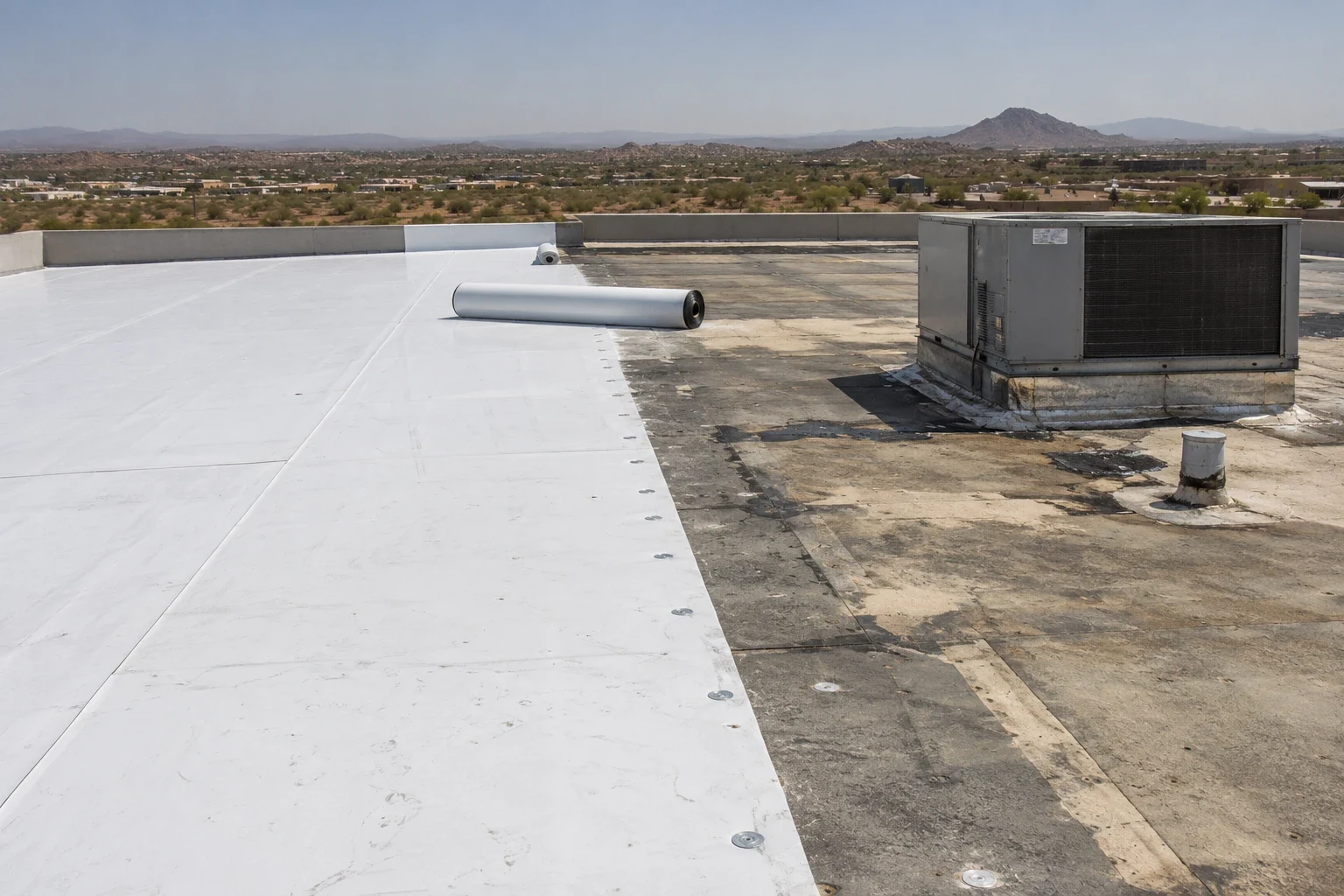
Adding another roof layer is only useful when the existing construction can receive it. For a proposed recover in Scottsdale, AZ, we examine the current membrane, supporting layers, drainage and perimeter details before discussing a new assembly over the roof. Loose or wet material, repeated failure or unresolved attachment can change what should remain. The owner needs to see those conditions and the further examination they may require before comparing a recover with removal and replacement.
Scottsdale Airpark includes industrial, office and retail occupancy categories. If a recover is being considered for a building there, we need its actual address, accessible roof areas and available records. The submarket description does not tell us what roof that property has. We examine the assigned building and explain how its existing assembly affects the proposed work period, material selection and completed transitions.
Existing roof suitability
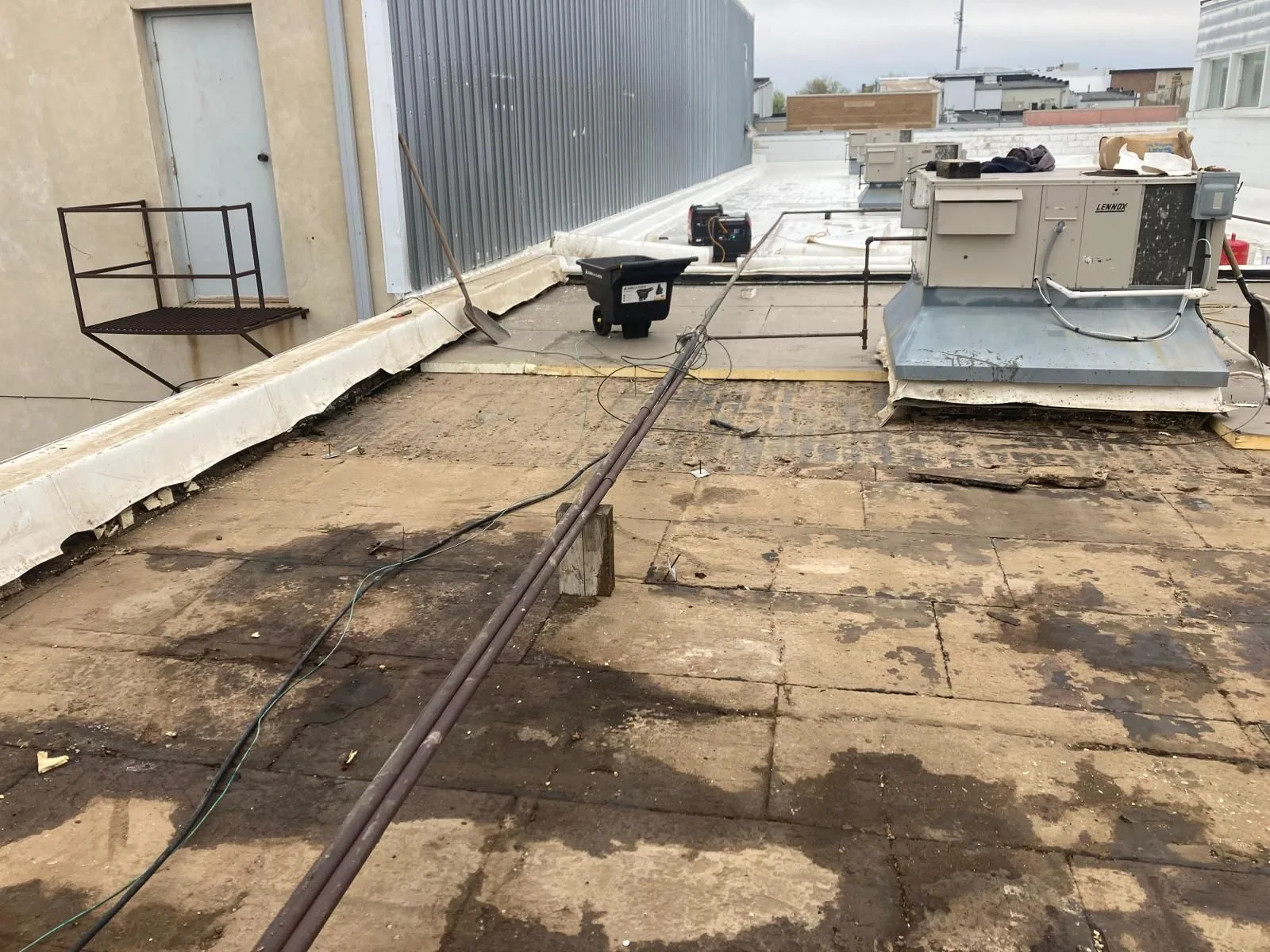
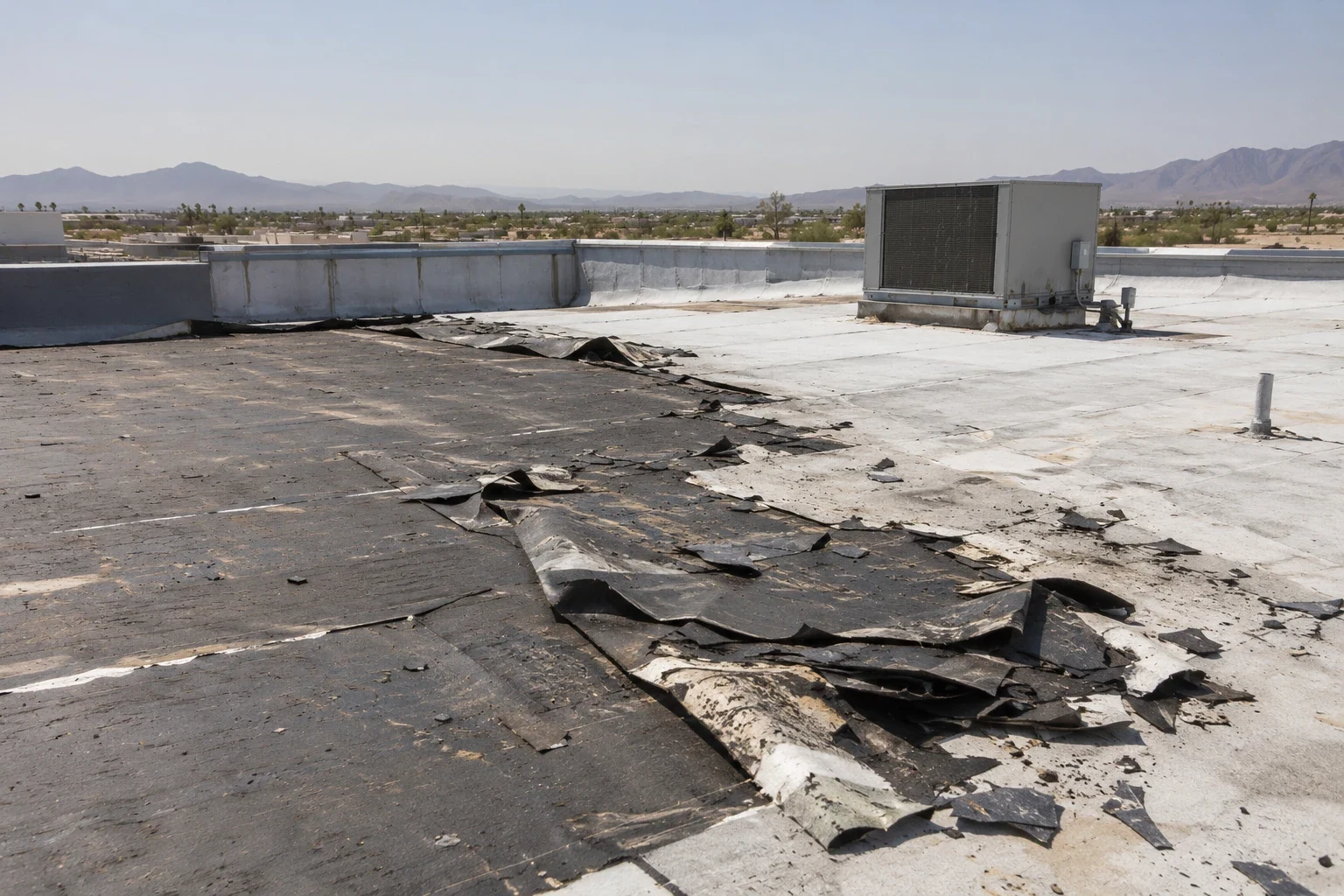
We inspect the existing covering, seams, flashings, drains and perimeter attachments for conditions that affect the proposed recover. The surface must provide a suitable base, and the underlying roof must be able to remain under the selected system. A visibly intact field does not establish concealed insulation condition or attachment. If moisture, movement or support remains uncertain, we identify the investigation needed before treating the assembly as suitable to cover.
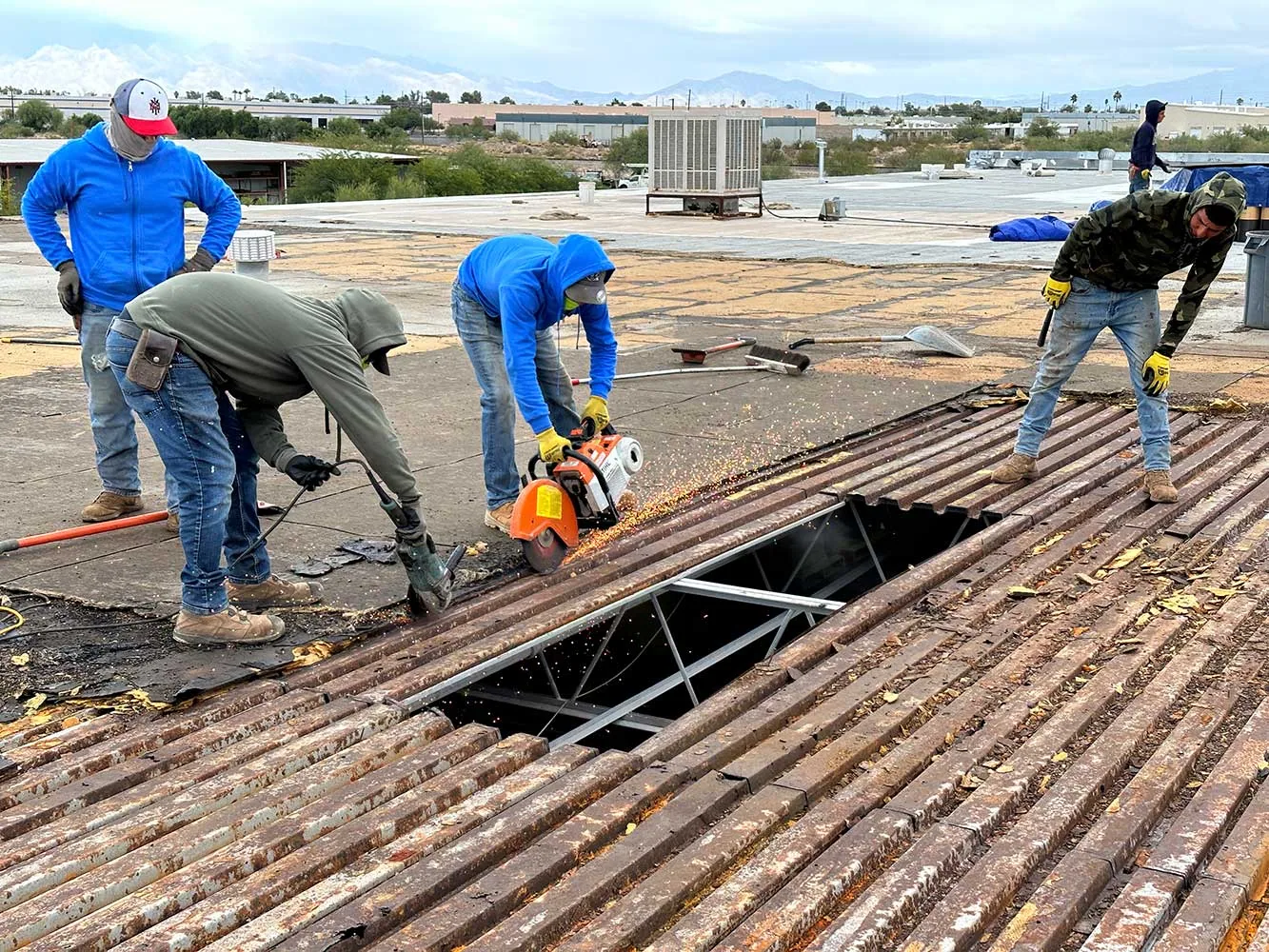
A commercial roof inspection can document accessible defects and help define that examination. Where a controlled opening is needed, we identify its location, permission, purpose and closure before proceeding. We inspect the exposed layers, photograph findings that could change the retained assembly and explain the added removal or repair required. An opening that reveals broader deterioration may change the method, so the owner can consider replacement against actual material findings rather than an assumed quantity.
Connections repaired before covering
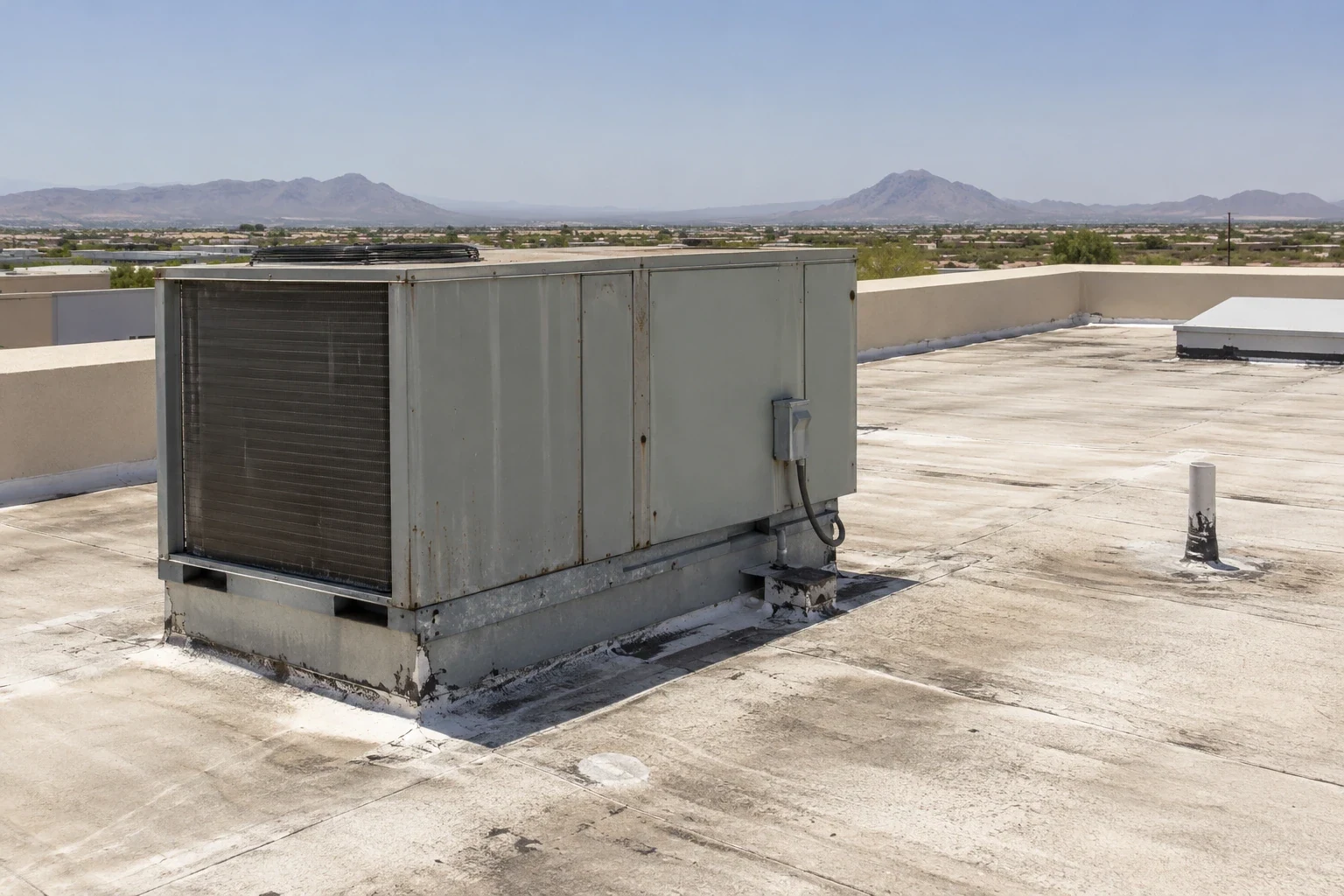
A recover does not correct a failed seam, loose wall termination or damaged drain simply by placing a new field layer above it. We identify those details and the preparation needed before they are concealed. Wet insulation or deteriorated cover board can require removal and replacement where it affects the new system. Curbs may need a suitable height and receiving surface. Related equipment work should be ready before the roofing transition depends on that component.
Where the existing field remains usable, repairing a localized roof defect can be considered separately from the recover. At drains and walls, we explain how the selected new assembly will connect and which parts need reconstruction. Replacing affected insulation or cover board may be necessary to create a suitable surface. The proposal should state what we repair, what remains and the connection completed by the new roofing. Unfinished details should not disappear beneath the added layer.
Retained layers and removal
A recover retains existing construction while adding new material. Replacement removes the existing assembly and rebuilds it through the specified layers. We explain the amount of each operation, including demolition, replacement insulation, attachment, perimeter and penetration work. The owner can compare what remains beneath the finished roof and the construction required at its edges. A lower initial removal quantity does not establish that retention is suitable.
For replacement of the commercial roof, we describe removal limits and the new assembly that will be installed. For a proposed recover, we describe the existing layers examined, those retained and any areas repaired beforehand. The method should account for moisture and support questions that affect the base. A located condition report can preserve the findings used in that decision, including the limits of an accessible inspection and any further inquiry needed before work is priced as a fixed assembly.
Drainage and finished heights
Adding layers changes the roof height at drains, walls, curbs and door or equipment transitions. We examine the details that could be affected and describe the work needed to keep those connections serviceable. A drain may need a compatible extension or reconstruction; an overflow opening should be reviewed against the completed elevation. Wall flashing and equipment curbs need sufficient height and a finished transition for the added assembly. We explain those details in the scope rather than treating them as later adjustments.
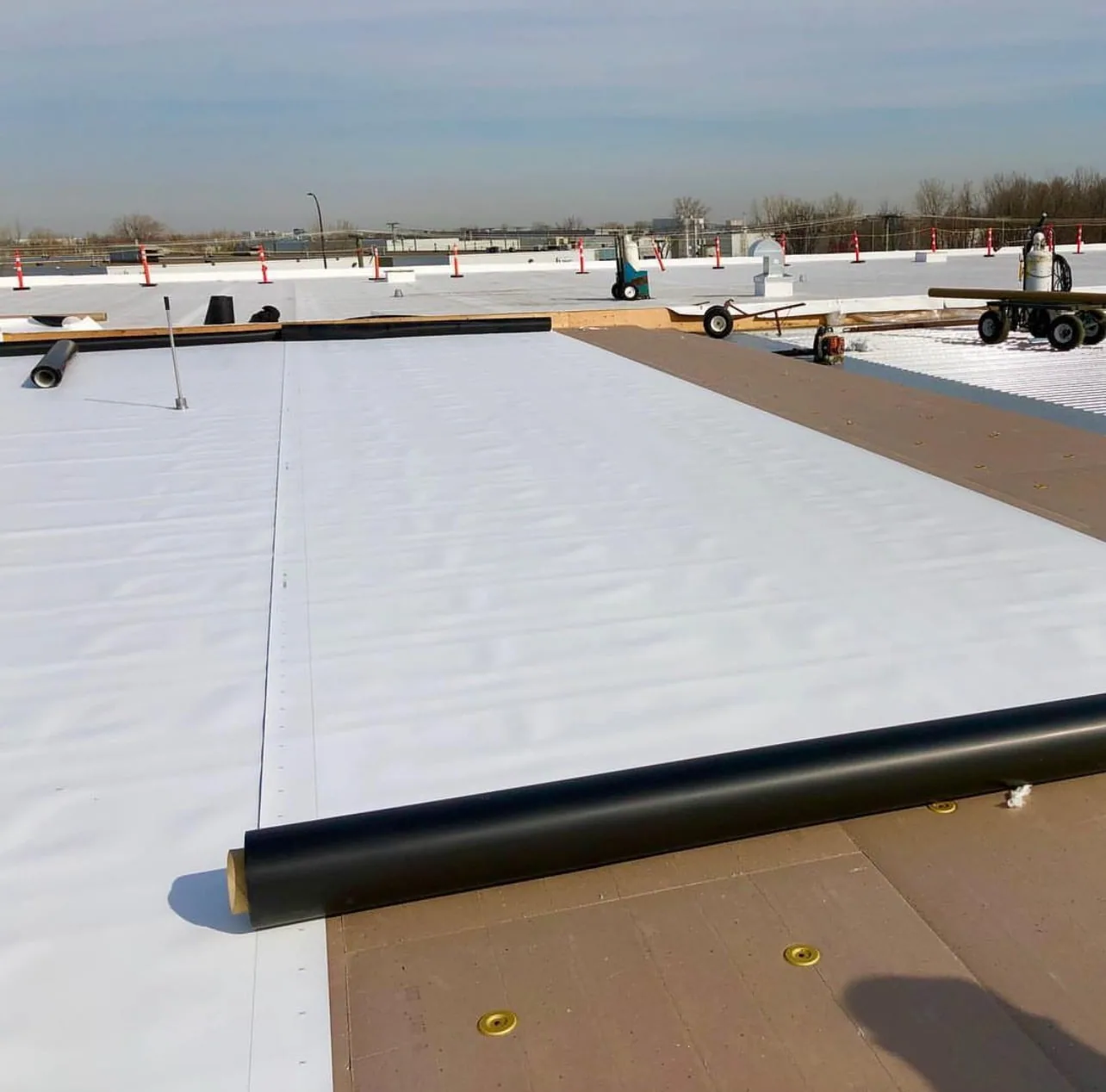
At a TPO recover system, the proposal should identify the selected membrane, attachment and compatible transition details. Other systems have different installation methods. We review the specified layers and edge conditions together. If an existing roof cannot provide the required receiving surface or the finished height compromises an opening, we discuss a revised assembly or replacement before material is ordered. The completed work needs a clear relationship between the old roof, the new layer and the surrounding construction.
Installation access and occupants
Recover work still requires material delivery, equipment access and preparation around the affected roof area. We discuss staging, lifting and any interior or exterior areas affected by the actual operation. At an occupied building, the property representative supplies applicable access and preparation directions. We explain the work footprint and the protection required while material is moved or details are opened. A longer work period can be necessary where repairs or component tasks need completion before the new layer can be installed.
Scottsdale Airpark includes industrial, office and retail occupancy categories. An address there does not establish that the assigned building’s receiving route is available. The operator and property manager identify the access that applies to the building. Where roofing work occurs above occupied rooms, we coordinate the proposed activity and any temporary exposure with the assigned building contact. If a curb or drain task remains incomplete, we identify the prerequisite before the recover depends on it. Material arrival and roof readiness both affect a useful work period.
The retained assembly record
At completion, the owner should know which existing layers remain under the new assembly and where repairs were completed first. We record the finished transitions, drains, edges and penetrations, with photographs and approved changes. If a separate component task remains, we identify its status and the contact responsible for completing it. Product documents should correspond to the material actually installed, with relevant scope records available for later roof decisions.
A property near the Scottsdale Airport and Airpark still needs its assigned building and roof area identified in the handoff. We explain the construction completed and any observation requiring follow-up. The owner receives an account of the old assembly retained, repairs performed and new details installed. That record helps a future examination distinguish the recover work from conditions concealed below it and other equipment or drainage questions outside its scope.
Commercial Roofing Questions
What conditions can make a recover unsuitable?
Wet or deteriorated layers, unresolved support or attachment concerns, damaged connections and unsuitable finished heights can affect whether the existing assembly can remain. We identify the examination needed before proposing the method.
Does a recover repair the existing leaks?
Only when the underlying defect is identified and corrected as part of the scope. We explain the repair to seams, drains, curbs or walls before describing what the new layer will cover.
How does the new roof connect to existing drains and curbs?
We review the added height and specify compatible transitions, drain work and curb preparation needed for the selected assembly. Those details should be included before installation proceeds.
Why should I compare replacement with a recover?
The options retain different amounts of existing construction. We describe removal, layers, repairs and completed details so the owner can compare the resulting assemblies and unresolved conditions.
Can a recover be installed above an occupied building?
The actual work footprint and supplied building directions govern the arrangements. We discuss access, material movement, preparation and any exposure with the representative before assigning the work period.
Review the existing roof before a recover
Provide the property address, roof records and building contact. We can examine the assembly, identify repairs and explain the new connections and work period the proposed recover requires.
Call or Email
Helpful to have ready:
The property address and a building contact
Where water or damage shows up inside
The roof type and age, if you know them
Photos and any past roof reports