
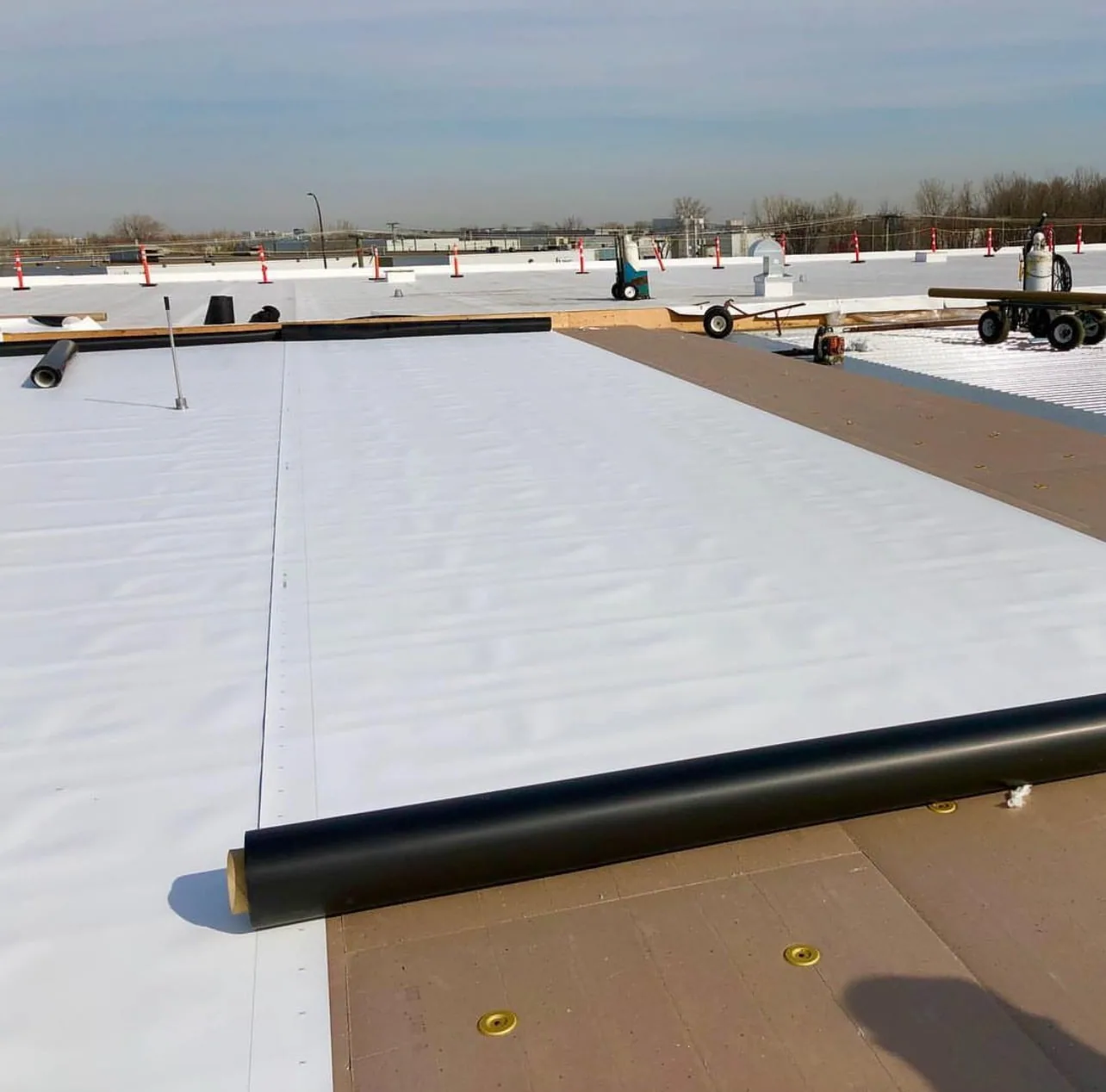
Commercial TPO Roofing Systems in Scottsdale, AZ
Home / Roof Systems / TPO Roofing
Evaluate Scottsdale commercial TPO roofing by roof condition, attachment, insulation, seam details, drainage and the selected manufacturer’s system.
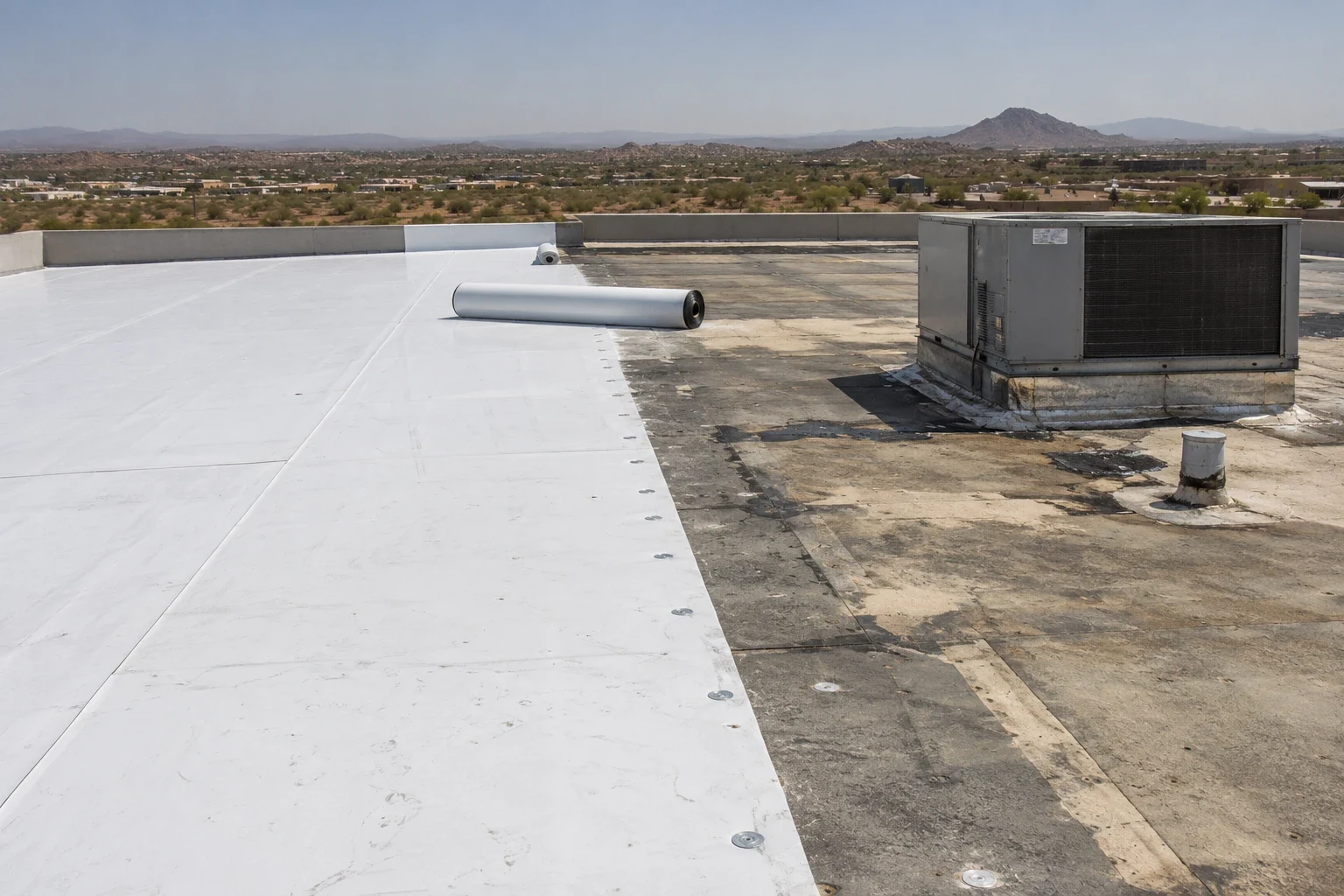
Thermoplastic polyolefin (TPO) is a single-ply membrane option for low-slope commercial roofs. A TPO roof is an assembly, not just a white sheet: deck, air or vapor control layers where designed, insulation, cover board, attachment, membrane, seams, edge metal and flashing all affect performance. We assess the existing roof and project requirements before recommending an assembly for a Scottsdale property.
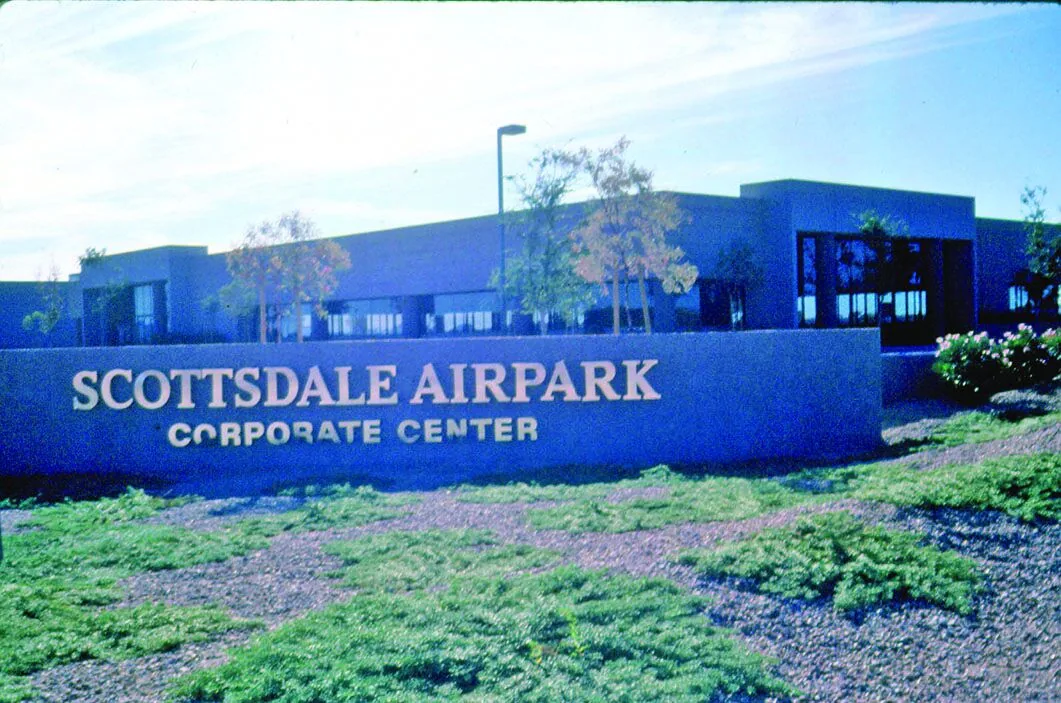
For a facility near Scottsdale Airport and Airpark, the location helps identify the project and coordinate site access. It does not establish the roof deck, wind design, code requirements or energy results. We request the roof plan, existing system records, leak history, building use and project specification before preparing a TPO scope.
Understand how the specified TPO system is built
Commercial TPO membranes are made from thermoplastic polyolefin. Manufacturers publish different reinforced, fleece-backed, self-adhered and accessory products, along with separate installation details and assembly plates. Johns Manville, for example, describes its TPO membranes as polyester-reinforced and designed for welding; Versico publishes reinforced TPO and separate fleece-backed TPO products. Those product descriptions apply to the named manufacturers and do not mean every TPO membrane has the same construction or approval.
Hot-air welded seams are an important feature of many TPO systems. The membrane sheets overlap, and the specified equipment, temperature, speed, preparation and test procedure must follow the selected manufacturer’s current instructions. A visual appearance alone does not verify seam strength or continuity. Before seams are covered, record the inspection required by the approved quality plan and mark any repair locations for recheck. The proposal should identify the membrane manufacturer and product, thickness, attachment method, accessories and the quality checks required by the approved specification.
Some TPO products have reflective surfaces, but reflectance and any requested rating depend on the exact product and color. A roof color by itself does not establish code compliance or a predicted utility saving. If a reflective-roof criterion is part of the project, see cool roof installation and check the designated product against the project’s exact requirements.
Match deck, insulation and attachment to the design
The roof deck and existing layers shape the available assembly. A steel, concrete or wood deck may require different attachment details. The designer may specify a mechanically attached, adhered, self-adhered or fleece-backed system based on the project conditions and approved assembly. Wind-uplift design, fire classification, insulation thickness, board joints and fastening patterns must match the drawings and product approvals; they should not be chosen from membrane color or roof area alone.
Insulation and cover board support the membrane and contribute other system functions as documented for the exact products. Insulation and cover-board work should be specified with the TPO membrane, fastening method and deck. Existing wet or damaged materials may require removal or repair rather than concealment beneath new board.
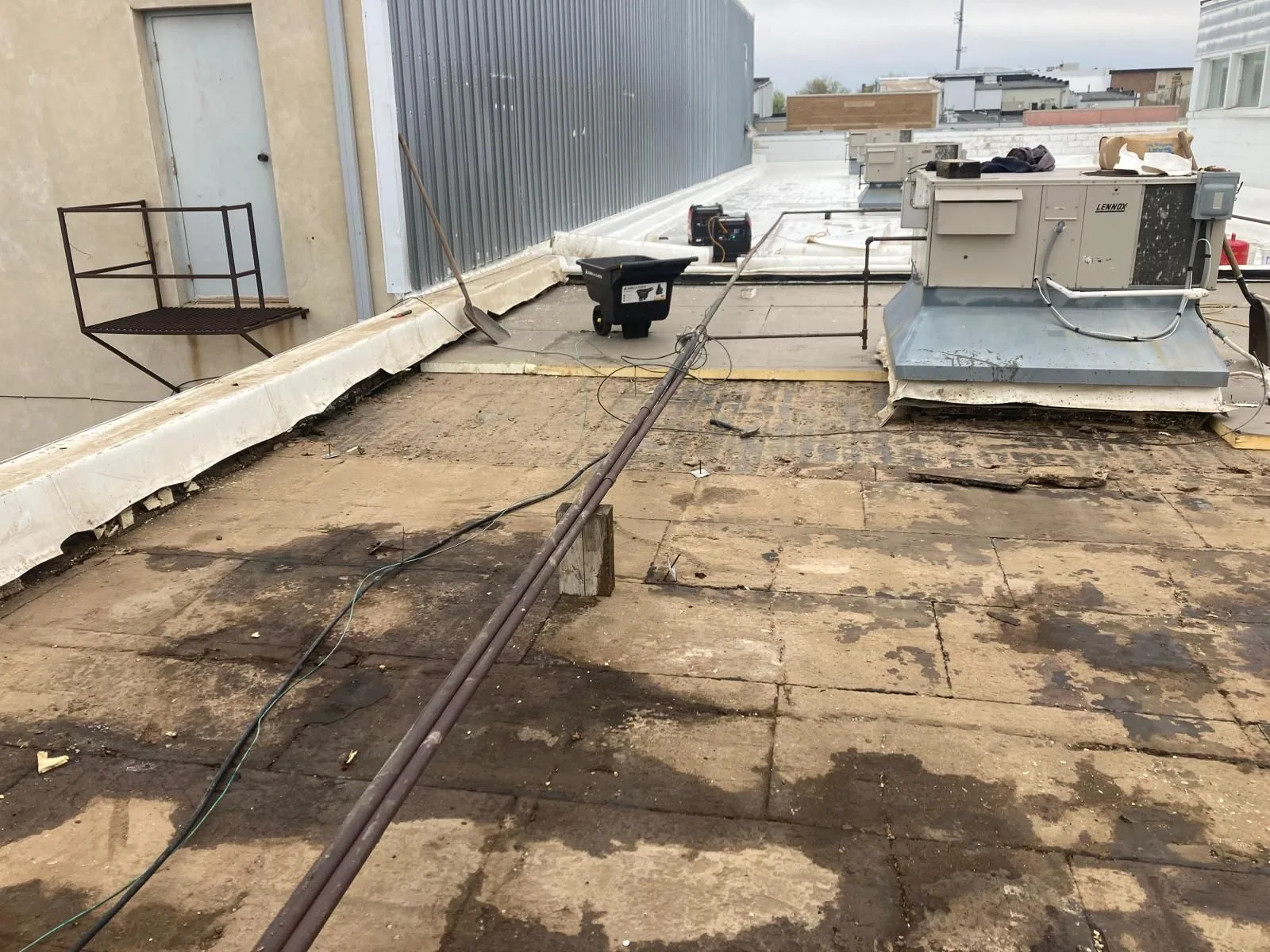
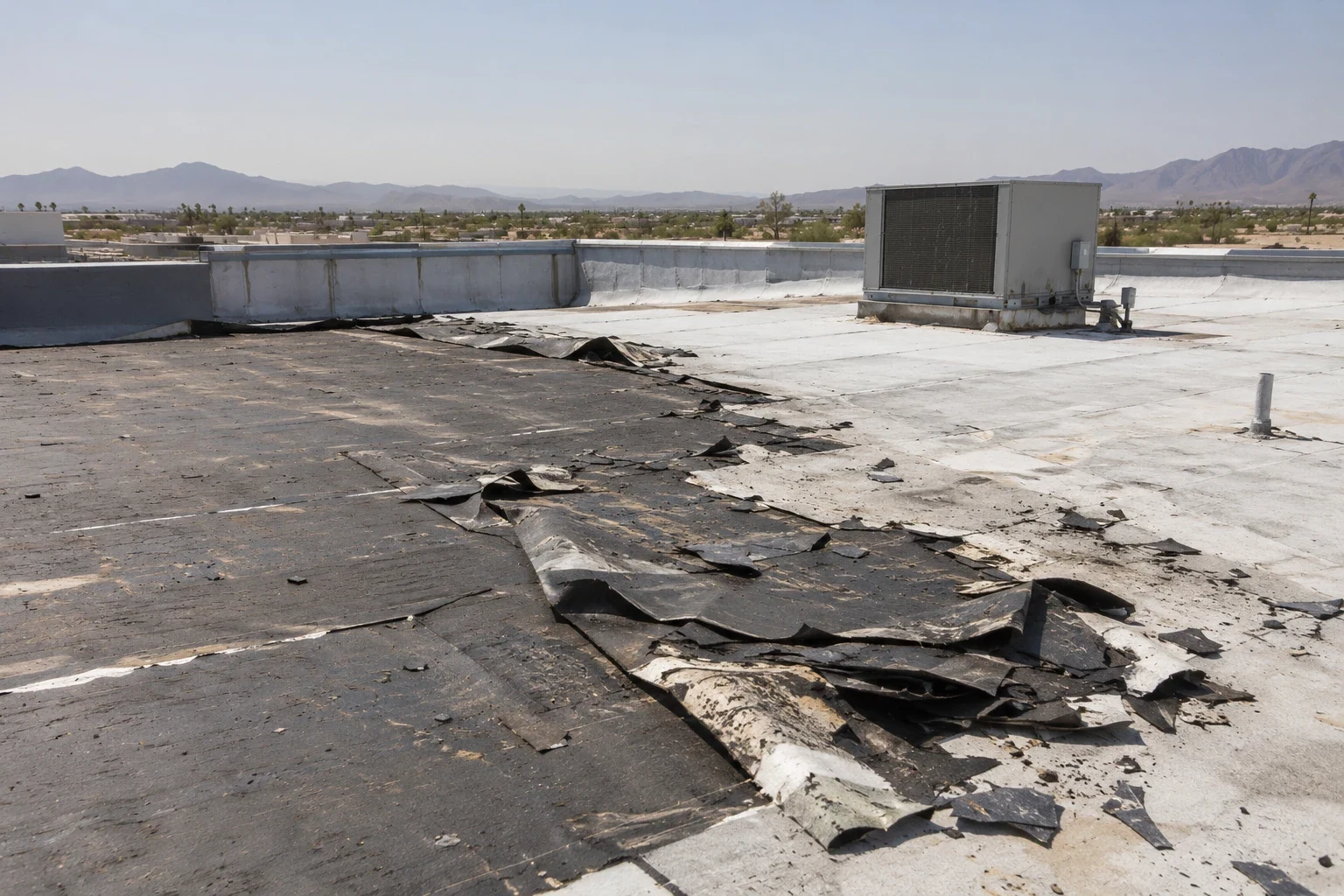
At reroofing, the owner must decide whether tear-off or a recover is allowed after reviewing existing layers, moisture, roof height, drainage, load, code and manufacturer criteria. Roof recover or overlay work is not appropriate for every assembly. If the roof has widespread deterioration or concealed conditions that cannot be resolved within a recover scope, compare it with a commercial roof replacement.
Pay close attention to seams, edges and penetrations
Membrane seams are only part of the water-control system. Curbs, pipes, skylights, parapets, roof edges, drains, scuppers and expansion joints need details compatible with the selected TPO assembly. Manufacturers publish dedicated corner, penetration, curb and edge details because one field sheet cannot form every transition. We check dimensions, substrate condition, termination and compatibility against the current approved detail before pricing the work.
At drains, the membrane connection, clamping ring and drain body must work as a connected outlet. At rooftop equipment, curb flashing must coordinate with the curb height and mechanical scope. Perimeter metal and wall flashing need secure transitions that match the plan. The scope should identify who supplies adjacent metal, who removes equipment, where the membrane ends and what preparation is included.
After installation, periodic inspection can find punctures, loose terminations, debris or other changes before they become larger repair questions. Roof access for maintenance should follow the building owner’s rules and the system documents. For an active leak, commercial roof leak repair documents the observed water-entry condition and the repair area; an interior stain alone does not identify a failed TPO seam.
A seam test should follow the manufacturer's process and the job's quality plan. Confirm the welder settings on a test strip, allow it to cool, and check the weld before production proceeds. During installation, inspect intersections, T-joints, corners, and patches where several layers meet. A visual pass can miss an incomplete weld at a change in sheet direction. Mark repairs and repeat the check after rework. The record should tie each test to the roof section and installation day, so a later leak investigation can distinguish a seam issue from a curb, drain, or wall transition.
Decide whether TPO fits the building and project
TPO can be considered for new construction, replacement or selected recover projects when the design and existing conditions support it. Compare the requested service life, membrane thickness, attachment, traffic, rooftop equipment, access, expected repairs and warranty terms in the project documents. A roof with frequent service traffic may require specified walkways and protection. A facility with solar or extensive mechanical equipment needs the roof details and trade sequence coordinated before the field is covered.
Scottsdale buildings vary in roof size, tenant activity and rooftop equipment. Different building uses can add access, equipment or operating constraints, but the use alone does not define the roof assembly. We use the actual plans, inspection and owner requirements to prepare the recommendation.
If you are comparing existing systems, review the documented roof history and repair records alongside the new proposal. Preventive roof maintenance can track observable changes after installation and keep service history organized. We can document current visible conditions when the immediate need is to assess the roof rather than select a new system.
Build a TPO proposal from verified conditions
A useful TPO proposal identifies tear-off or recover limits, substrate assumptions, insulation and cover-board layers, membrane product, attachment, seam and flashing details, edge scope, drainage work, phasing and closeout requirements. It also says how concealed conditions will be handled if the opened roof differs from the survey. Product substitutions should follow the contract and manufacturer approval process instead of relying on a generic equivalency statement.
When comparing membrane families, review EPDM roofing and PVC roofing against the project needs. Share the Scottsdale address, roof drawings, existing product and warranty records, leak locations, equipment plan and any project specification. We can inspect the roof, identify unresolved design questions and price an assembly that connects the membrane to the actual deck, edges and penetrations.
Commercial Roofing Questions
Are all TPO roof membranes the same?
No. Reinforcement, thickness, backing, accessories and approvals vary by manufacturer and product. The proposed system should be checked against its own details and documentation.
Are TPO seams welded?
Many TPO systems use hot-air welded seams. The exact preparation, equipment settings and quality checks follow the selected manufacturer’s current instructions.
Can a TPO roof go over an existing roof?
Sometimes, when the existing assembly and project requirements allow it. Moisture, attachment, roof height, drainage, load and code review can change the decision.
Will a white TPO roof lower energy bills?
No. A surface rating or color does not predict the energy result for an individual building. Performance depends on the full roof assembly and building operation.
Review a Commercial TPO Roofing Project
Share the property address, roof plan, existing system records, leak history, equipment layout and project requirements. We can inspect the roof and define TPO assembly, attachment and detail questions before pricing.
Call or Email
Helpful to have ready:
The property address and a building contact
Where water or damage shows up inside
The roof type and age, if you know them
Photos and any past roof reports