Warehouse Roofing in Scottsdale, AZ
Home / Property Types We Roof / Warehouse Roofing
Review warehouse roof leaks, drainage, repair extent and replacement stages with delivery routes and protected storage areas in Scottsdale, AZ.
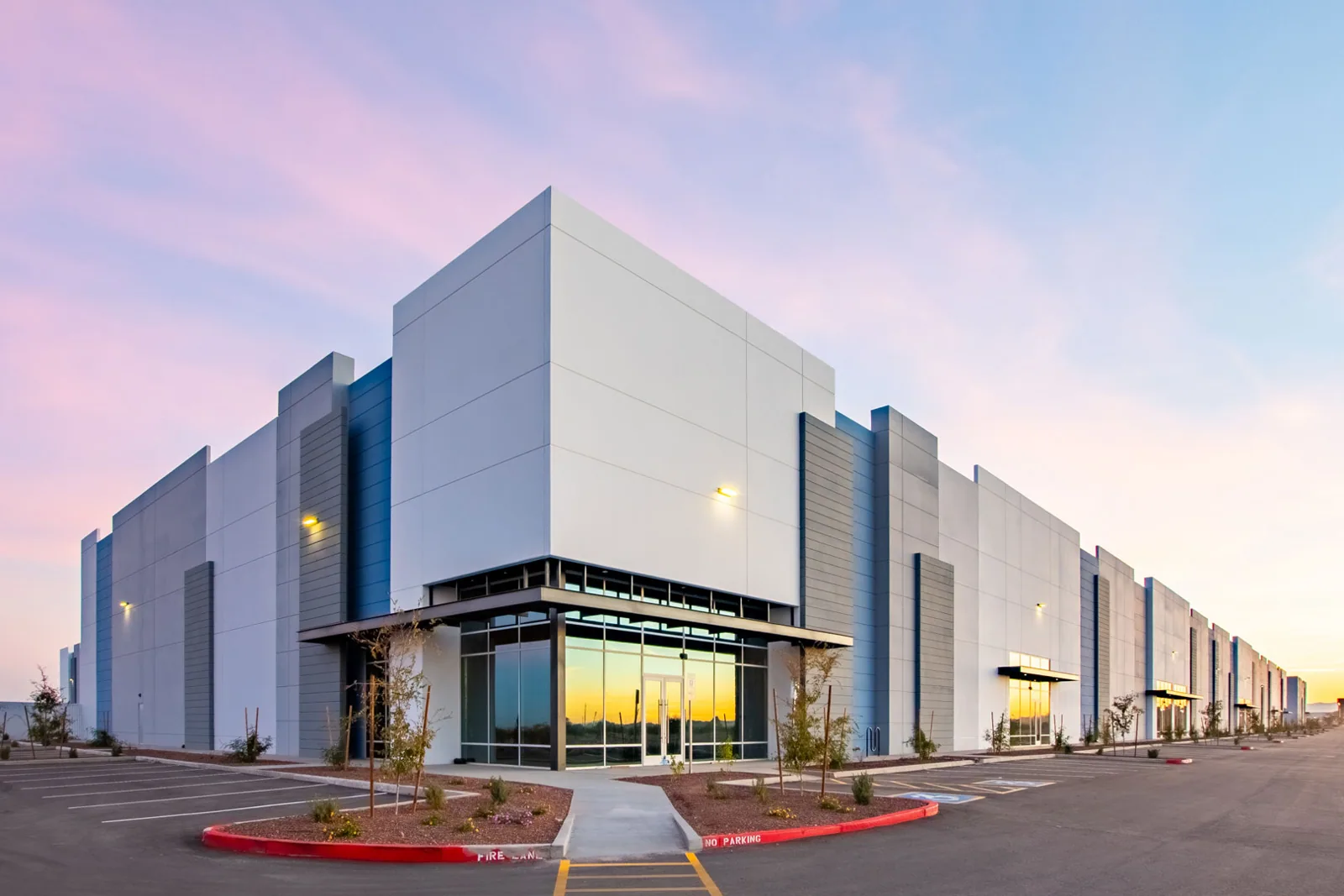
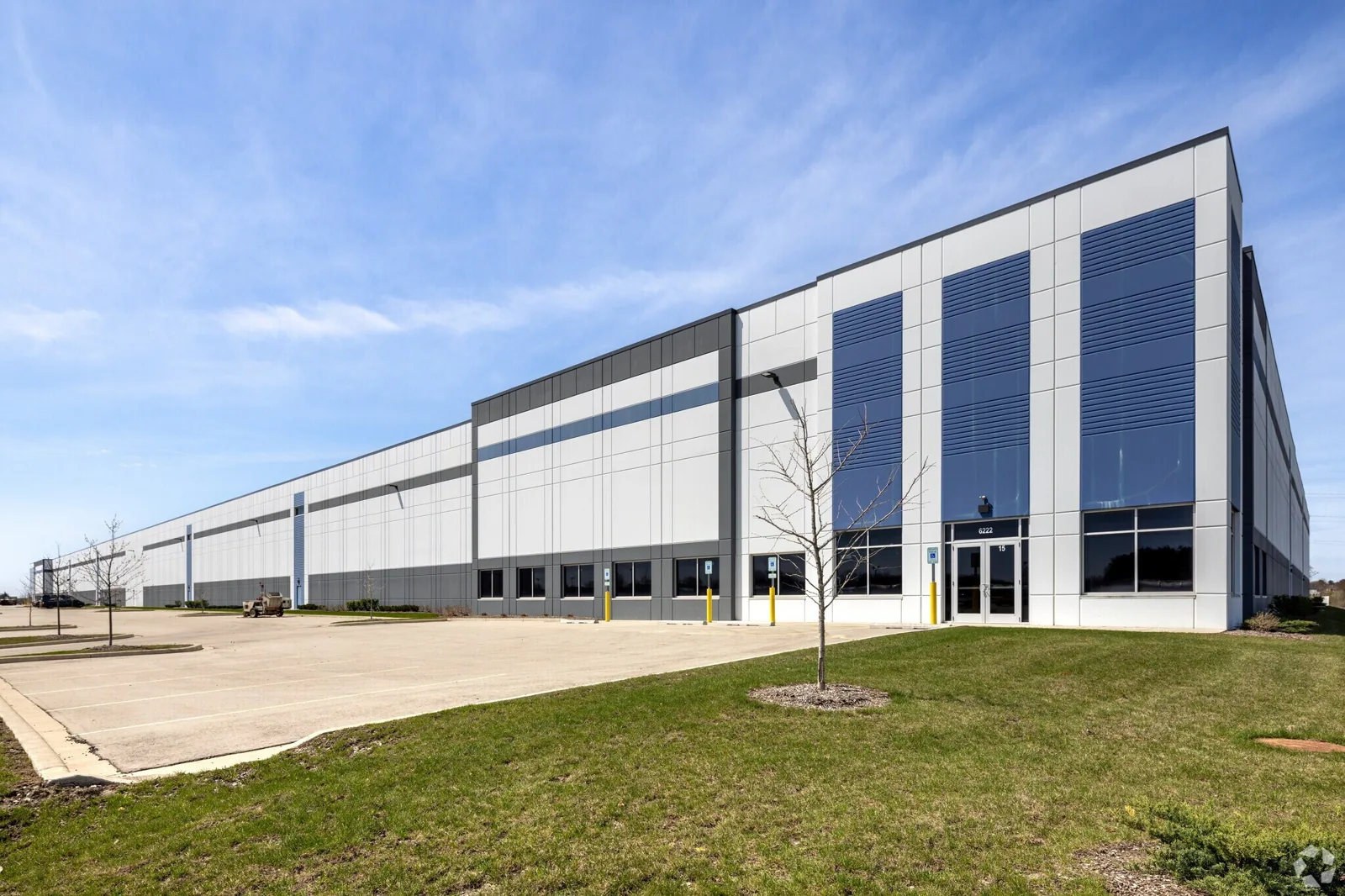
Storage arrangements can determine how much warehouse roof work is ready to proceed in Scottsdale, AZ. We examine the problem on the roof, then review the area below the proposed removal with the property representative. A repair boundary that passes above shelving, stored goods or a circulation route needs preparation suited to that actual position. The manager should have that requirement while deciding the work window, before a crew is committed to opening the roof.
Scottsdale Airpark and McDowell Corridor are named employment reporting areas in the city's commercial occupancy material. Give us the actual warehouse address when discussing an assignment in either area. The useful starting point is the reported roof concern and the representative who can arrange the inspection. For roof work involving distribution space, review the receiving and dispatch arrangements affected by the proposed handling route. We can then separate the immediate investigation from the preparation needed for a larger repair or replacement decision.
Locate the defect before moving stock
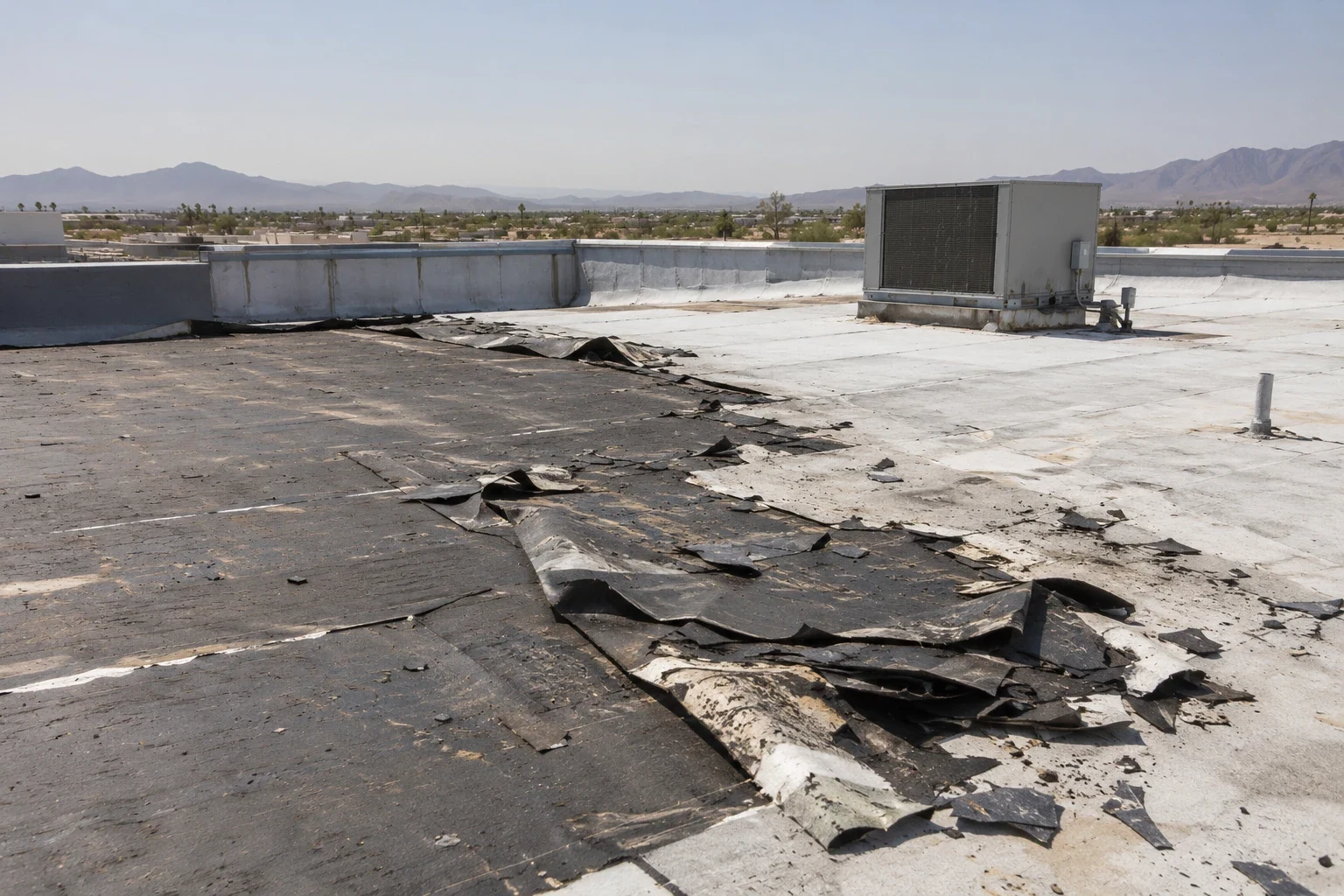
Ask where water appeared, what was beneath it and whether the reported location changed between observations. Record those details against the roof layout. Check the surrounding seams, penetrations, wall transitions and drainage. Water may move along roof layers or framing before it reaches the storage area, so the stain below is a reference for investigation rather than a ready-made repair boundary.
A warehouse roof inspection should describe the conditions actually observed and the areas still needing access or examination. If a concealed layer must be opened, explain the proposed opening and how it will be protected afterward. Ask for prior repair records where available. Knowing whether a patch was intended as temporary protection or a permanent detail helps us examine its edges and understand the adjoining construction. We give the manager a defined next step instead of directing unnecessary stock movement beneath an unconfirmed defect.
Repair the sound boundary
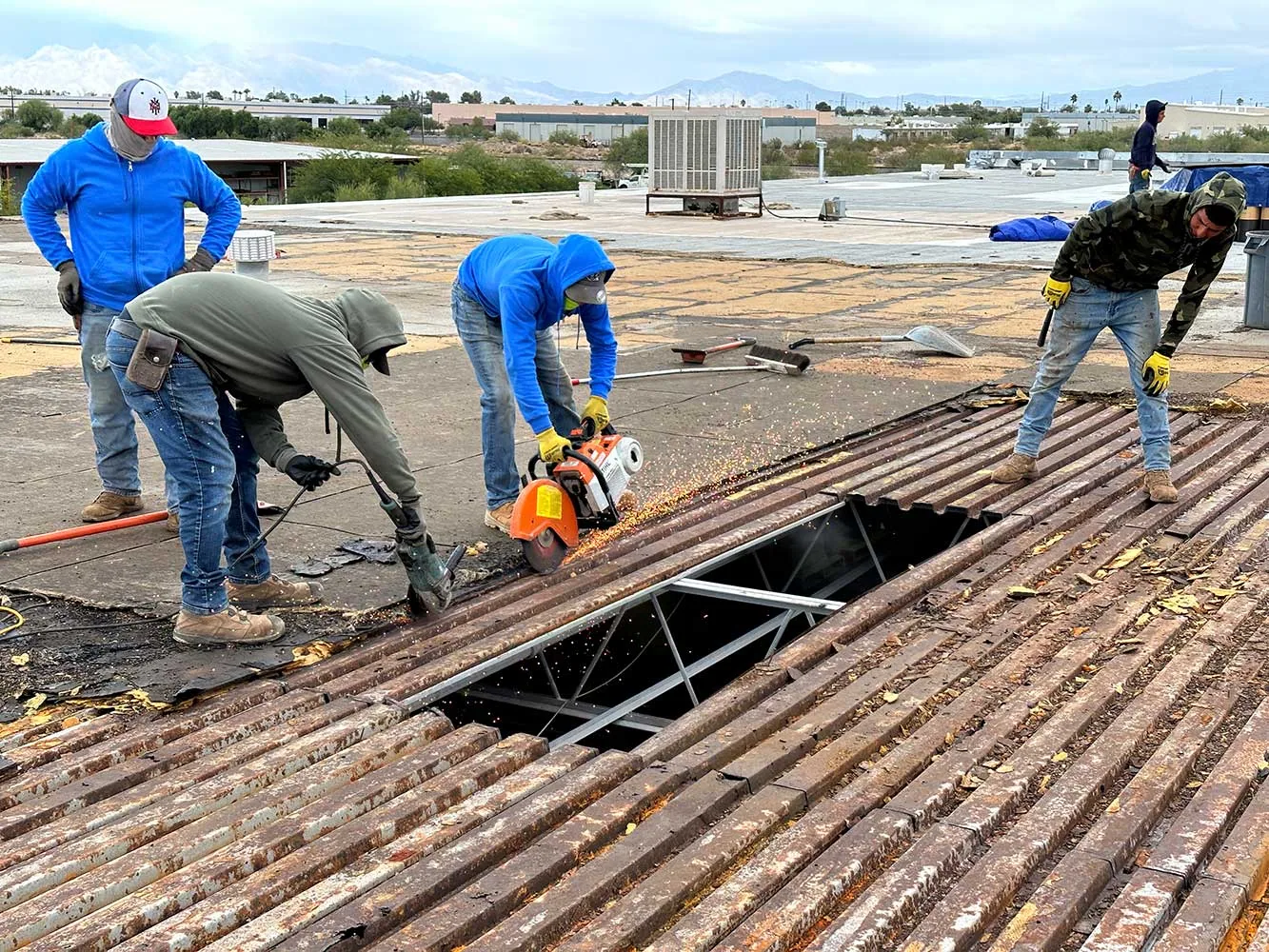
Where the investigation identifies a local defect, examine the surrounding construction that will receive the repair. A loose flashing edge may require removal far enough to inspect its backing and attachment. A damaged membrane area needs sound material around its edges and a compatible joining method. The visible size of the defect is therefore only one part of the proposed removal extent.
For repair of an examined warehouse roof defect, describe the material to be removed, the preparation included and the adjoining detail to be completed. If inspection reveals wet insulation, deteriorated backing or a wider failure, show that finding to the approval contact before expanding the work. A written change should identify the additional area and its effect on material needs and the window below. The manager can then decide the expanded repair with a clear account of what caused the change, rather than receiving an unexplained increase at closeout.
Keep the handling route workable
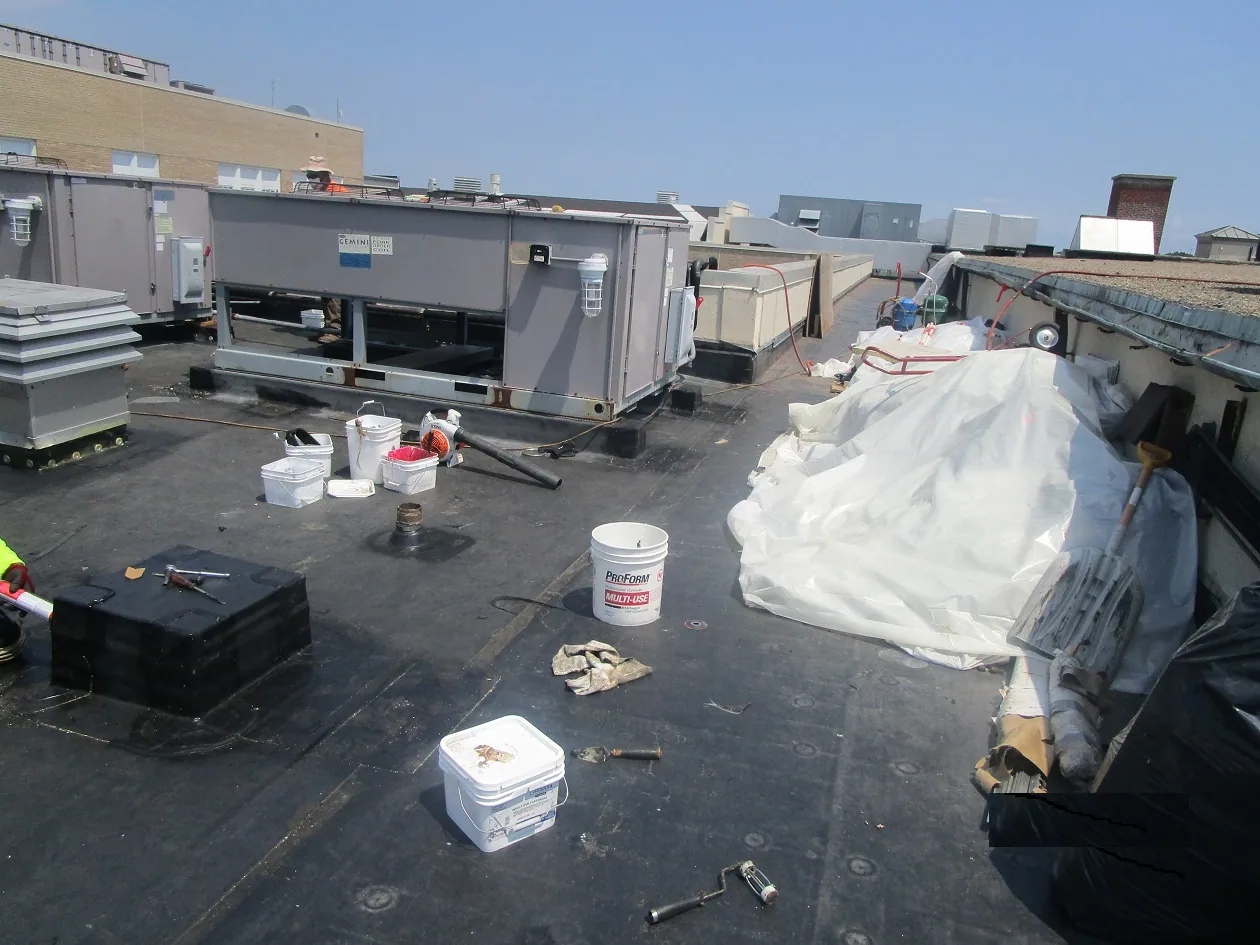
Review where roofing material will arrive, where removed material will leave and where each load can be held. Ask the warehouse representative about the receiving or vehicle movement affected by those positions. The arrangement needs to work for the roofing operation and the actual facility use. A roof access point should not be selected solely because it offers the shortest carry when the loading position cannot be made available.
Show the proposed opening to the representative from both above and below where access permits. Ask which goods or equipment require moving, clearing or protection and who will complete that preparation. Review dust, odor, intake and noise concerns relevant to the method. Roof removal over occupied storage areas must fit the preparation available for the particular stage. If the facility changes that area or its access window, adjust the roofing boundary before removal. Include the time necessary to finish and protect the exposed edges in that revised plan.
Separate drainage and equipment tasks
Observe the drainage path around the affected roof area, including the approach to the outlet and the connection through the roof. A blocked path, damaged flashing or piping concern requires a different response. Identify which part is roofing work and which needs the responsible plumbing or equipment contractor. Explain the condition that contractor must provide before the roof connection can be completed.
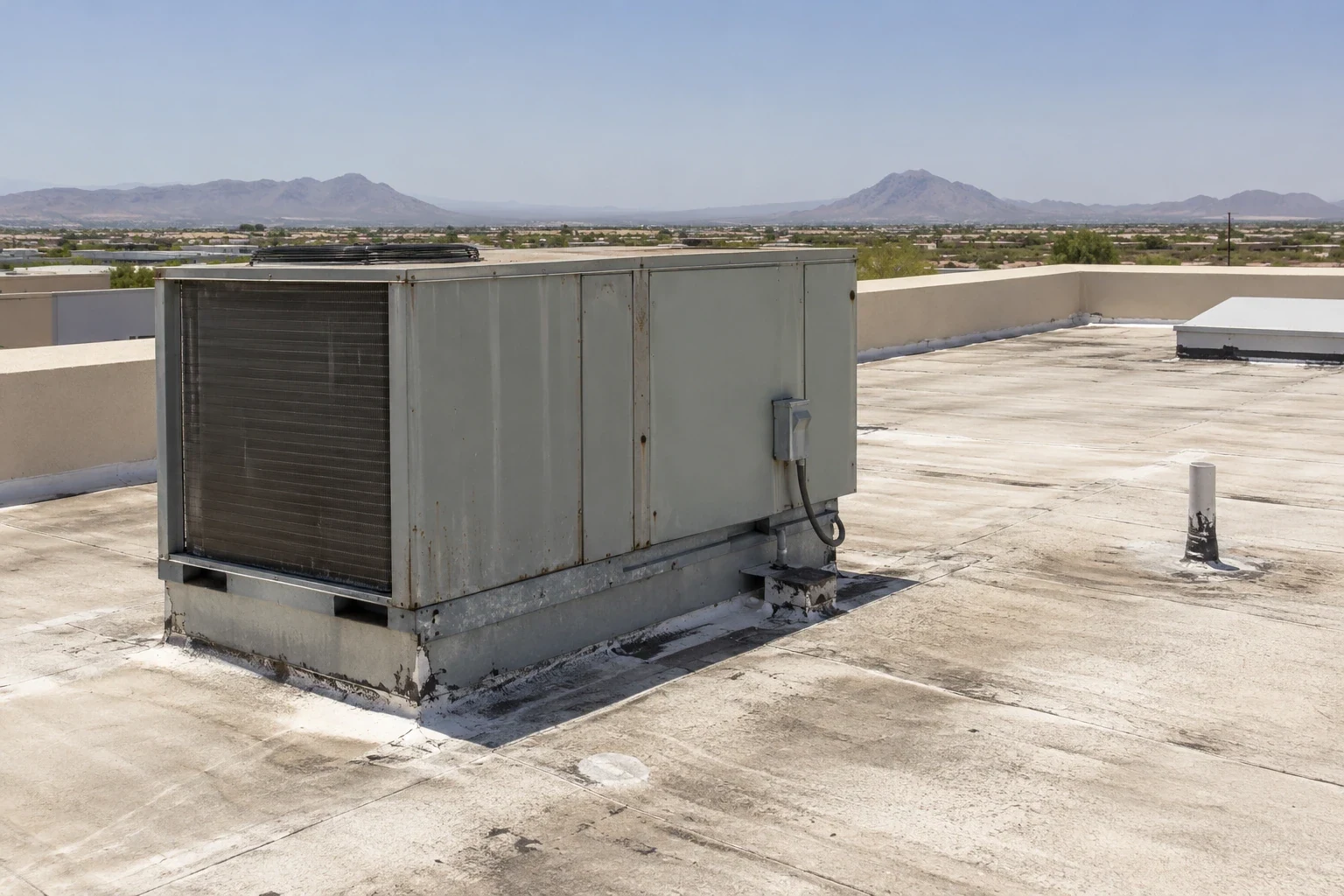
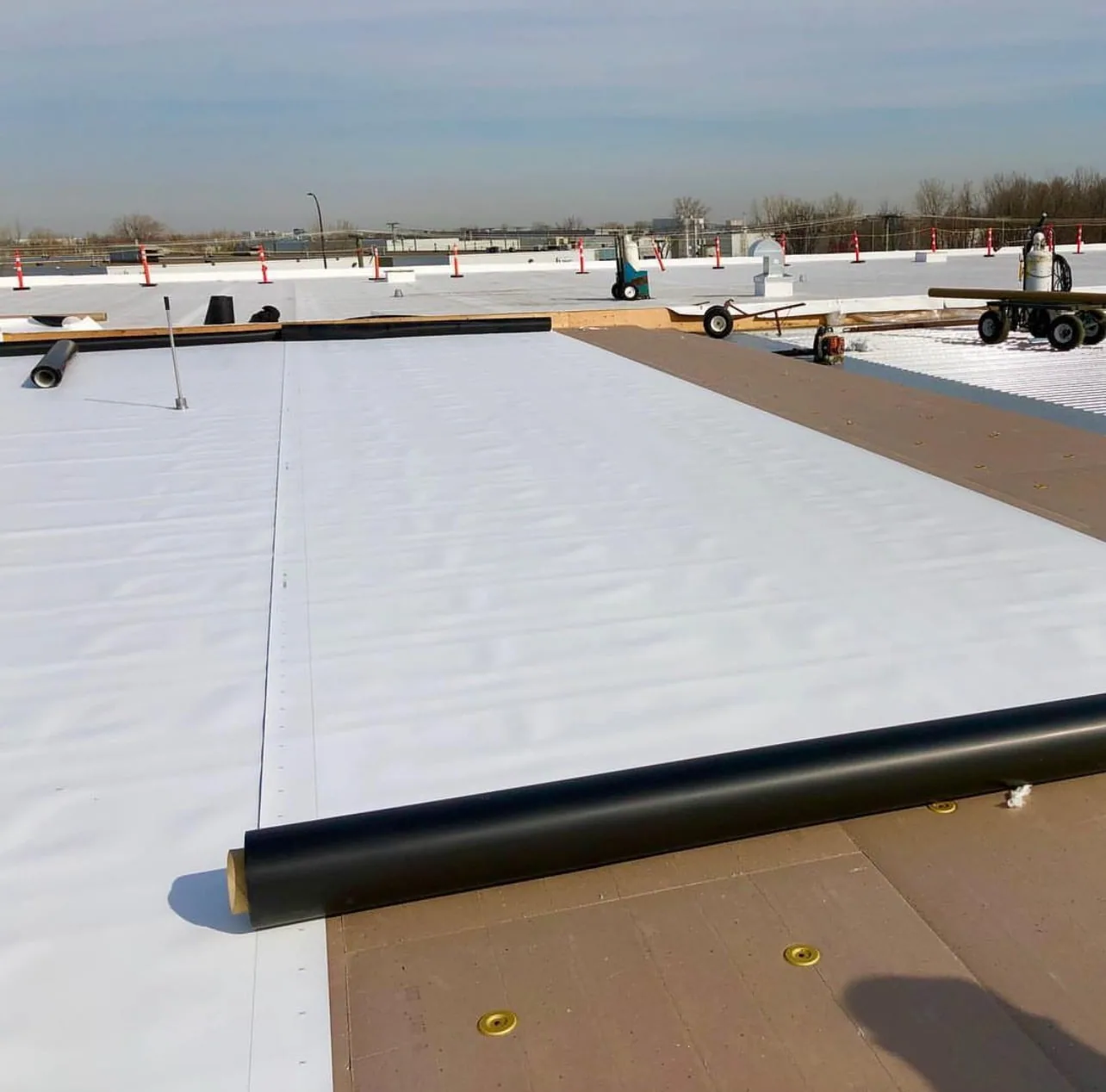
An examined TPO warehouse roof repair depends on the existing membrane condition, compatible materials and the preparation required by the detail. Work at a curb or wall also depends on sound supporting construction. We do not bury a failed component beneath new flashing to finish a scheduled stage. When adjoining work changes the sequence, notify the approval contact and review the interim protection needed. Roof material availability and another contractor's preparation should both be settled before promising a start that relies on them.
Compare replacement stages
If the examined condition warrants a replacement discussion, compare the roof area to be renewed with the storage areas affected below. Review existing layers, the removal needed, insulation and cover board requirements, attachment and perimeter connections. A warehouse roof replacement stage should include the work necessary to finish its boundaries, not merely the open field between them.
Consider whether the facility can prepare a broad area or needs smaller successive stages. Explain the effect on temporary protection, material handling and later connections between stages. Where roof construction over flex industrial space joins an office or another occupied area, include that adjoining use in the preparation discussion. The manager needs the amount and timing implications of the actual layout to compare options. Record the chosen stage, its approval contact and the conditions required before it begins.
Walk the completed work
At the end of each stage, inspect the finished seams, flashing edges and drainage around the work. Confirm that temporary protection is accounted for and that unfinished adjoining tasks are identified. Keep the manager informed of any area awaiting another contractor before it is mistaken for a completed roof detail.
The completion record should show the authorized repair area, the materials used and changes approved during the operation. Include useful photographs and the next inspection or observation agreed for an unresolved concern. For an assignment near Scottsdale Airpark, confirm the actual property entrance and meeting point before arranging the completion walk. The resulting record should help the manager recognize the work that was finished and the decision, if any, that still remains.
Before work begins, mark the protected inventory area, temporary cover limits and route for removed roofing. The facility contact should identify any goods or equipment that cannot be relocated during the agreed window. We keep each exposure small enough to finish or protect within the approved operation, and we record any condition that expands the boundary before continuing. At turnover, compare the completed roof zone with the original plan and note any remaining area awaiting a separate stage, so warehouse staff can restore normal use with a clear handoff.
Commercial Roofing Questions
Does a ceiling stain establish the warehouse repair area?
The stain helps locate the investigation. Examine the roof and adjoining connections before defining the removal boundary because water may travel before it becomes visible below.
Who decides which stored goods need moving?
Review the proposed stage with the warehouse representative. We describe the preparation our roofing operation requires; the facility arranges the necessary movement or protection of its property.
Can replacement be divided into smaller stages?
Compare the available prepared areas with the roof connections and protection each stage requires. The examined construction and facility arrangement determine a workable extent.
What belongs in a scope change?
Record the finding, additional work proposed, material or adjoining-trade requirement and effect on timing. Obtain the designated contact's decision before expanding the authorized scope.
Review your warehouse roof work
Share the reported problem, warehouse address and available inspection contact. We can review the roof concern and identify the preparation needed to compare the next roofing step.
Call or Email
Helpful to have ready:
The property address and a building contact
Where water or damage shows up inside
The roof type and age, if you know them
Photos and any past roof reports