
Storm Damage Roof Repair in Scottsdale, AZ
Home / Commercial Roofing Services / Storm Damage Roof Repair
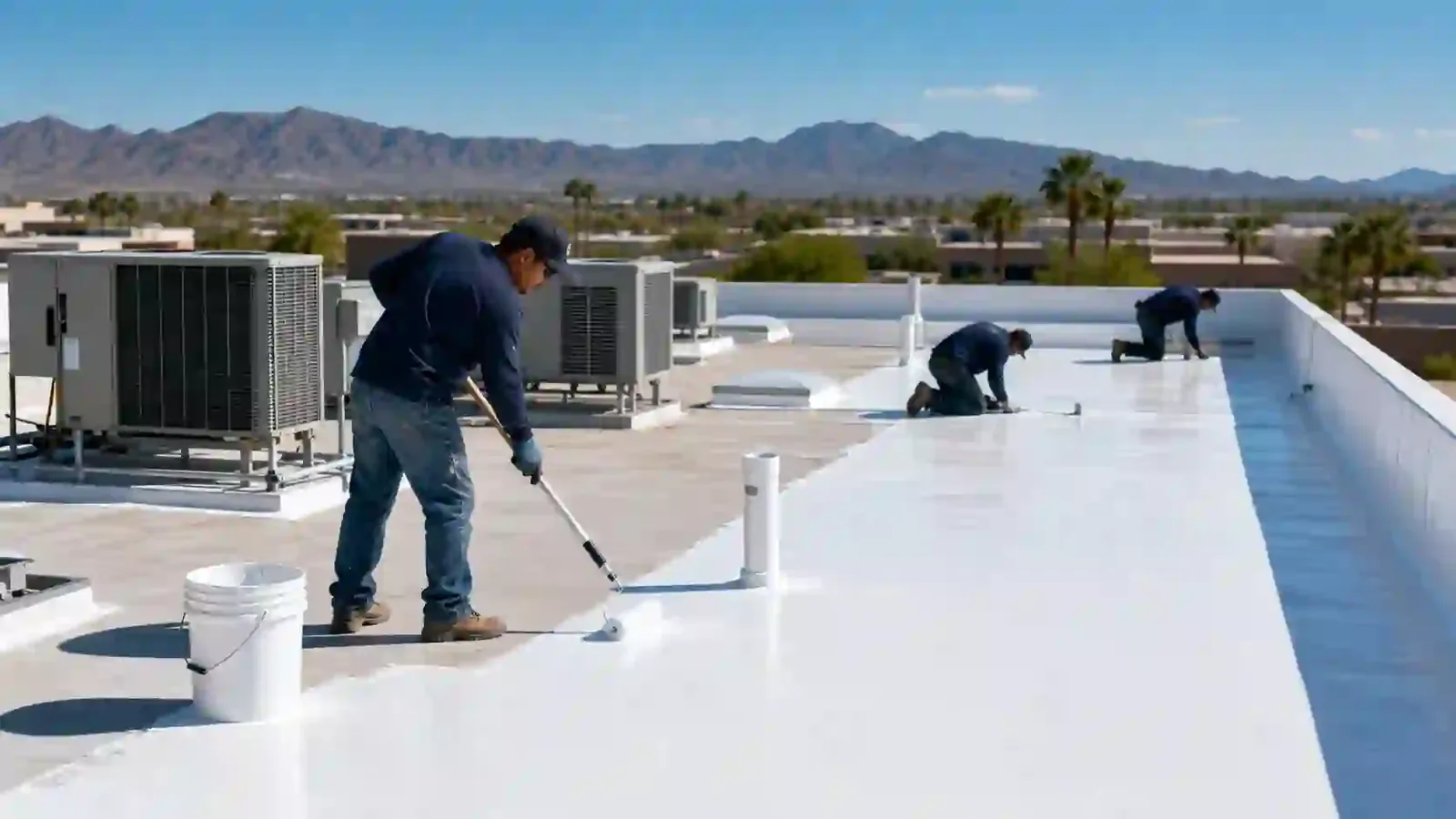
Storm damage roof repair in Scottsdale separates emergency protection, inspected conditions and approved permanent repairs for each building.
A severe-weather report is a reason to check the assigned building, not proof that its roof is damaged. Storm damage roof repair in Scottsdale starts with the property address, the event or impact reported, any active interior leak and the access contact. We separate immediate water protection from the permanent repair decision, then record which roof areas and connections were actually examined. A contractor should not assign damage or a repair quantity from a regional weather report alone.
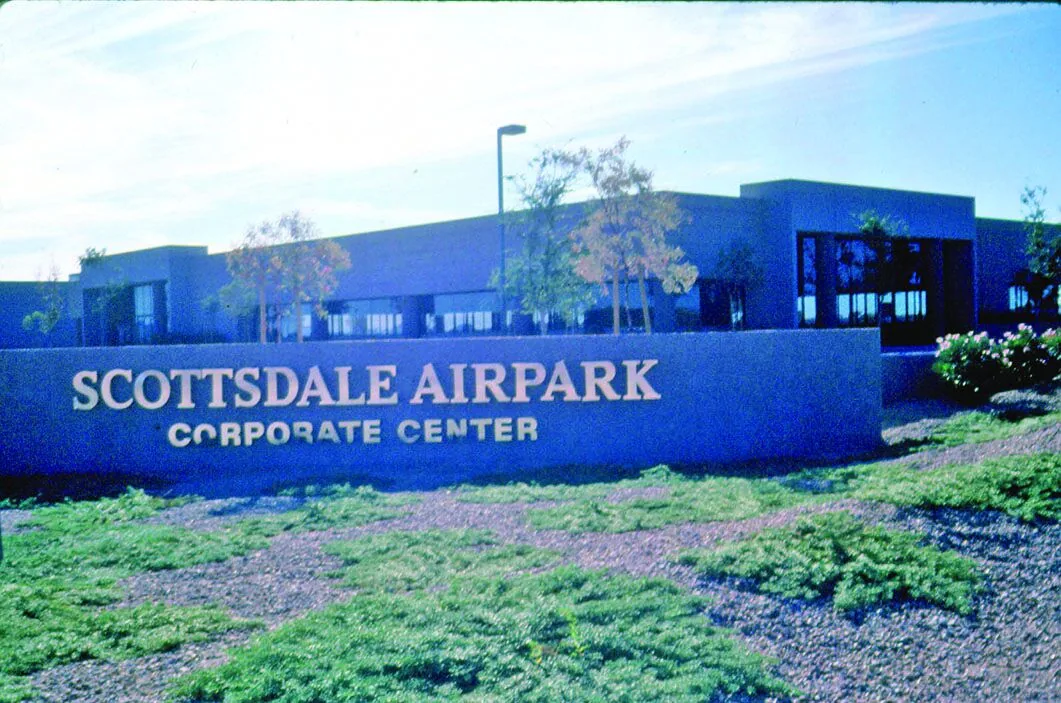
The National Weather Service documented a severe downburst near McCormick Ranch in August 2024 and reported localized roof damage from downed trees. That event record does not establish conditions at another Scottsdale building. Properties in Scottsdale Airpark and Old Town Scottsdale need building-specific inspection findings, photographs and repair records before work is defined.
Protect the building while conditions are assessed
If water is entering occupied space, the property contact should report the room, visible symptoms, time observed and any change in conditions. We confirm whether emergency access is available and identify the temporary protection needed to limit further exposure. An immediate cover or other interim measure may reduce water entry, but it does not repair a concealed assembly or establish the final extent of damage. The affected space and temporary roof treatment should be documented for the permanent visit.
The temporary record identifies the protected area, the material or method used, any conditions requiring a return visit and who will confirm permanent inspection. We do not describe temporary protection as a completed repair.
Access follows the owner’s safety directions and the conditions at the building. Wind, standing water, fallen equipment or unstable debris can make roof entry unsuitable. If crews cannot safely reach the area, we explain the limitation and coordinate a ground-level or interior review until conditions change. Emergency roof repair can address urgent protection and set out the next inspection step, with any temporary measure clearly distinguished from completed repair.
For a property with multiple roof areas, the owner helps identify which building, wing or elevation is affected. We avoid extending a reported impact to other roofs just because they share an address, development or storm history. A location reference prevents an interim response at one area from being mistaken for a survey of the full property.
The inspection records impact and prior condition
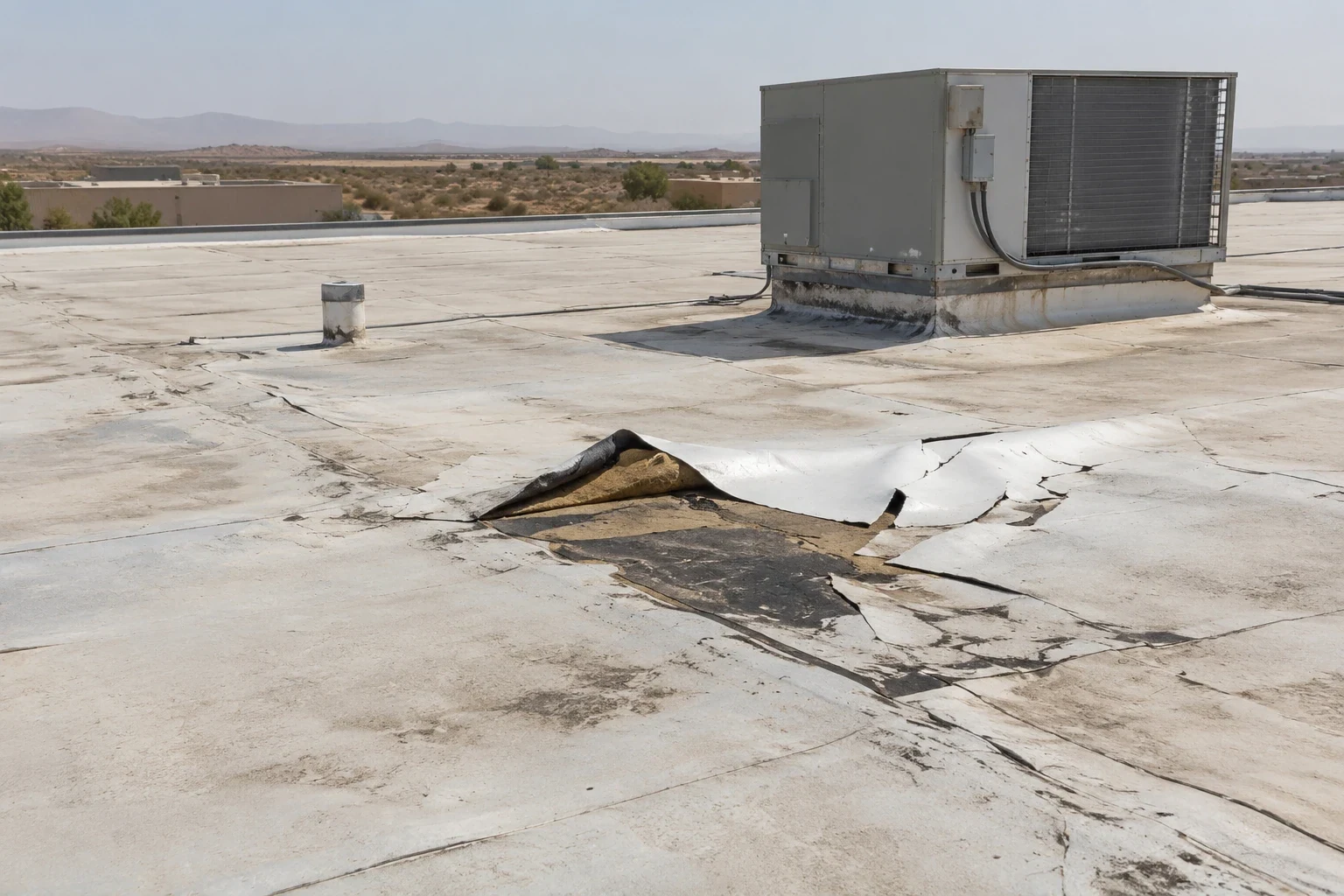
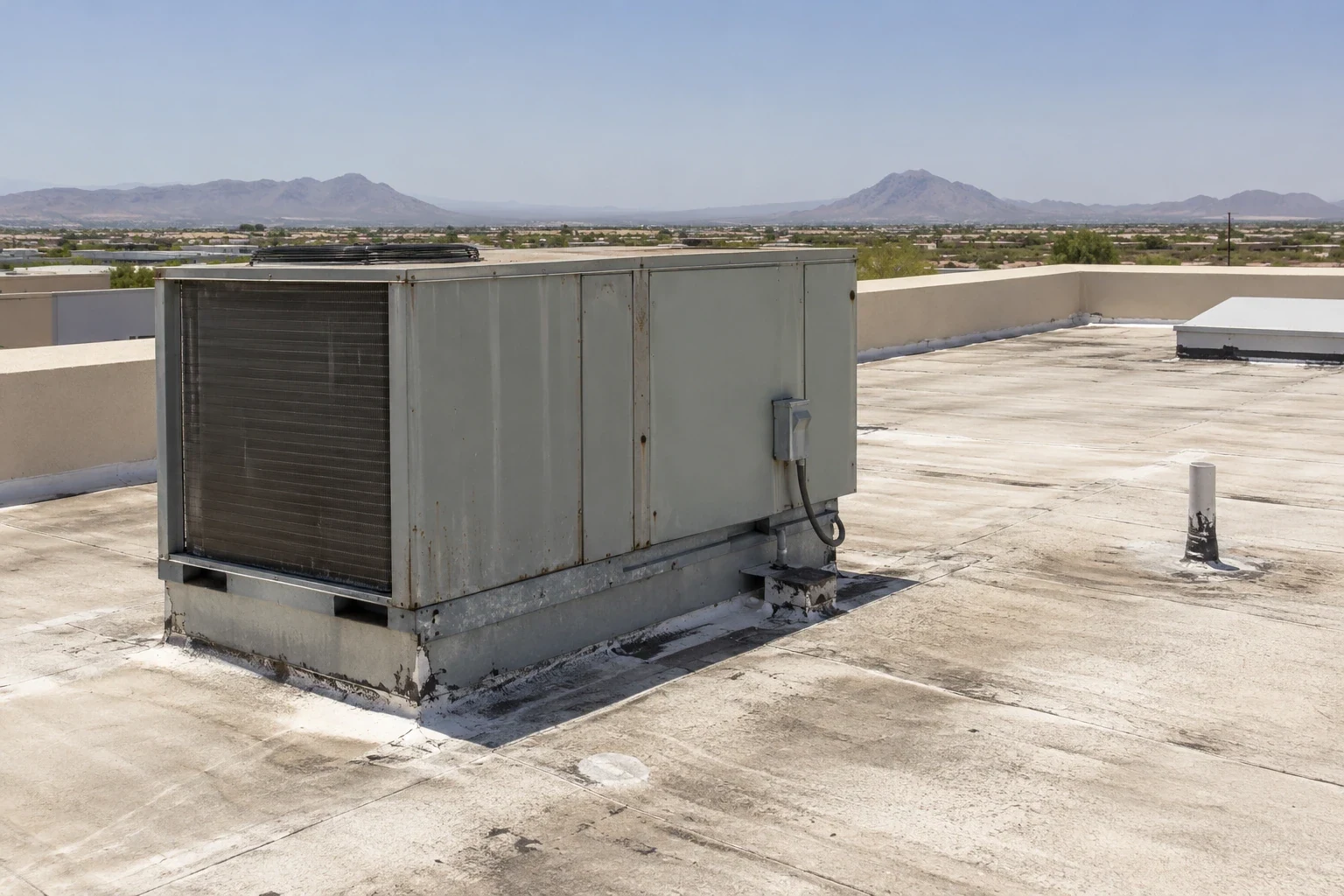
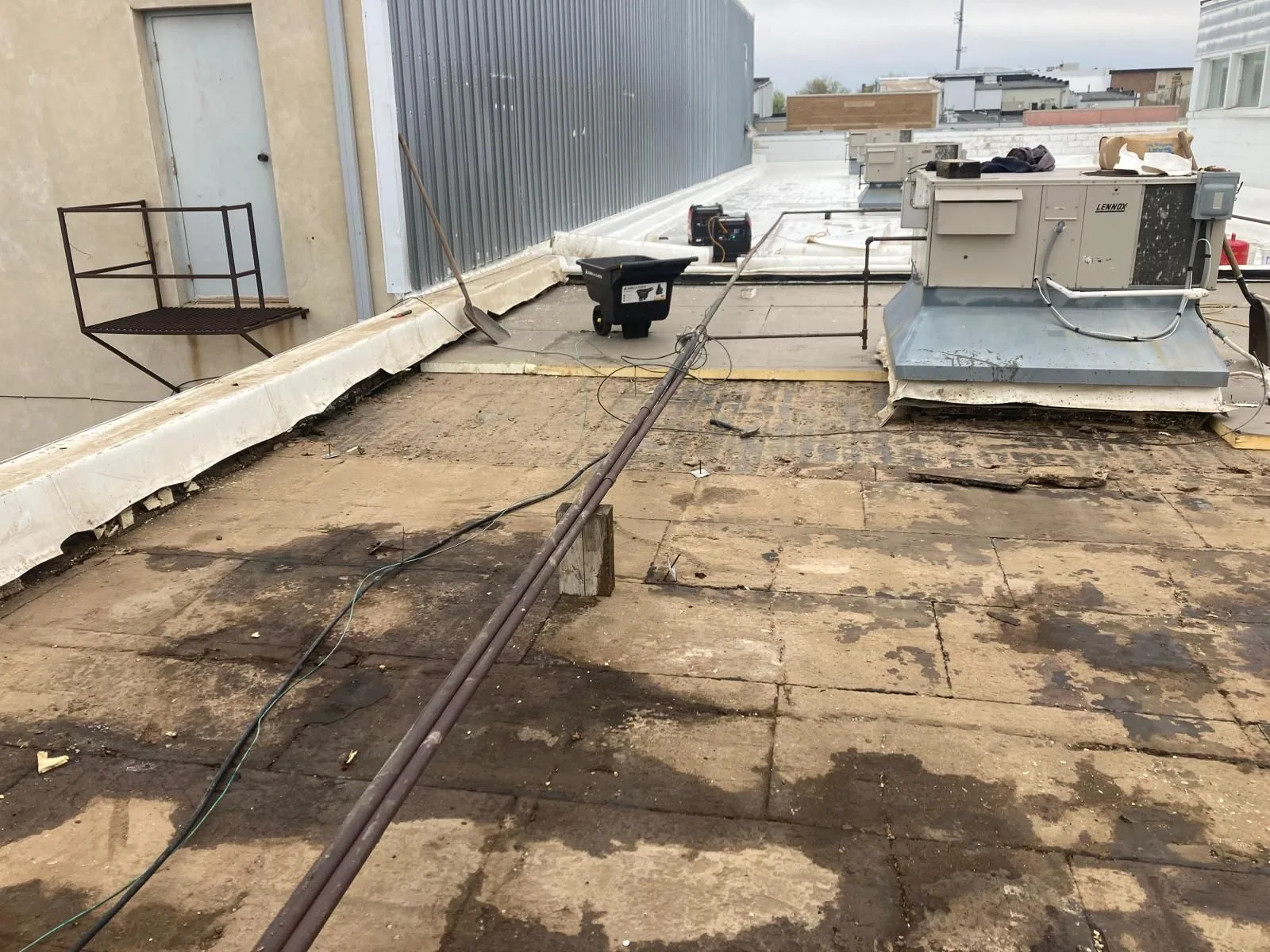
We compare accessible roof surfaces and details with the reported impact, available pre-event photographs, prior service records and the property contact’s description. The review can include the field membrane or surfacing, perimeter attachment, metal edges, flashings, drains, skylights, equipment curbs and locations struck by debris. We record visible displacement, punctures, splits, impact marks, loose components and water entry signs by roof section. A weather event alone does not show which condition is new or what caused it.
Hail, wind, falling limbs, airborne debris and heavy rain can leave different evidence. A dent or surface mark may need a closer look before it is called functional damage. A leak reported after a storm may originate at a detail that was already open, at a new impact point, or along a path that is not visible from the interior stain. Where comparison evidence is missing or a cause remains uncertain, the report states that limit instead of making a definite attribution.
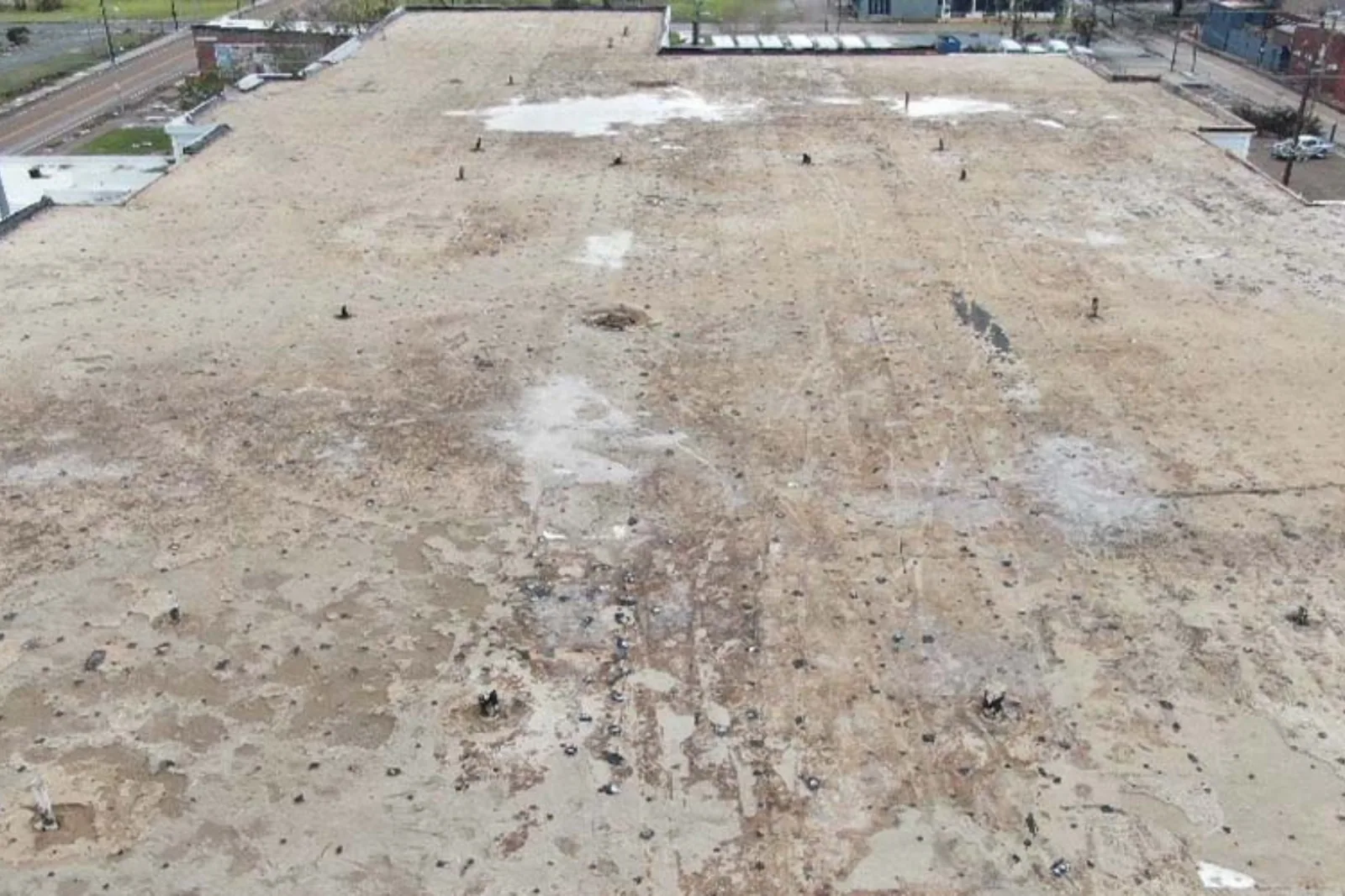
A commercial roof inspection can document the accessible field and connections beyond the reported leak area. If imagery helps locate a roof section, aerial photographs supplement rather than replace close examination of seams, edges and penetrations. We identify areas excluded by obstruction, access limits or the agreed scope.
The repair scope follows verified conditions
After inspection, we separate confirmed damage from possible damage and pre-existing wear. A repair proposal identifies the roof area, material and detail to be corrected, preparation, replacement layer if needed, transition to retained construction and any condition that could change the work after opening. If insulation, cover board or deck condition is concealed, we explain how an authorized opening would establish the boundary and how the roof will be closed that day.
The proposed detail must suit the installed system. Wind-related damage at an edge or seam may require a different correction from a puncture or a failed curb flashing. We verify the membrane and receiving surface before selecting repair materials. If damage reaches adjacent layers, insulation and cover-board replacement may be part of the approved repair, with the membrane transition completed over sound construction.
If the event exposes widespread deterioration or uncertain attachment, a patch may not address the owner’s full need. We describe the condition that prevents a limited repair and compare a wider recover or replacement evaluation only where observations support that choice. The owner can then approve an amount and work boundary tied to what was found, not an assumed event-wide scope.
Photos and work records stay tied to the property
For the initial review, the owner receives dated photographs, affected roof sections, observations, access limits, temporary measures and conditions requiring a second visit. We keep the storm date supplied by the owner separate from the inspection date. If a pre-event record was not available, the report says that the prior condition could not be compared.
When the owner is coordinating with an insurer or another consultant, we can provide the factual inspection record and a separate roofing repair estimate for the observed work. The roofing report does not decide coverage, assign policy responsibility or promise reimbursement. The owner or their appointed representative handles any claim communication and should review the applicable policy and insurer requirements.
After approved repair, the closeout records the material installed, completed seam or flashing detail, replaced layers, photographs and any deferred work. A later maintenance visit can compare those locations with the repaired condition. A condition report can keep event-related work distinct from routine maintenance and separate concerns at other buildings.
The work order should keep the event date, inspection date and authorization date distinct. Those records help the owner compare the observed condition with earlier maintenance without assuming a mark began during the reported storm. Before removal, confirm who can approve concealed-condition changes, how an open area will be secured if work pauses, and what documentation the property team needs before covering the repair. If separate buildings are involved, list their roof zones individually. A shared event does not combine their inspection findings or make one building’s repair quantity applicable to another.
Commercial Roofing Questions
Does a storm report confirm roof damage at my building?
No. A regional weather report describes an event, not the condition of a particular property. We inspect the assigned roof and tie each observation to its location.
Can a temporary cover be the final repair?
Not by itself. Temporary protection can reduce exposure while conditions are assessed. The permanent repair needs an inspection, defined work boundary and completed connection to the existing roof.
Can you identify whether damage is new?
Only when available evidence supports the comparison. We review prior photographs or service records where provided and state when the former condition cannot be established.
Will you prepare a report for an insurance claim?
We can document observed roof conditions and prepare an estimate for the roofing work. We do not decide policy coverage or promise reimbursement.
What if the storm exposed concealed roof damage?
We explain the affected area, seek approval for a defined opening and record how the assembly will be protected and closed. Any changed repair quantity remains subject to the owner’s approval.

Assess a Reported Storm Impact
Share the building address, affected rooms or roof areas, event date, access contact and prior roof records. We can inspect the reported area and document the protection or repair needed.
Call or Email
Helpful to have ready:
The property address and a building contact
Where water or damage shows up inside
The roof type and age, if you know them
Photos and any past roof reports