
Commercial PVC Roofing Systems in Scottsdale, AZ
Home / Roof Systems / PVC Roofing
Evaluate Scottsdale commercial PVC roofing around the membrane product, exposure, roof assembly, seams, drainage and project-specific requirements.
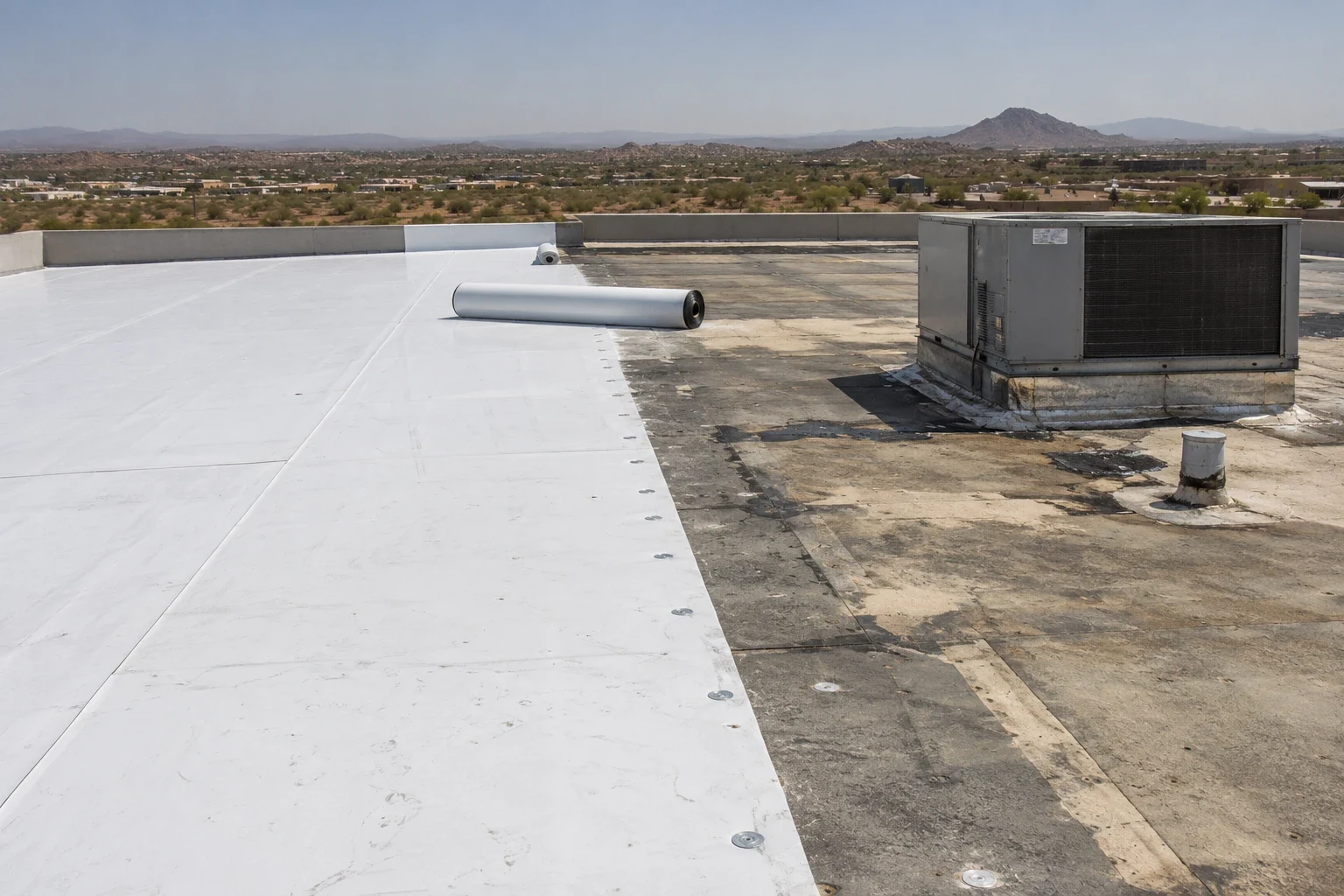
Polyvinyl chloride (PVC) is a heat-weldable single-ply roofing option for commercial low-slope roofs. Product formulations, reinforcement, fleece backing, thickness and accessory details vary by manufacturer. A PVC roof should be selected as a complete assembly after the owner’s exposure concerns, existing roof condition and project documents have been reviewed.
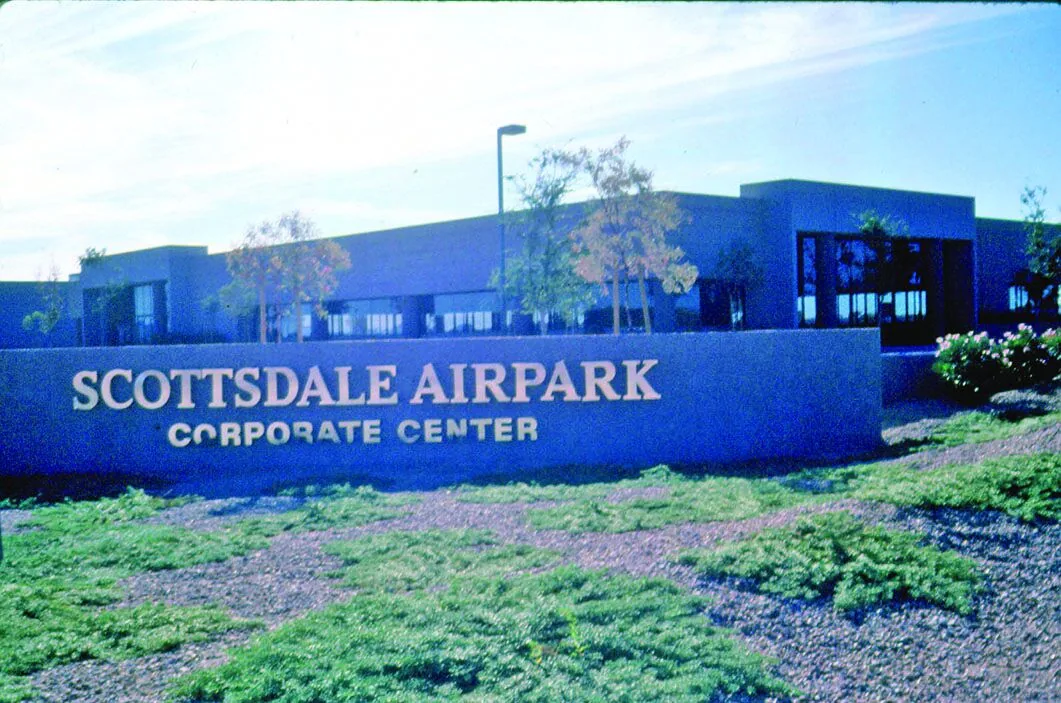
For a Scottsdale property near Scottsdale Airport and Airpark, we use the address to identify site access and available roof records. Location does not tell us whether grease, oils, chemicals or other substances reach the roof, or which membrane will fit the building. We ask for the roof plan, equipment schedule, service history and the specific material exposure the owner wants addressed.
Start with the exposure at the roof surface
Some manufacturers describe particular PVC products as resistant to specified chemicals, grease or oils. Johns Manville, for example, publishes product-specific PVC and KEE membrane information with stated resistance characteristics; Versico also describes chemical- and grease-resistant applications for its own PVC products. These statements do not mean all PVC formulations resist every substance or concentration. Before choosing a membrane, identify the material, source, route, amount, cleaning practice and location of exposure, then compare those conditions with the exact product documentation.
Commercial kitchens, exhaust fans, process areas and equipment pads deserve a site review where airborne or spilled material may reach the roof. We inspect visible staining, surface deterioration, seams and the path from the exhaust or discharge point. If the source is active, the owner may need the kitchen or process team to adjust the discharge, containment or cleaning plan. Roofing replacement alone may not stop a recurring exposure. Record where deposits collect, whether discharge is direct or wind-affected, nearby seams and drains, and how facility staff maintain the equipment. That evidence helps the owner decide whether source control, localized repairs or a new roof assembly belongs in the project.
For other membrane families, compare TPO roofing and PVC with KEE-based options using the written product requirements. Similar color or welding method does not make two membranes interchangeable. Compatibility depends on the proposed substrate, seam materials, cleaners, adhesives and any transition to an existing roof.
Specify the deck, attachment and insulation as one assembly
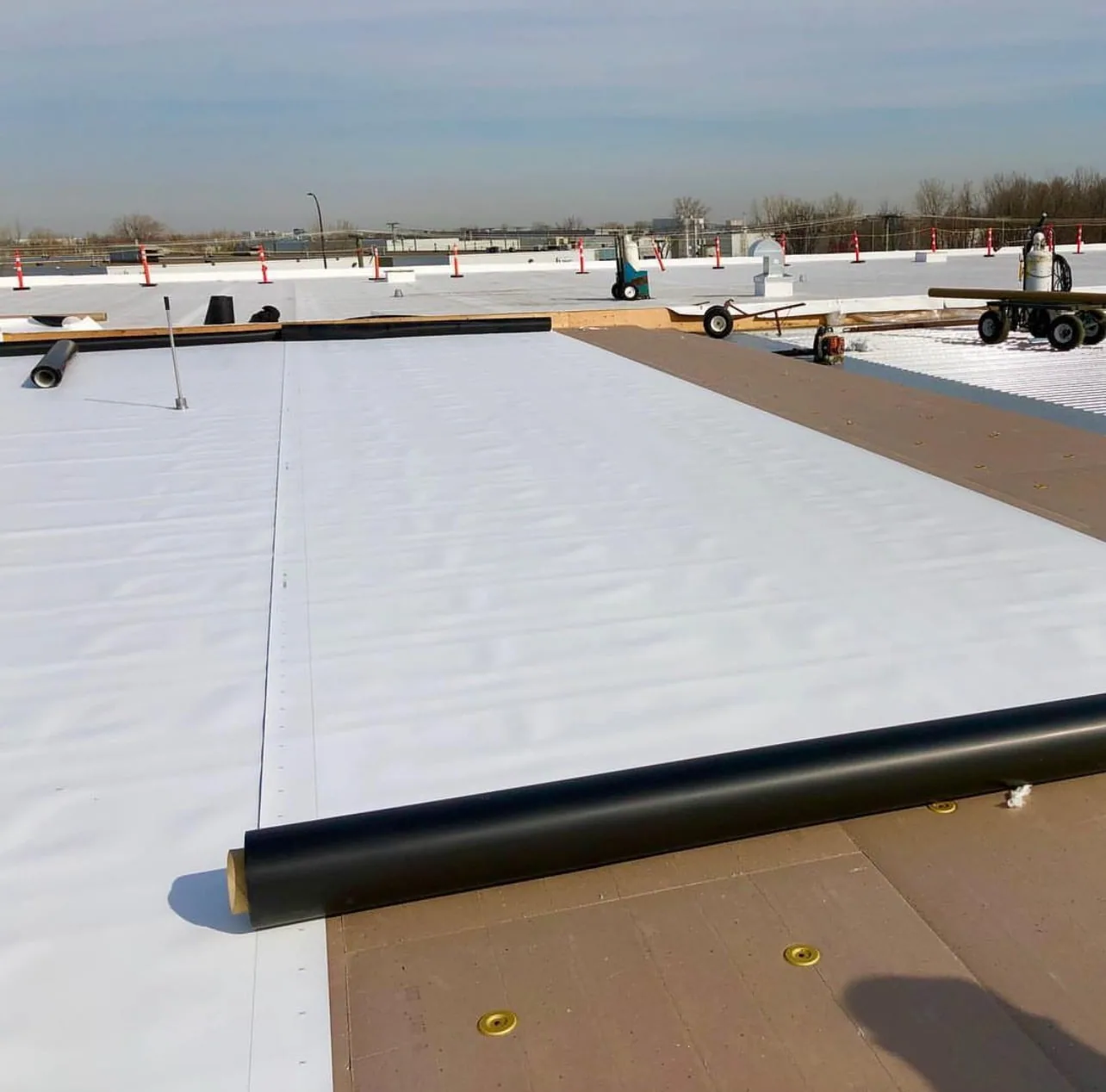
Start below the PVC sheet. The roof deck, vapor control layers where designed, insulation, cover board, fasteners or adhesive and membrane need to align with the approved assembly. Product approvals, wind design, fire requirements, insulation thickness, substrate condition and drainage shape the selection. A membrane data sheet cannot by itself resolve which assembly belongs on a particular building.
Manufacturers publish different adhered, mechanically attached and induction-welded configurations, plus system-specific fastening patterns and assembly plates. The proposed attachment must match the deck, perimeter zones, roof geometry and design documents. We do not choose a fastener pattern by surface area or assume that an attachment method from one product line works with another. If the deck or existing build-up differs from the drawings, the design team should review that variance before material is ordered.
When adding insulation or a cover board, account for the specified PVC system, board facer, attachment and separation layers where needed. Roof insulation and cover-board work should be coordinated with perimeter metal, curbs and drain heights before the roofing transitions are set. At an existing roof, wet or deteriorated materials may require removal rather than concealment.
Use the selected system details at every transition
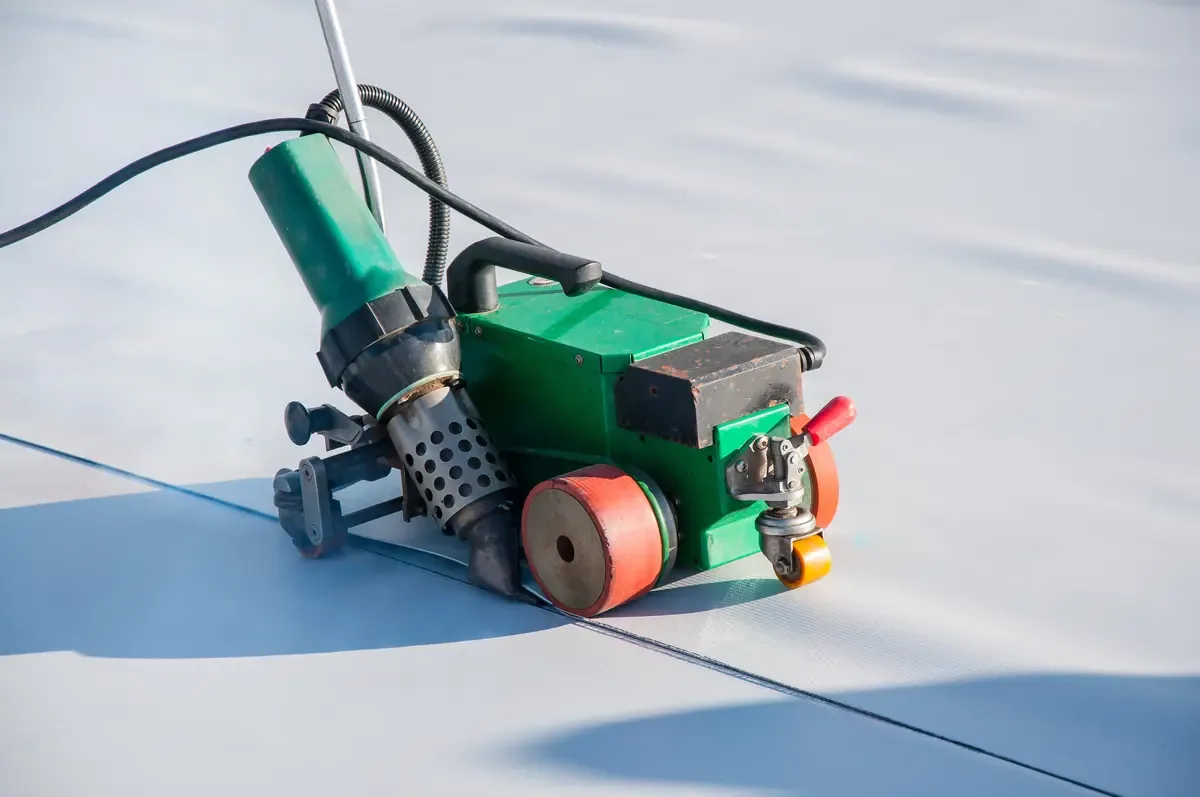
PVC sheet seams are heat welded, but the approved detail set controls seam preparation, welding procedure, accessory selection and quality verification. A new field membrane does not eliminate the need to detail inside and outside corners, pipe boots, curbs, wall transitions, edge metal and expansion joints. We identify those conditions during the survey and compare each one with the chosen manufacturer’s current details.
Different PVC products can call for distinct accessories. A fleece-backed product, a KEE-modified product and a smooth-backed membrane may use different bonding materials and substrate limits. PVC-coated metal or cover strips also need a compatible attachment and termination. The proposal should say which product and accessory are included, who supplies adjacent metal and which trade handles equipment removal.
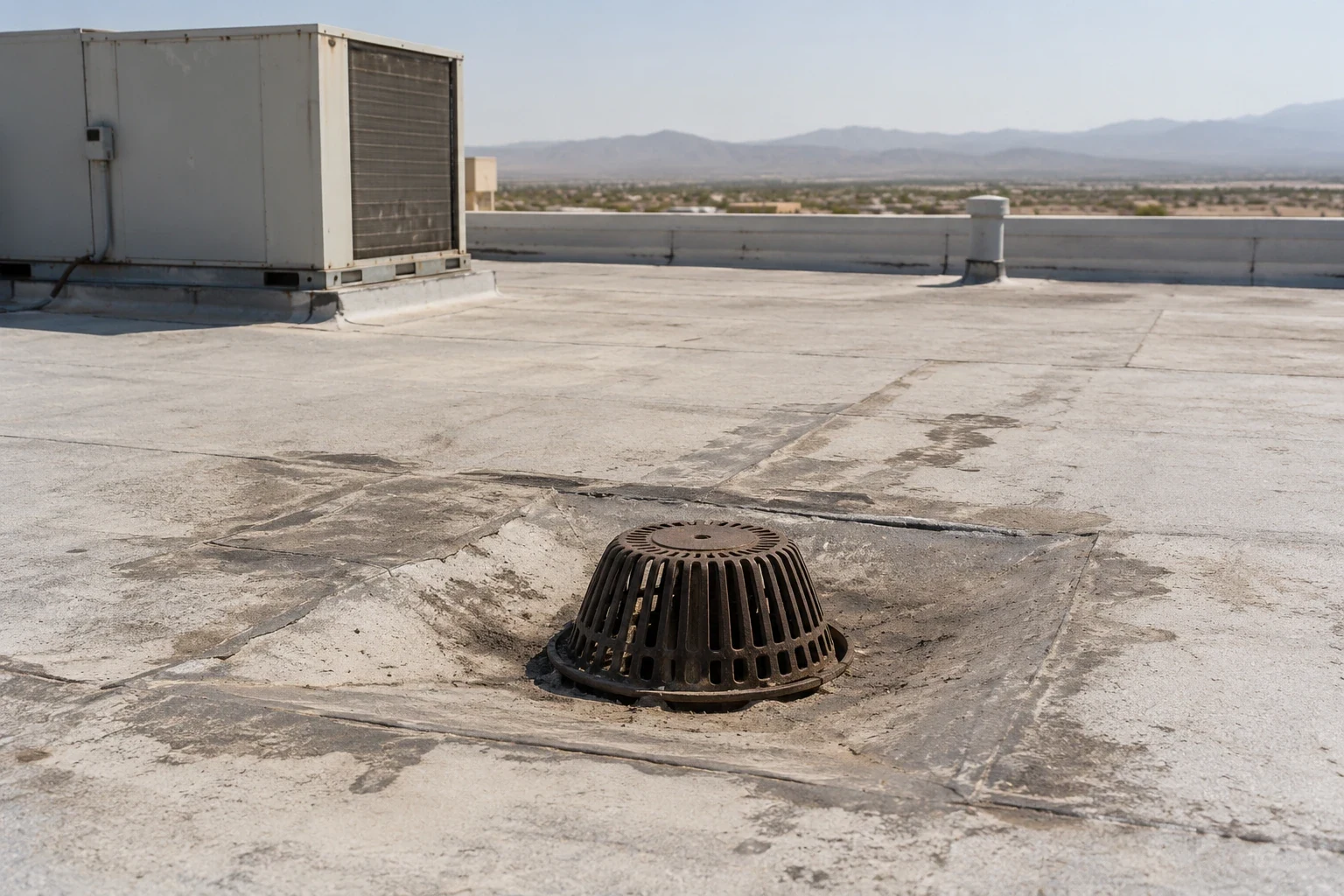
Roof drains and scuppers are especially important around kitchen discharge and service areas. The membrane connection, clamping ring, drain body and water path need to remain open and inspectable. Drain and scupper repair may be required before the membrane scope is closed. Walkway protection can be specified around service routes; it does not replace housekeeping or prevent all rooftop damage.
A heat weld needs consistent contact across the entire overlap. Set the welder using a test seam, then check the cooled sample before production work continues. At the roof, pay extra attention to inside corners, T-joints, curb corners, and patches that cross an existing seam. These intersections concentrate detail work and can be difficult to revisit after equipment or walk pads are reset. Record the seam tests and mark any repair so the completion walk can check the actual correction. The selected product instructions govern settings and test intervals; one temperature setting should not be assumed to fit different membrane thicknesses or ambient conditions.
Confirm whether recover or replacement is appropriate
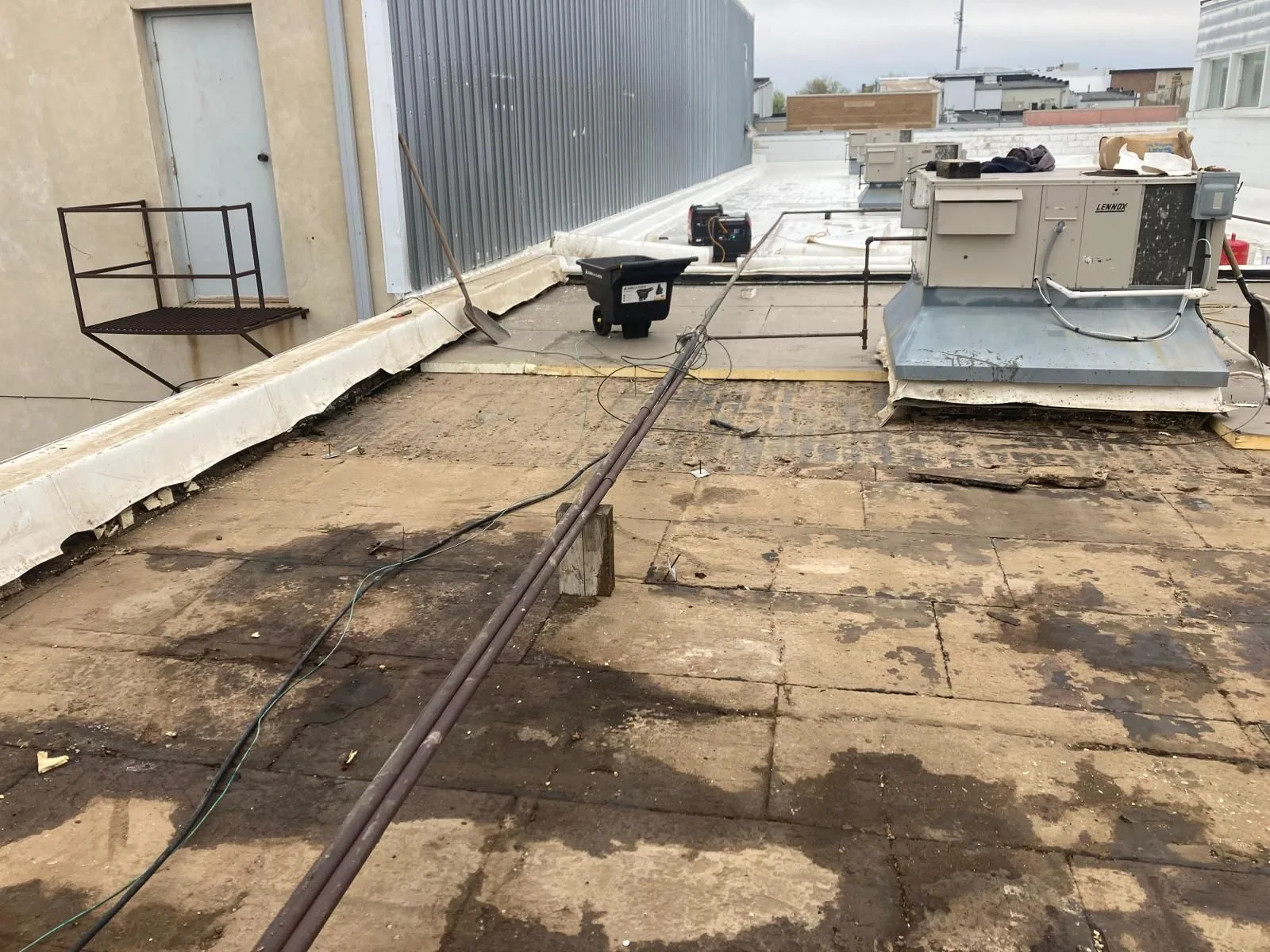
For reroofing, the choice between tear-off and recover depends on the existing layers, moisture, attachment, roof height, drainage, loading, code and product approval. An owner’s preference for less removal does not establish that a recover is allowed. We document what is visible and flag concealed conditions that need an authorized test opening or other assessment.
A recover may be an option when existing conditions and the approved system permit it. If contamination, wet insulation, loose membrane or recurring leaks remain unresolved, installing PVC above them can leave the cause in place. Compare recover or overlay work with a replacement assessment after reviewing field evidence and system requirements.
At a property with grease or chemical exposure, include cleanup and source-control responsibilities in the scope. Identify any affected accessories, walkway pads, equipment supports or metal transitions. If the owner only needs an investigation before deciding on replacement, a commercial roof inspection can document visible conditions and the next questions.
Prepare a PVC roofing scope for this building
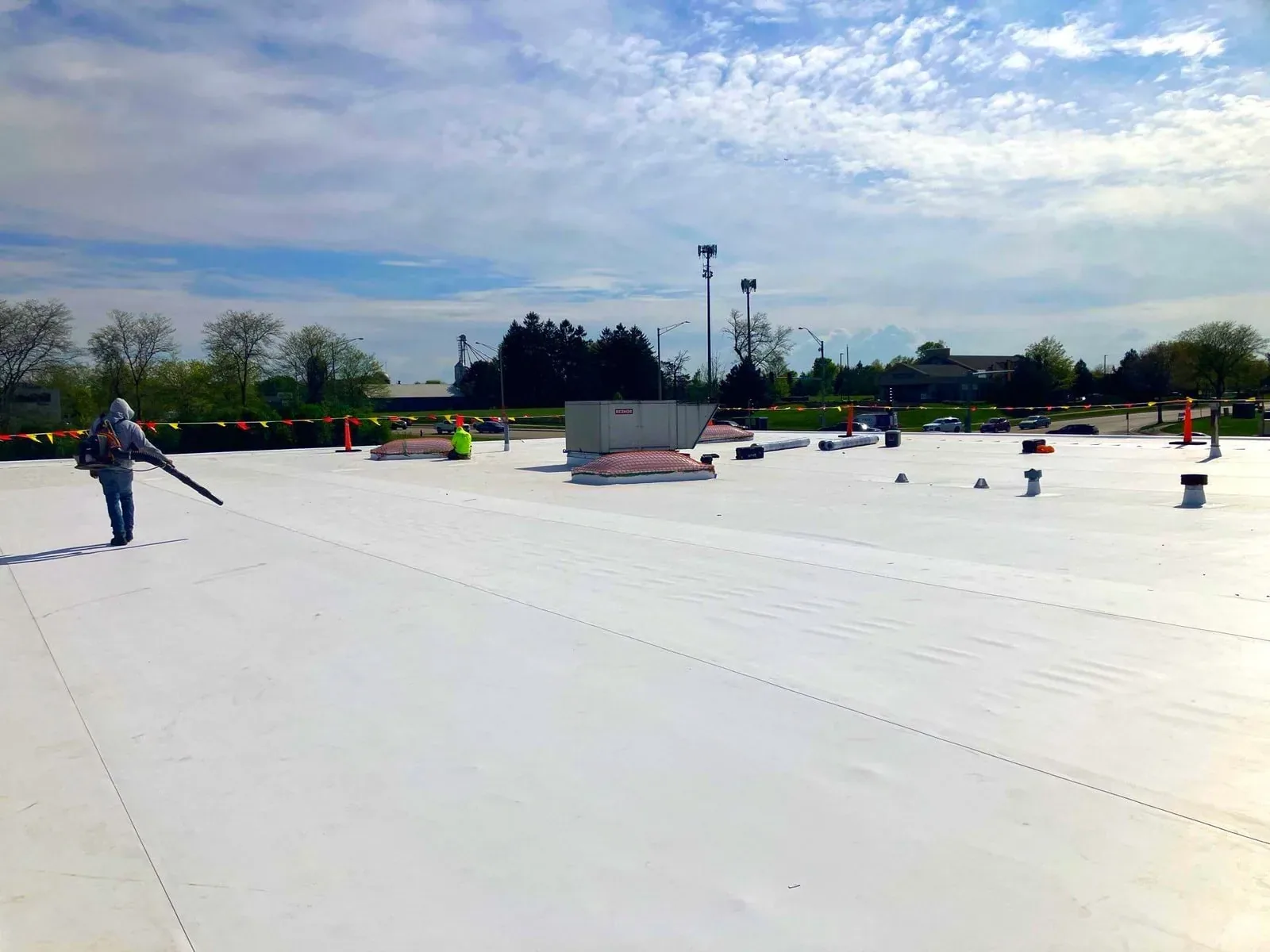
Scottsdale commercial roofs vary in use, access, equipment and exposure. We do not infer that a building needs PVC from its neighborhood or business category. The recommendation follows the actual roof, identified exposure, approved design and product data. Maintenance staff should also receive the final membrane and accessory list so that future repairs use compatible materials.
Provide the property address, current roof drawings, product or warranty records, equipment and exhaust layout, prior leak reports and any known chemical or grease exposure. We can inspect the affected areas, identify transition details and prepare a proposal that separates confirmed repair work from open design questions. For existing water entry, commercial roof leak repair can be scoped separately from a full PVC reroof.
Commercial Roofing Questions
Is PVC roofing resistant to grease and chemicals?
Some manufacturer products publish resistance claims for specified substances. Check the exact membrane and the material, concentration and exposure conditions before selecting a system.
Does a PVC membrane stop kitchen exhaust contamination?
The membrane may be part of the solution, but the exhaust source, discharge, cleaning and roof details also need review. A new sheet alone does not correct a recurring source.
Are PVC and KEE membranes interchangeable?
No. Product composition, accessory requirements and approvals vary. Use the exact system and details accepted for the project.
Can PVC roofing be installed over an existing roof?
Sometimes, when the existing roof and project requirements allow it. Moisture, deck, attachment, drainage and product approvals can require tear-off instead.
Review a Commercial PVC Roofing System
Share the property address, roof plan, equipment and exhaust layout, exposure concerns, leak history and existing roof records. We can inspect the roof and identify the PVC product and detail decisions to confirm before pricing.
Call or Email
Helpful to have ready:
The property address and a building contact
Where water or damage shows up inside
The roof type and age, if you know them
Photos and any past roof reports