Commercial Roofing in Phoenix, AZ
Home / Service Areas / Phoenix
Phoenix commercial roofing: plan repairs and replacement by building, roof zone, access needs, material compatibility, and an approved construction sequence.
A repair recommendation should tell you what will be opened, what remains in place, and what the crew can finish during the approved work window. Commercial Roofing Contractors Scottsdale serves Phoenix, AZ, across a broad city where employment districts and property uses differ from one part of the map to another. Phoenix includes major employment centers, industrial areas, and commerce parks. A roof at an occupied office, a production building, or a distribution facility still needs its own inspection and scope. We verify the assembly, affected section, access route, and approval contact before setting a price or date.
Start with the building and roof section
A useful request begins with the property name, building or wing, roof plan, and the room where water appeared. Phoenix employment maps distinguish locations such as Deer Valley, the Camelback Corridor, and South Central Industrial, but those labels do not establish a roof system or defect. They help place the property within a large service area. We compare the reported interior symptom with drains, laps, parapets, curbs, and prior repair limits, then photograph the roof section that can be reached. A staining pattern can travel along deck or framing, so we record what the walk confirms and what would require a test opening. The resulting commercial roof inspection gives the manager a measured starting point rather than a repair quantity inferred from a ceiling tile. If a site has separate buildings, assign each one its own location code and photo sequence before comparing conditions across the portfolio.
Make the repair boundary visible
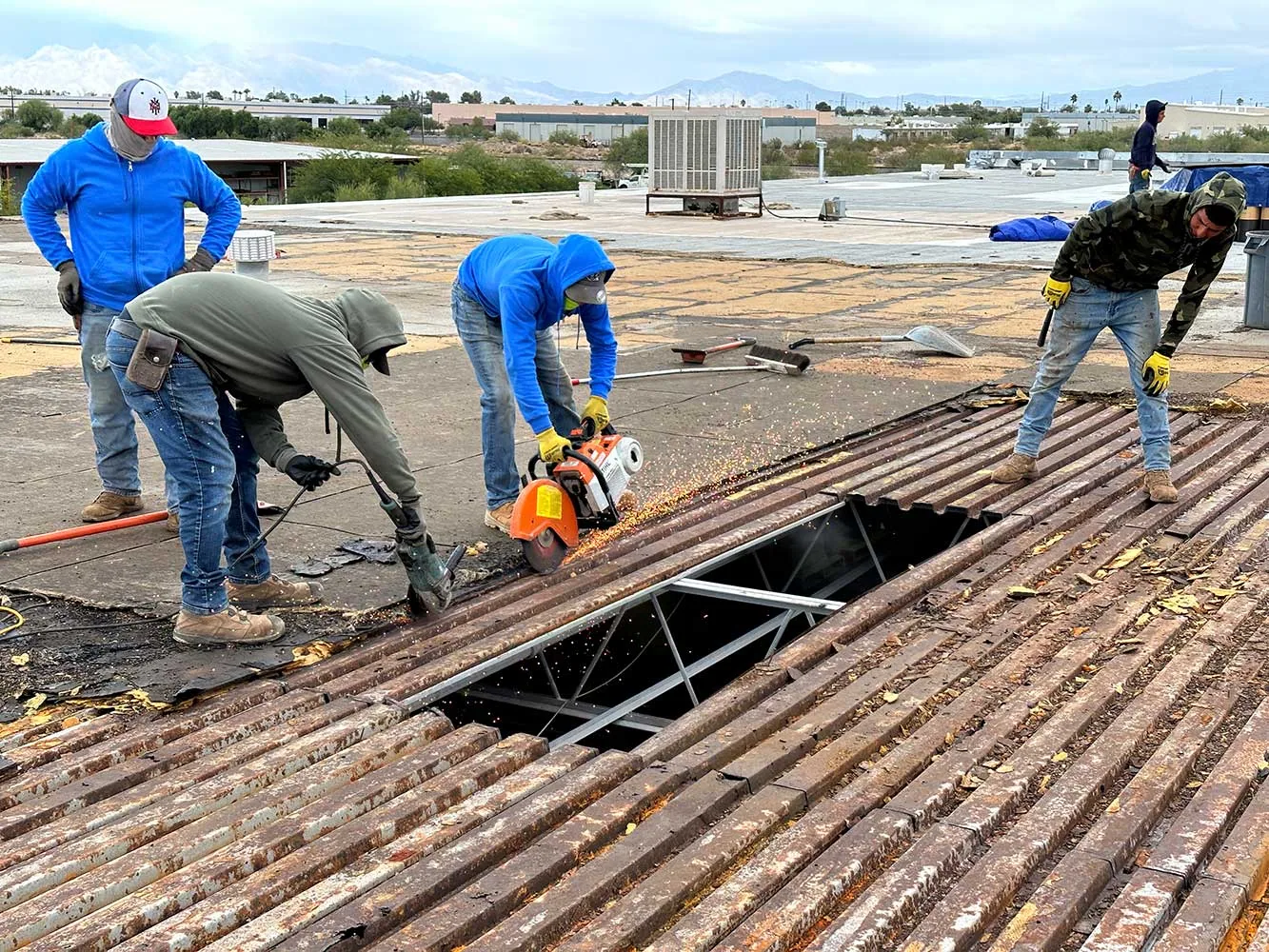
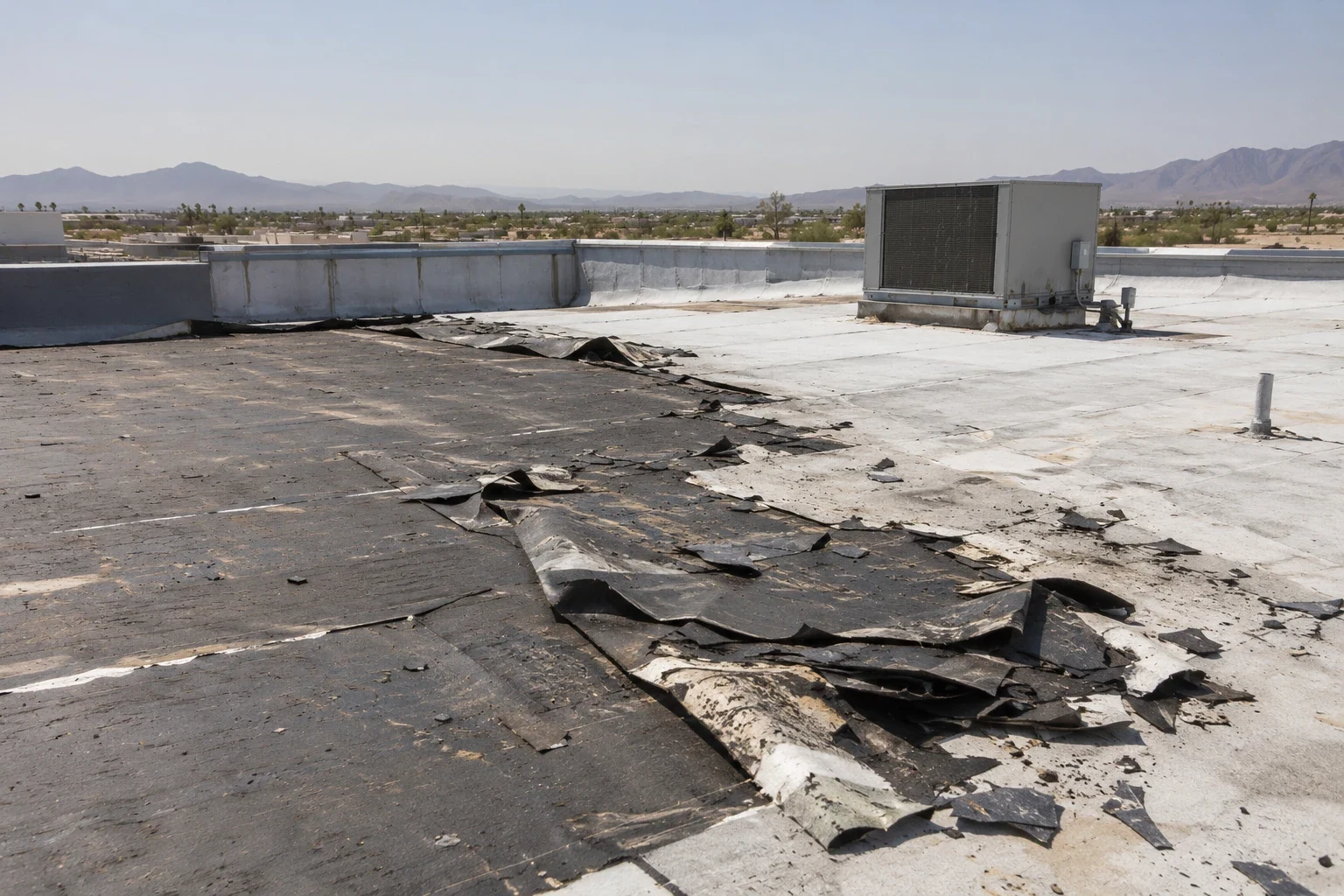
A seam, flashing corner, drain bowl, curb, or metal edge can each admit water, but the correction differs by material and movement. We identify the installed system where records and field evidence agree. A thermoplastic patch needs clean, weldable membrane; a metal panel repair depends on its seam geometry, fasteners, and transition details. For a localized defect, the crew removes loose or incompatible material, prepares the surface, and stops at sound material that accepts a tie-in. When the approved boundary exposes wet insulation or damaged deck, we protect the opening and measure the added area before asking the owner to expand the work. The repair scope separates confirmed labor and materials from conditions that remain concealed. This lets a Phoenix manager compare a bounded correction with a larger option without treating the first leak report as proof that every roof section needs the same work.
Compare repair, recover, and replacement
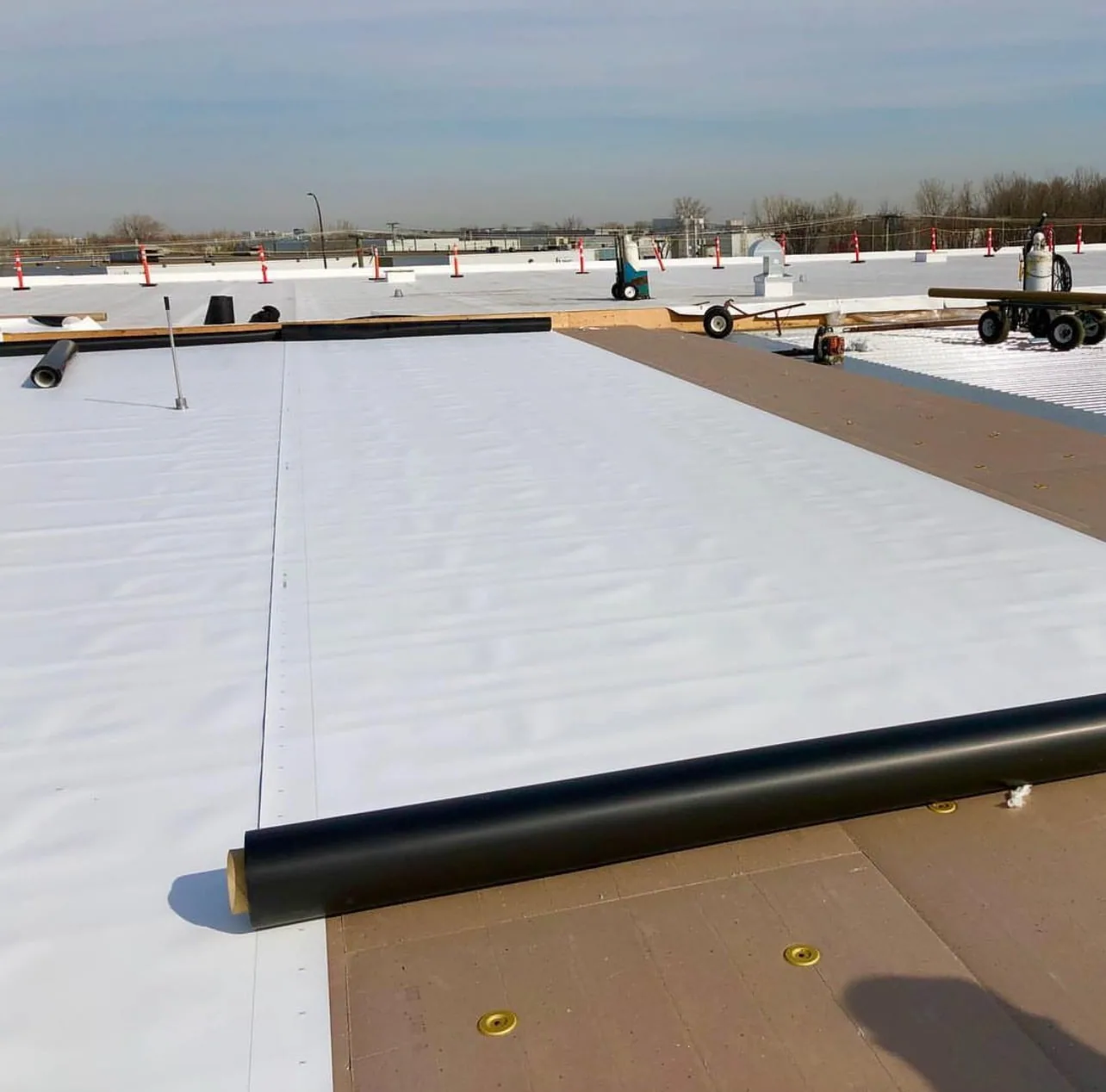
A roof with repeated leaks may still have isolated penetrations, while a broad moisture pattern can change the decision. We look at seam condition, attachment, insulation, deck, edge heights, drainage, and the number of transitions that would need to remain in service. A recover only makes sense when the existing layers and substrate can support another assembly and when drains and curbs can retain working clearance. A replacement plan identifies removal limits, test results, new insulation, attachment, flashing, metal, and the point where each shift closes. Compare a TPO roof system with other options only after the field condition is established. For owners comparing a localized repair with full replacement work, we state the evidence behind each alternative and price separate quantities instead of hiding an uncertain allowance inside one total.
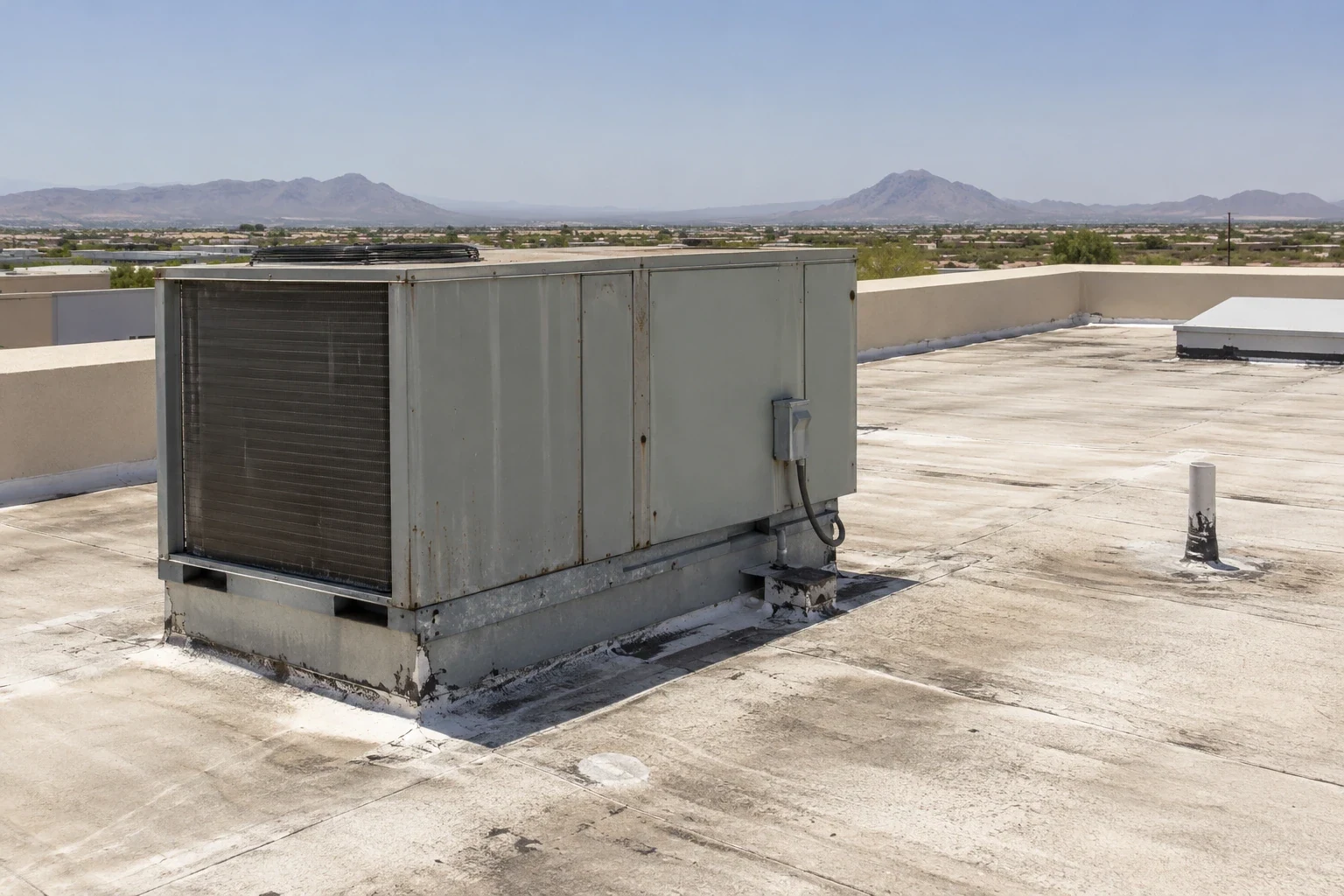
On a larger roof, the inspection plan should distinguish the area that can be walked from sections that need a lift, escort, or fall-protection setup. Tell us if a hatch is locked, a ladder is shared with another trade, or a tenant controls the route. We can then identify the access dependency before the crew arrives. The same preparation applies to material staging: note the receiving entrance, loading restrictions, and any hours when a truck cannot wait. These details do not decide whether a roof needs repair, but they help keep an approved repair from losing time once the surface is ready.
Protect people, equipment, and deliveries
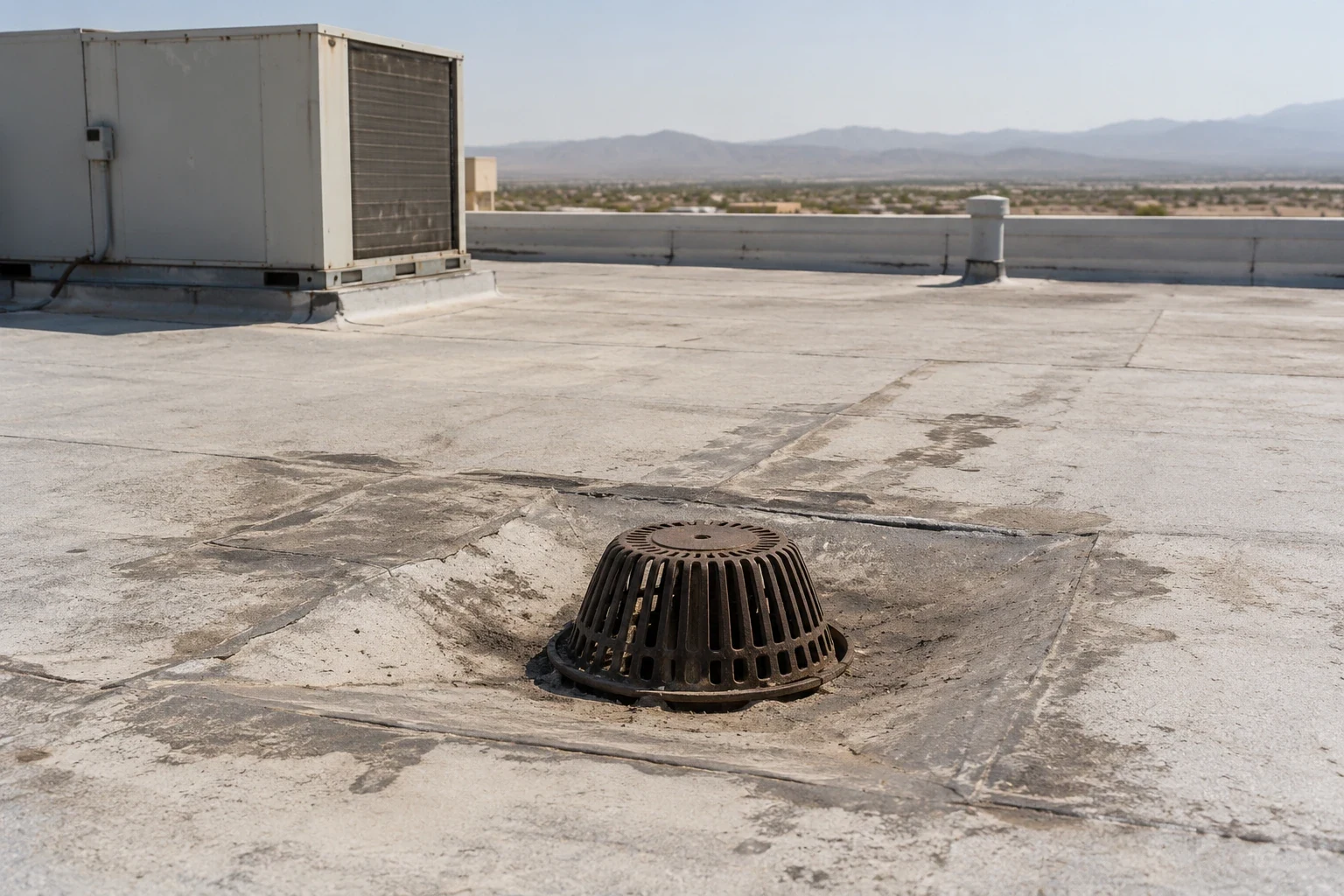
Work sequencing matters when a building stays open. Confirm roof access, loading doors, lift placement, interior protection, and the person who can approve a change while the crew is on site. A distribution operation may have truck movements throughout the shift; an office may need quiet near conference rooms or a clear public entrance. The property contact identifies which routes remain active and whether rooftop equipment can be isolated. We list material deliveries and debris handling by roof section, then choose a daily stopping point that can be secured if weather interrupts the work. If a drain or overflow needs correction, the drain and scupper work gets its own preparation and closeout line. For roofs across the northern part of the service radius, a Peoria property can be scheduled on the same regional trip, while its inspection record and approval remain separate.
Owners should also gather the last roof invoice, warranty record, and any leak log before comparing bids. A product name in an old file is a useful lead, but field seams and repair layers still need confirmation. We record where the available documents agree with the roof and flag discrepancies that may affect compatibility or warranty coordination. When a building has several roof zones completed in different years, the age and assembly can change by wing; one blanket material assumption can create avoidable change orders. The proposal should state which zones were reviewed and what remains unverified.
Set a realistic work window
Material instructions, roof temperature, wind, and the forecast shape the work period on the day of installation. We confirm the acceptable conditions for the selected adhesive, coating, or weld process instead of assuming a calendar date does not ensure a usable surface. A project that opens several roof zones needs enough crew time and material on site to reach a planned dry-in boundary. The schedule also accounts for testing, equipment coordination, and any owner decision triggered by concealed conditions. If a storm or access hold changes the order, the manager receives the affected roof section, temporary protection status, and the next release condition. This is especially useful on a multi-building assignment where one property may be ready while another still needs an escort or operating window. Phoenix-area regional traffic can also affect deliveries, but the actual route and receiving hours must come from the property contact rather than a broad map assumption.
Leave a record that guides the next decision
Closeout identifies the building, roof area, observed system, repair materials, photographs, drainage findings, and any excluded section. A manager should be able to compare the completed tie-in with the original repair boundary and understand what remains open. If additional testing is recommended, state what result would change the repair quantity or replacement choice. Keep roof plans, service tickets, and closeout images under the same asset name so a later leak report can be tied to the correct structure. For a portfolio with work in both Phoenix and Tempe, keep the scheduling overview regional but preserve each city’s property records and scope separately. We can review the inspection, explain the options, and give the approval contact a sequence that is ready to schedule.
Commercial Roofing Questions
What should I include with a Phoenix roof request?
Send the building or asset name, roof plan, reported room or equipment, prior repair record, access contact, and available work hours. We use those details to define the inspection area.
Can one inspection cover several buildings?
Yes, if each building and roof section is identified separately. The report keeps photographs, findings, quantities, and open items attached to the correct structure.
When does a localized repair become a replacement review?
Repeated failures, moisture across several sections, weak attachment, or repairs that cannot reach stable material can support a wider review. Testing helps show which condition changes the scope.
Can crews work while operations continue?
Often, with agreed roof boundaries, interior protection, clear access routes, and a daily closure plan. The property contact identifies areas that must remain available.
How do you handle an unexpected deck condition?
We secure the open area, document the affected quantity, and submit the added work for approval before expanding removal beyond the original boundary.
Plan the next roof decision
Share the roof plan, reported issue, access window, and approval contact. We will define the examination and work needed before setting a construction date.
Call or Email
Helpful to have ready:
The property address and a building contact
Where water or damage shows up inside
The roof type and age, if you know them
Photos and any past roof reports