
Commercial Roofing in El Mirage, AZ
Home / Service Areas / El Mirage
Commercial roofing in El Mirage for commerce, industry, manufacturing, and business properties. Plan inspections, repairs, replacement, and site logistics.
El Mirage’s community profile identifies a commerce and industry park and the Northern Parkway transportation corridor. It lists construction, manufacturing, mining, fabrication, and agriculture among local employment sectors, while the city business office supports commercial growth and identifies available land and interstate access as development resources. That context may orient a property request but does not establish a roof’s assembly, size, or condition. We inspect the actual building, confirm the reported issue, and plan around the operating rules supplied by its representative.
Verify site entry and roof access
A useful request names the building, roof zone, interior symptom, service history, and contact who can arrange access. If a property has more than one roof section, label each separately to avoid assigning a repair across different assemblies. We check roof laps, drainage components, mechanical penetrations, wall junctions, and perimeter terminations where access allows. The inspection record identifies findings and any area requiring a test or follow-up access. A manager with work in Surprise or Glendale can coordinate a regional schedule while keeping the El Mirage asset file separate.
A pre-visit checklist can include the roof key or hatch procedure, security check-in, required escort, fall protection rules, and any area unavailable during operations. We verify the current roof configuration against plans and prior tickets. If a commerce or industrial property has multiple sections, note separate elevations and drainage paths. These details help ensure that the findings apply to the intended building and that a follow-up test is scheduled only where needed.
Measure each repair separately
For a repair, show the defect and proposed limit on the roof plan. We measure the seam, penetration, flashing, drain, or membrane section, then confirm that the surface can accept the selected material. The crew prepares the tie-in and documents the finished detail. If removal reveals moisture or damaged deck, secure the opening and report its measured extent before requesting added authorization. The repair scope says what will be completed, where it stops, and how concealed conditions are handled. This gives the property manager a clear basis to approve the known problem without accepting an unbounded quantity.
A service record should distinguish the suspected entry point from the interior symptom. For each defect, identify the roof-plan location, existing material, preparation needed, and compatible repair. If the original material cannot be confirmed, test or review manufacturer requirements before applying a patch. The owner receives the observed quantity and a clear stop point. Additional removal should wait for a measured condition report and approval, especially if it could interrupt active fabrication or storage.
Check closure before the next shift
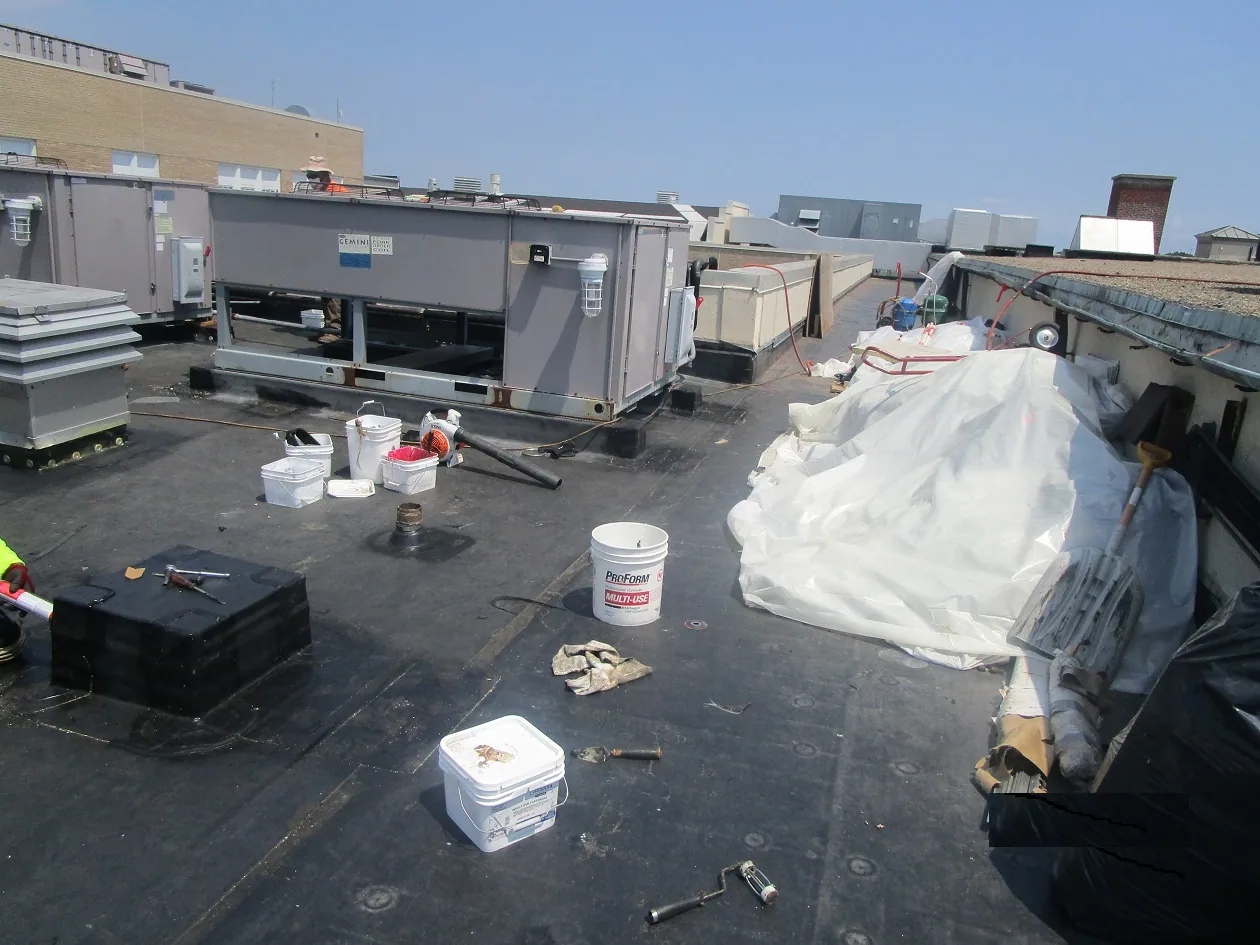
A commercial or industrial property may need delivery coordination, equipment clearance, or active vehicle routes during roof work. The facility contact should confirm receiving hours, check-in procedures, loading areas, lift access, debris handling, and whether a production process must continue. We phase work by roof section and agree how each opening will be secured at the end of a shift. Where equipment isolation or movement is needed, assign it to a named trade before starting curb work. An occupied-building plan sets access and interior-protection expectations; local employment categories do not substitute for site-specific instructions.
Vehicle, loading, and equipment movements can influence where a crew sets up and how debris leaves the roof. Confirm truck approach, receiving hours, material staging, lift footprint, and whether a production area may be affected by vibration or dust. The person managing the site can also identify any emergency lane or pedestrian route that must remain open. We use those instructions to assign a roof zone and daily closure method before materials are delivered.
Agree on the workday closeout before removal begins. Identify who verifies the exposed area is secure, how photos are sent, and whether another shift can resume without a new access release.
Separate testing from replacement
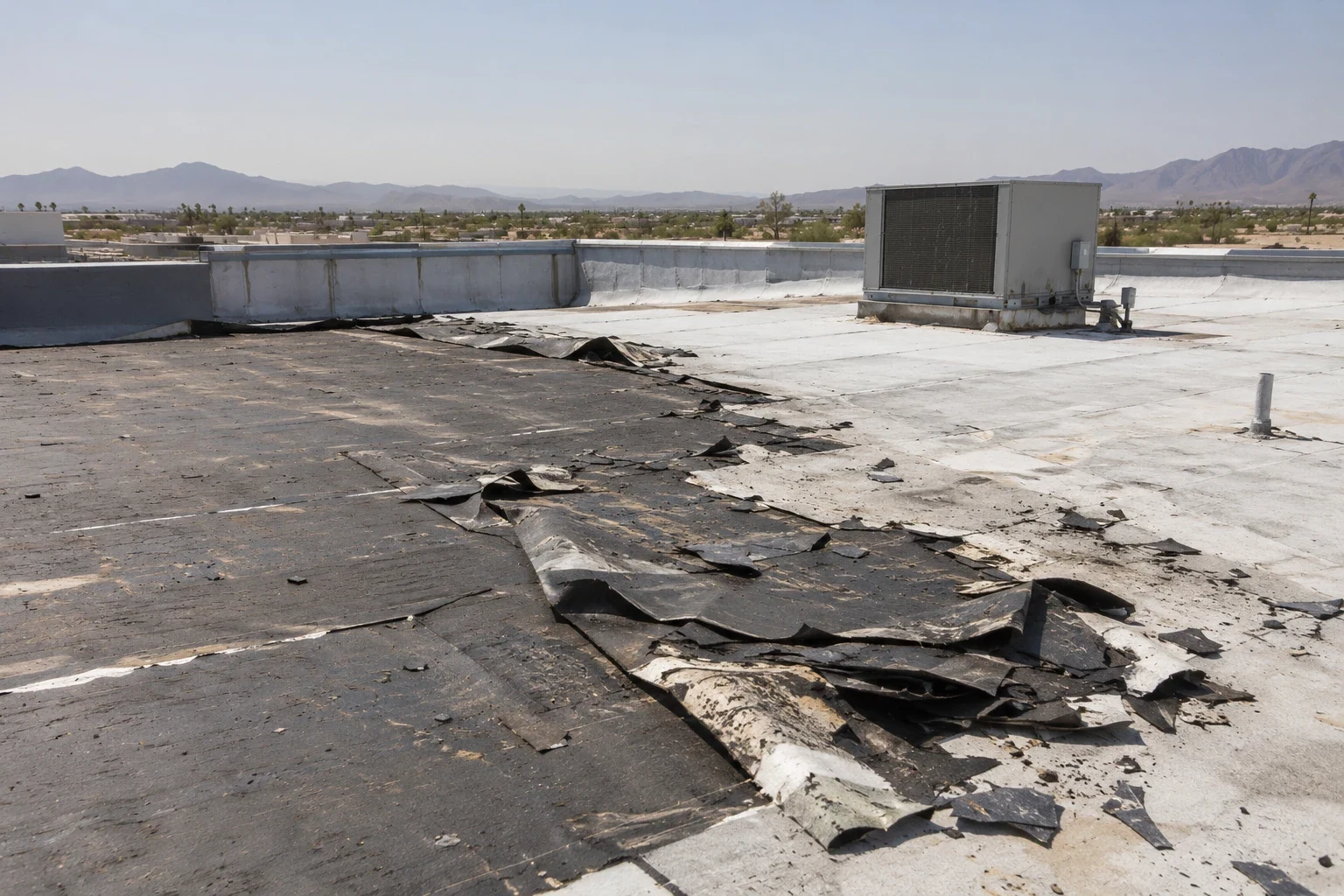
The choice between repair, recover, and replacement depends on moisture, attachment, insulation, deck, drainage, edge conditions, and history. Repeated defects or an unstable assembly can justify testing before a large commitment. Recover is considered only if retained layers can support a new system and transitions remain at useful heights. A replacement proposal defines removal limits, new components, flashing, metal, and daily dry-in. A standing-seam metal system or other assembly must suit the building and design details; it is not selected from a general industrial designation.
When a replacement is considered, separate field membrane from edge, drain, curb, and penetration work. The estimate should state if insulation testing, deck repair, metal replacement, or equipment reset is included. If a test opening will inform the choice, identify who observes it, what result matters, and how it is temporarily sealed. These details allow a business owner to compare a staged decision with an immediate full project using known boundaries.
Name security and escort contacts
Confirm the roof route, safety orientation, staging location, delivery timing, and approval contact before crews mobilize. The site contact should be available to review a concealed condition and identify which operational areas cannot be interrupted. We plan an achievable section for each shift and define the closure point in advance. If weather or receiving delays change the sequence, communicate which roof area is protected, which task remains open, and what needs to happen before work resumes. This makes a schedule change understandable to facility teams and keeps authorization tied to the original repair boundary.
Confirm the check-in contact and backup before crew arrival. If site security or an equipment escort controls the roof route, include that requirement with the work order.
Label the closeout by section
Closeout should identify the asset, roof-zone reference, photographs, materials, quantities, test results, exclusions, and any next maintenance step. State whether a trade handoff or access condition remains open. The manager can then compare future service calls to the actual work rather than rely on a general note that the roof was patched. A regional trip near Avondale’s Health-Tech Corridor or Phoenix can be scheduled efficiently without combining records. Share the roof plan, access rules, and prior tickets; we will state what was confirmed and which option fits the evidence. If testing was not part of the approved work, state that plainly so the report cannot be mistaken for a full moisture survey. Save this closeout with the latest roof drawing.
Include a site plan reference and a clear label for each finished roof section. Attach before-and-after photographs, material and quantity notes, and any exclusion or equipment handoff. If another area remains pending, identify the access or operational condition that kept it out of scope. This lets a future facilities contact plan the next visit without confusing a completed repair with a nearby open condition.
Commercial Roofing Questions
What broad local settings does El Mirage identify?
Its community profile identifies a commerce and industry park, Northern Parkway corridor, and several employment sectors including manufacturing and fabrication.
Does a commerce park name make the request site-wide?
No. The work is scoped to the actual building and roof section identified by the property contact.
What helps schedule an industrial roof inspection?
Provide check-in requirements, receiving hours, roof access, loading routes, equipment dependencies, and the onsite contact.
Can several roof sections share one repair proposal?
They can be listed together if each section has a measured boundary and separate findings. Do not assume one repair detail covers every area.
What conditions can prompt replacement review?
Broad moisture, recurring failure, attachment issues, or deteriorated transitions may justify testing and a replacement comparison.

Plan the next roof decision
Share the roof plan, reported issue, access window, and approval contact. We will define the examination and work needed before setting a construction date.
Call or Email
Helpful to have ready:
The property address and a building contact
Where water or damage shows up inside
The roof type and age, if you know them
Photos and any past roof reports