
Roof Capital Planning in Scottsdale, AZ
Home / Roofing Capabilities / Roof Capital Planning
Scottsdale roof capital planning compares removal, retained layers and phased work. Review project amounts with the findings and dependencies behind them.
An allowance for new membrane can leave a roof project short of the work it actually requires. Removal, wet insulation, perimeter connections and equipment preparation can each change the amount you need to approve. Roof capital planning starts by identifying those obligations, then comparing the construction choices available. We help the property manager carry the roofing decision from inspection into an understandable project amount and a practical work window.
Tempe’s adopted character-area plans guide land use across distinct parts of the city. A capital plan that includes Scottsdale and Tempe still needs an asset-by-asset roof record. We compare the assembly, drainage, edge metal, and mechanical transitions actually found before putting a renewal allowance forward. For this building, the decision record separates present repair work from insulation or deck questions that could change the project. That lets the property manager keep a funded repair, a later replacement phase, and a still-unpriced investigation in separate approval lines. We identify the information that would change the amount and state which roof area can be completed in each work window. Mesa employment centers include Downtown Mesa and Falcon Field, where portfolios can span different building uses and roof assemblies.
An estimate needs an assembly to price
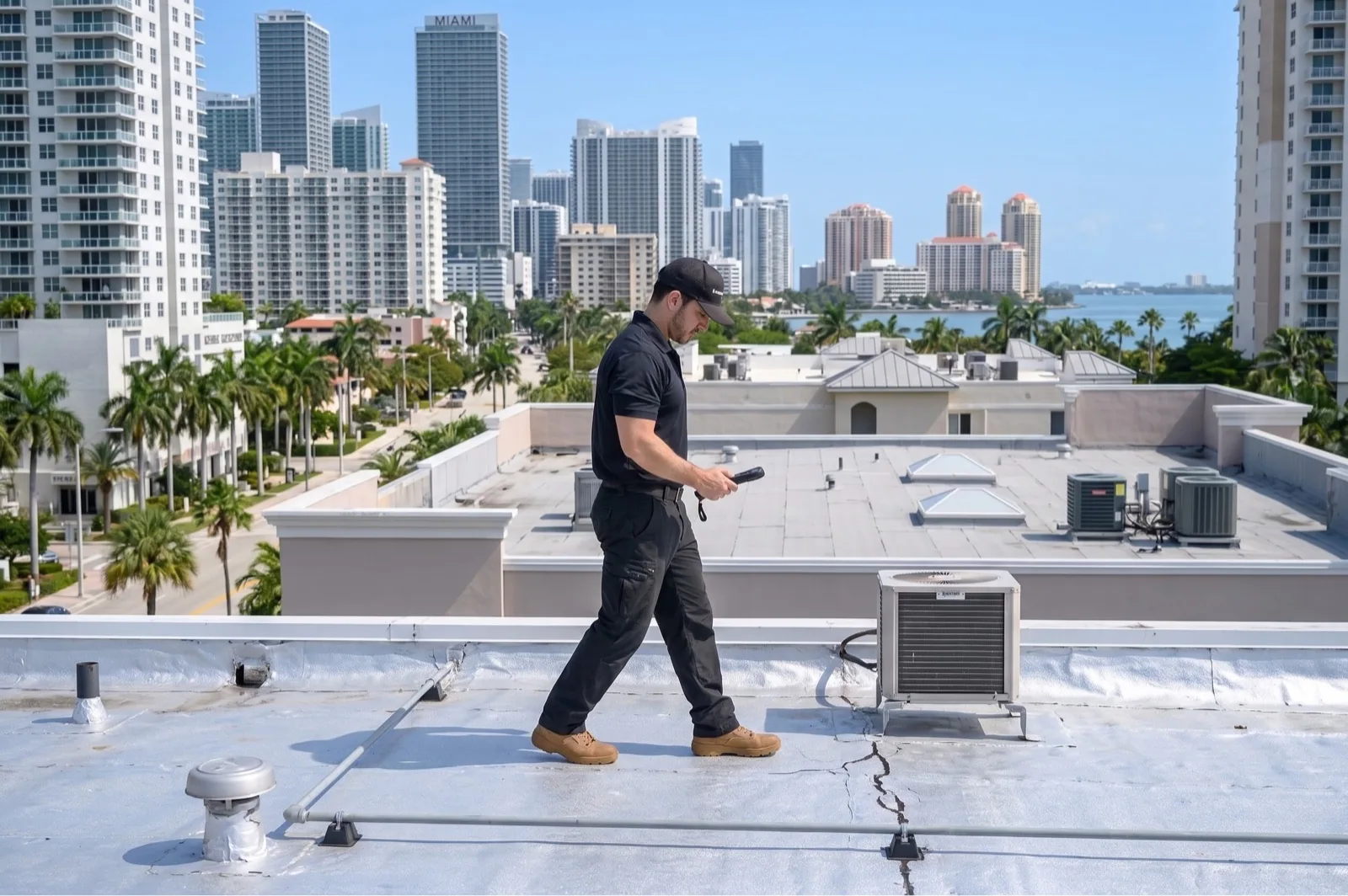
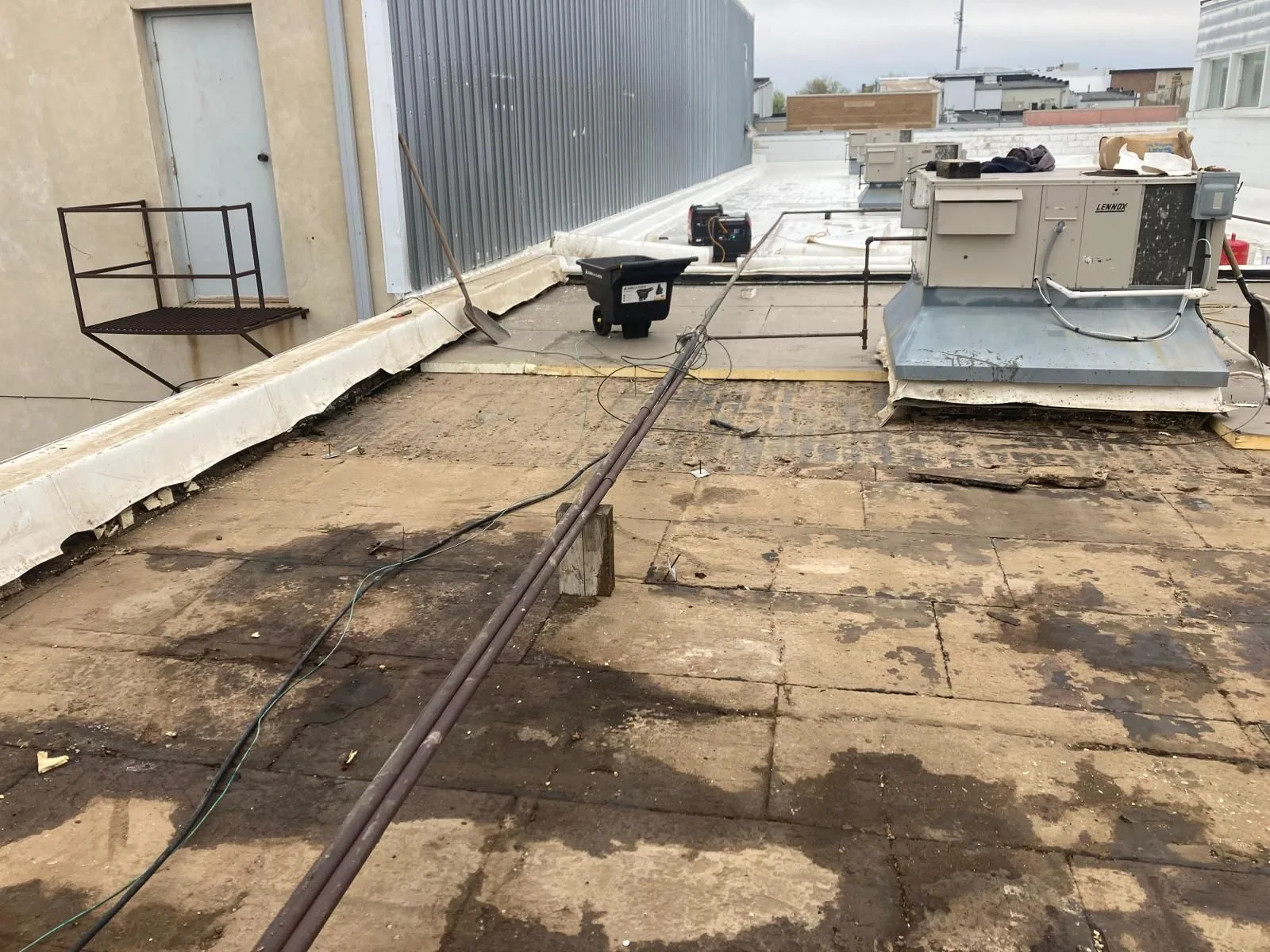
Describe the existing covering and the roof areas being considered before assigning a replacement quantity. We examine accessible seams, transitions, drainage and surface distress, with available drawings used to understand earlier changes. A sound visible membrane does not settle the condition of concealed insulation or supporting deck. Where that uncertainty controls retention, we identify the investigation needed. The property manager can arrange that step with a stated purpose and include restoration of its opening in the requested work.
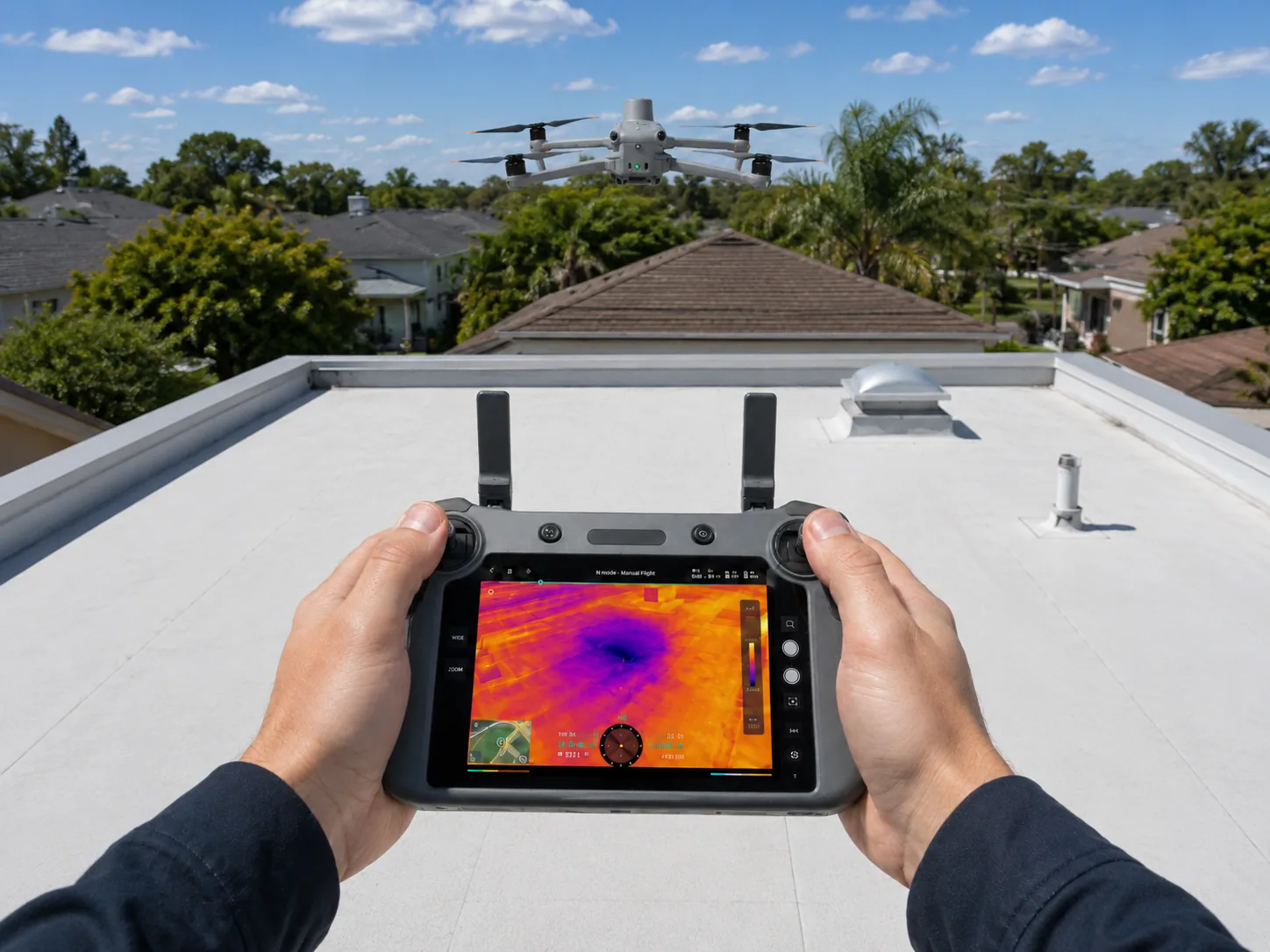
An infrared moisture survey used to investigate suspected wet areas can help direct further examination under suitable conditions. Its indications still need interpretation and appropriate confirmation; they do not establish every concealed layer by themselves. We explain how the findings affect the proposed removal boundary. Keep that boundary visible in the amount being reviewed. Pricing a retained assembly and discovering widespread unsuitable material after opening can create a different project from the one initially approved.
Different options carry different obligations
A local correction may address a failed seam where the surrounding membrane remains suitable for the required connection. It can have a much smaller opening than a replacement, but its purpose needs to be understood. We describe the repaired defect and any remaining concern. Several isolated corrections do not automatically answer extensive deterioration or concealed moisture. The comparison should explain the construction each option restores and the conditions that would make a broader approach necessary.
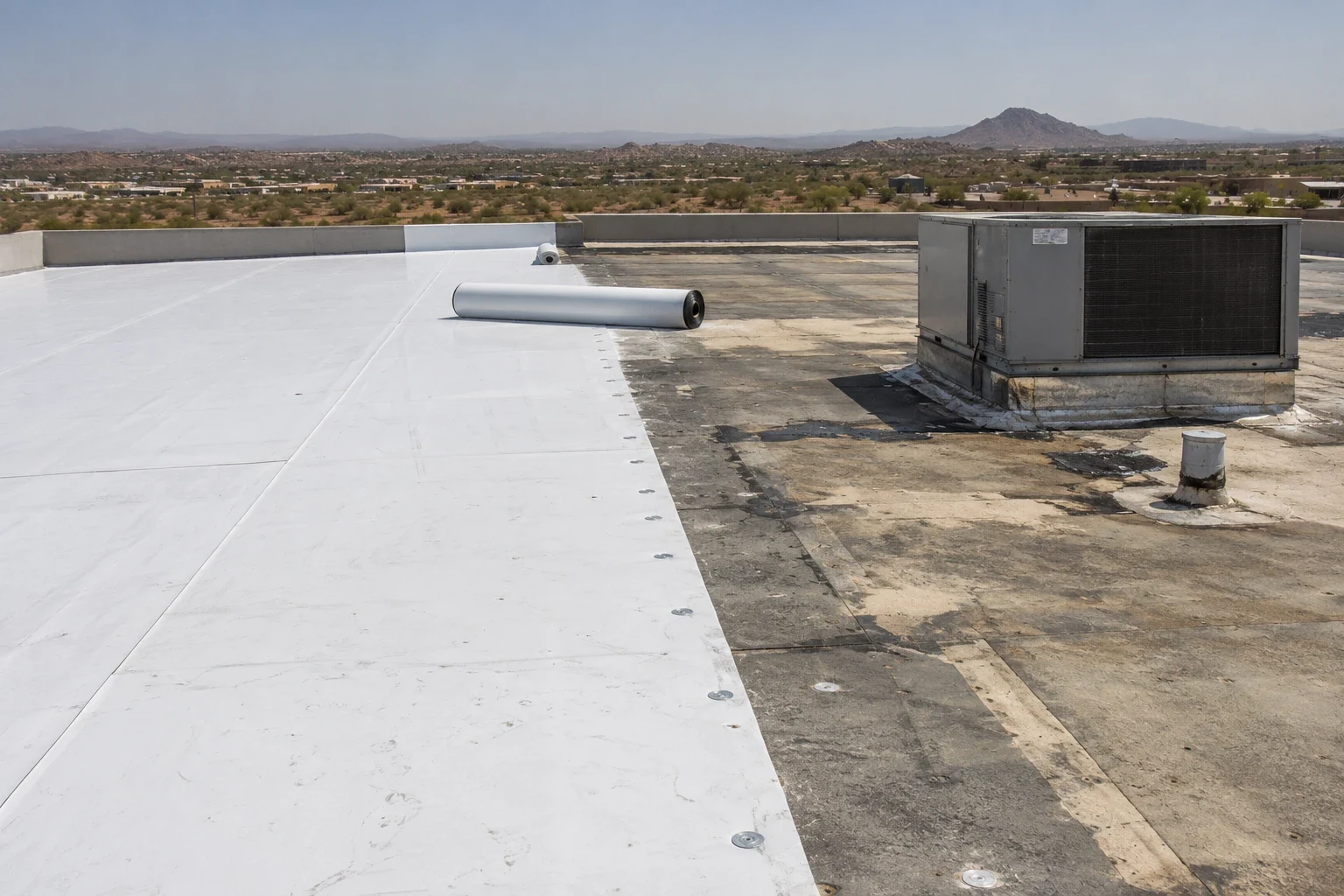
Roof recover work with retained layers assessed beforehand includes supporting and connection decisions as well as a new covering. Establish suitability of the existing construction, necessary corrections and applicable project requirements before choosing retention. Removal and replacement expose different material and need their own protection arrangements. We describe the material left in place under each approach. You can then compare the amounts with the associated work rather than assume that similar surface coverage means similar construction.
The roof amount includes more than the field sheet
A perimeter transition can need new blocking or another supporting correction before replacement edge metal is attached. An equipment curb can require work by its service representative before the flashing detail is formed. Locate these requirements during assessment and identify who will complete them. We put our roofing connection and preparation into the proposed work. A related operation performed by someone else should have its responsibility identified so the property manager can obtain the necessary approval and arrange its timing.
Roof condition reports with the supporting findings located give the approval contact a reason for these allowances. Include drainage corrections where the examined condition calls for them, rather than presume a new membrane will eliminate standing water. Review insulation and cover-board requirements with the assembly being proposed. Access equipment, removal handling and occupied-area protection also need to be understood. The project amount should describe the tasks needed to reach the finished roof detail, including the supporting work beneath it.
Phasing changes the construction boundary
A partial replacement must connect to roofing that remains. That junction can require interim protection and later completion as another phase proceeds. We describe the stopping position, attachment and drainage arrangement involved, with suitable material details for the assembly. Splitting an amount across work windows does not remove these obligations. Some handling or mobilization may recur, and a temporary connection may need to be opened again. The property manager should see that work in the phase comparison.
For requested work near Tempe service area, identify the actual building and the areas that need to remain usable. Supply its delivery and access instructions before the phase arrangement is agreed. We relate the removal footprint and planned closure to those requirements. Component preparation, available staging and material delivery can limit the useful size of a phase. A smaller work area is practical only when its boundary can be closed and the next operation can connect to it appropriately.
An uncertain quantity needs a decision process
Deck deterioration exposed during removal can change the amount and sequence. Before work begins, agree on how the condition will be located, photographed and explained to the approval contact. We describe the additional correction and revised boundary before that construction is concealed. Keep the suitable interim roof state clear while authorization is arranged. A contingency should relate to the uncertainty identified during assessment. It is easier to evaluate a change tied to a found condition than an unexplained adjustment to a broad project figure.
Roof asset management that retains earlier repair decisions can supply useful history for this review. An older invoice may locate a previous moisture concern or show an alteration that needs examination. We relate that information to the roof encountered now. Separate known work from investigation still needed. The capital request can then state which quantity is established, where uncertainty remains and what action resolves it, without treating an estimated amount as evidence that concealed construction is suitable.
The approval package should support scheduling
Present the examined condition, selected assembly, removal boundaries and related preparations together. We identify the roofing materials proposed and the operations needed for their installation. Review availability when the work window is arranged, including any component item that must arrive before flashing can finish. The property manager can align the approval contact, building representative and other required people against that sequence. At completion, preserve installed material information, located photographs and authorized changes so the investment decision remains understandable with the finished construction.
Commercial Roofing Questions
What should sit beside a replacement allowance?
Include the assessed assembly, removal boundary and supporting corrections. Locate unresolved quantities and explain the investigation needed to settle them.
Can a coating amount be compared directly with replacement?
Their construction obligations differ. We describe preparation, retained layers and the defect each approach addresses before their amounts are compared.
Why can two phases require extra connecting work?
The new portion needs a suitable junction with the roof remaining. Interim protection and later completion of that boundary belong in the phase amount.
How do concealed findings enter the approval process?
We locate the condition and explain the added correction, revised quantity and timing effect. Agree on the responsible approval contact before removal starts.
Which delay should be considered before a work window is chosen?
A required component correction or unavailable selected material can hold the roofing operation. Review those dependencies while the amount and sequence are being developed.


Set the roof amount against the construction required
Share your property address, available roof records and proposed investment timing. We can assess the options and explain their removal, preparation and scheduling needs.
Call or Email
Helpful to have ready:
The property address and a building contact
Where water or damage shows up inside
The roof type and age, if you know them
Photos and any past roof reports