
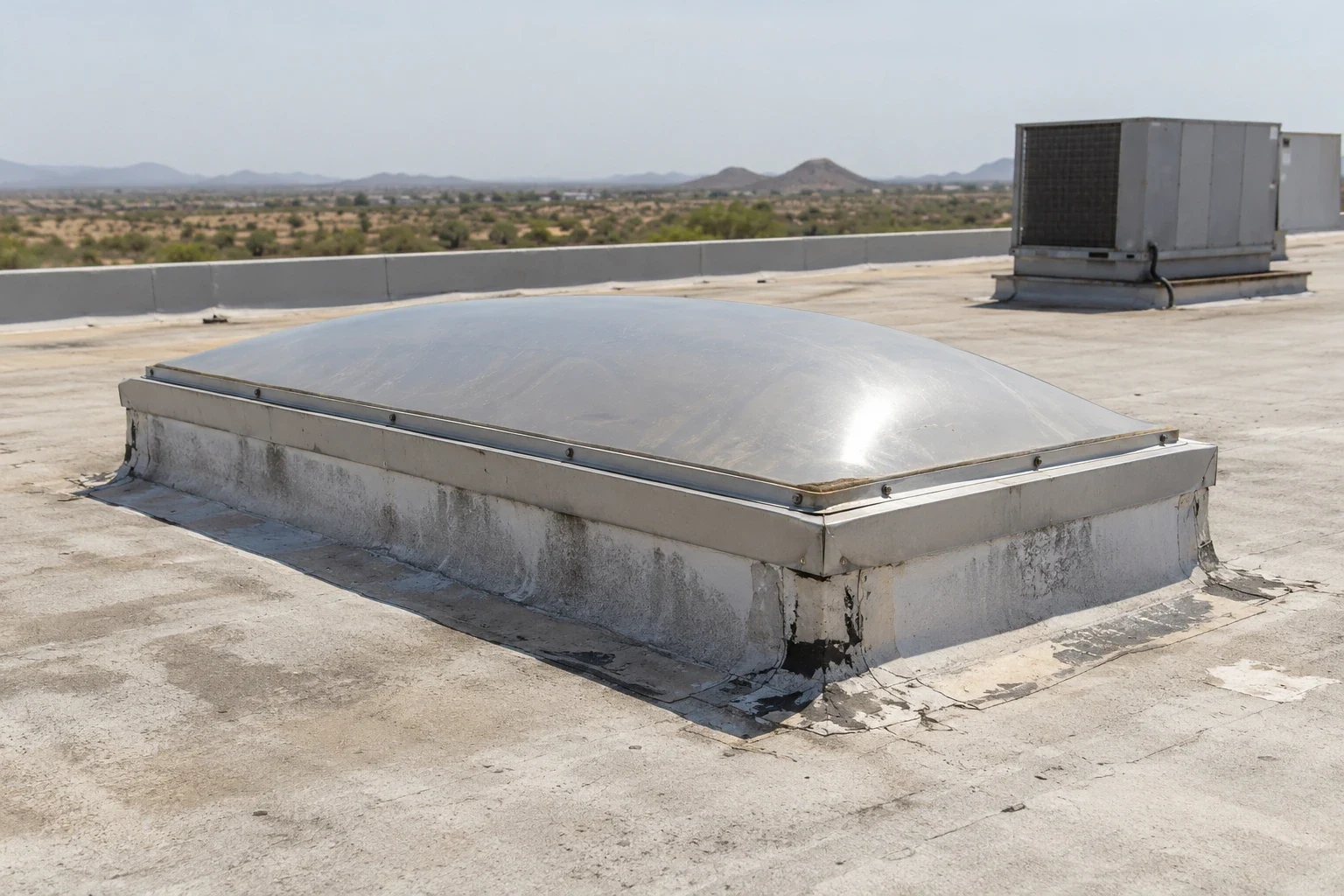
Skylight and Penetration Flashing in Scottsdale, AZ
Home / Commercial Roofing Services / Skylight and Penetration Flashing
Skylight and penetration flashing repair in Scottsdale distinguishes roofing connections from damaged equipment, curbs and glazing before removal begins.
Removing a failed skylight curb flashing is easier to schedule once the curb and glazing have been examined separately. Skylight and penetration flashing work in Scottsdale, AZ requires a repair boundary that identifies the roof connection we are reconstructing and any equipment defect another representative must correct. A leak beneath a skylight does not establish that its membrane flashing is the only damaged component. Opening the connection before those dependencies are understood can prolong the interruption.
For an office or retail property in Old Town Scottsdale, tell us which room is affected and which roof opening appears involved. We inspect the requested construction before assigning the repair. Some penetrations can receive a contained flashing replacement; others have loose supports or deteriorated curbs that must be corrected first. Examining the leak path through adjacent details helps distinguish the roof task from a glazing, equipment or condensation problem.
Separate roof and glazing connections
A skylight includes more than its contact with the roof membrane. The glazing, frame, seals, curb and roofing transition can each present a different failure. We inspect the accessible roof connection and note conditions that need a skylight or equipment specialist. Applying roofing sealant to a failed glazing joint without establishing its intended construction can conceal the problem while leaving the roof flashing unchanged.
At a pipe penetration, we examine the pipe support and the material that seals the covering around it. Movement at an unsupported pipe can strain a new boot as well as the old one. The receiving membrane, boot termination and attachment arrangement matter to the proposed correction. We describe which component we can repair and what movement or equipment task needs resolution. Reconstructing the damaged flashing connection should follow an identified detail rather than repeat the material accumulation left by earlier patching.
Preparation and removal
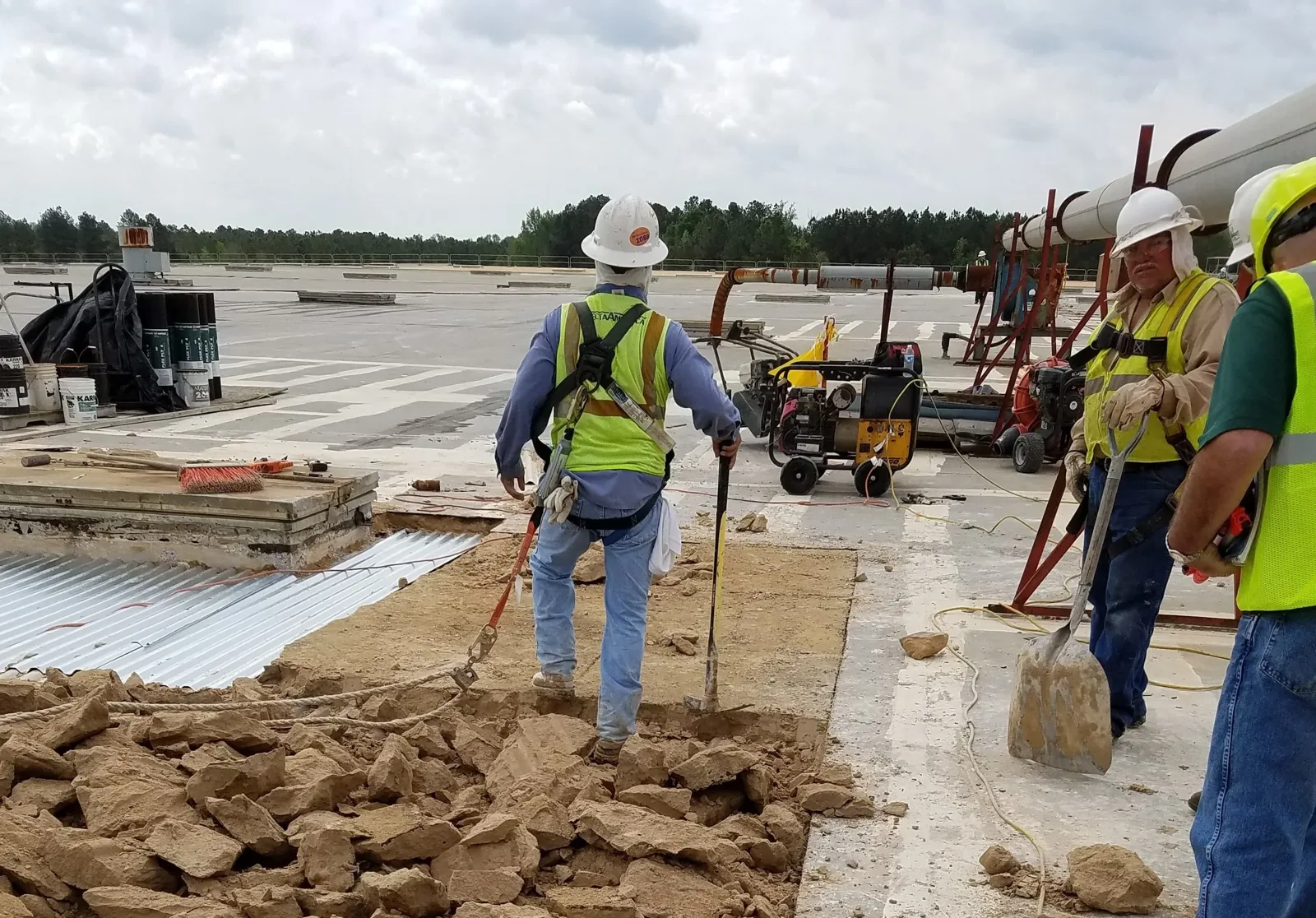
A flashing patch needs a receiving surface that can support its intended connection. Dirt, deteriorated coating or an incompatible earlier repair can prevent that, even where the visible damage is small. We establish what requires cleaning, preparation or removal before describing the replacement. Removing old material may expose a wider affected area, so the proposed operation should explain how further damage will be addressed and who can approve that change.
For modified bitumen around a curb, the repair must account for the existing membrane construction and the condition of its transition. A different roof material requires its own compatible method. We do not treat a thick layer of sealant as a substitute for a properly formed membrane connection. Where insulation or supporting material has deteriorated beneath the flashing, removal and replacement of those layers belongs in the repair extent. The surface treatment alone cannot restore lost support.
Curb and equipment dependencies
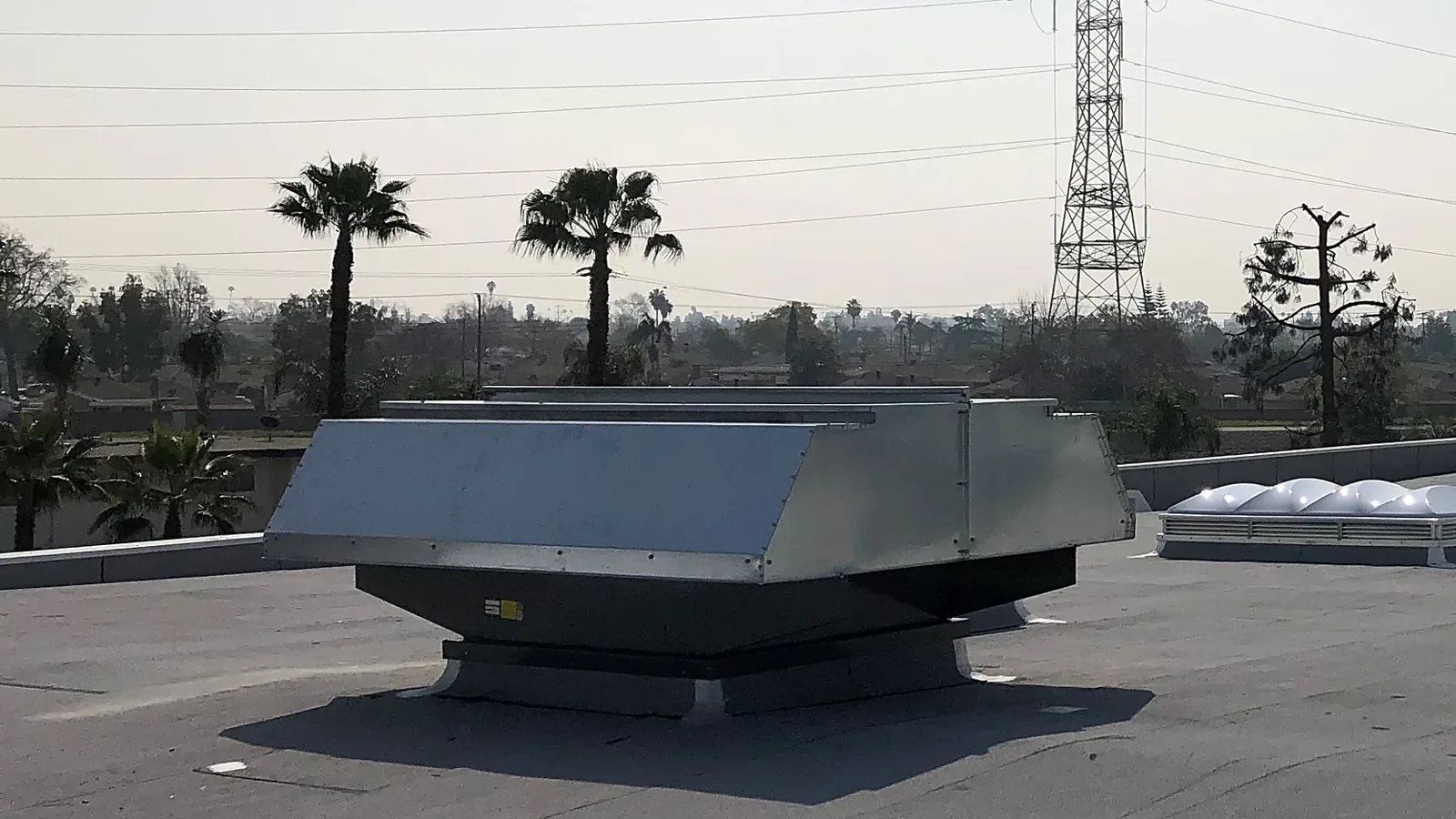
A corroded curb wall or unsecured equipment base can make flashing replacement premature. The connection needs a suitable receiving surface, and equipment work may be necessary before the membrane can be reconstructed. We identify the roof task that must wait and explain the closure that can be provided in the meantime. Detaching equipment, modifying its base and reconnecting its services require the appropriate representatives; those responsibilities need agreement before the roof opening is enlarged.
An occupied office building beneath a skylight repair also needs the affected interior location identified. We discuss removal debris and temporary weather exposure with the property contact. Access to a roof opening does not necessarily make the glazing suitable for loading or walking. The work is arranged from safe access to the actual detail, with the material and related equipment operation ready for the agreed sequence. That preparation reduces the chance of leaving an incomplete connection while another task is organized.
Grouped roof openings
Several penetrations close together can make a single isolated patch impractical. We examine whether separate boots and transitions can be repaired reliably or whether a larger reconstructed detail is needed. The answer depends on spacing, movement and the receiving material. Adding more sealant between crowded pipes may leave gaps that are difficult to inspect and can interfere with future equipment service.
Scottsdale Airpark includes industrial, office and retail property categories. Each requested building still needs its actual penetration arrangement examined. A pipe group above a storage area may require different removal coordination from a curb above occupied rooms. Where support work is involved, correcting the roof equipment base and its transition needs to precede final flashing where the operations depend on each other. We identify the proposed boundary and any retained construction, then explain how adjacent penetrations remain connected during the work window.
Completed detail review
We inspect the repaired connection for its attachment, seams and termination, as appropriate to the selected material. Photographs record the completed detail and any adjacent condition requiring separate work. Where a limited water check is suitable, we discuss what it can establish. Wetting the roofing transition does not test every glazing seal, equipment drain or concealed connection associated with the opening. A repeated interior symptom may require investigation of those other components.
The property manager should receive a clear description of the roofing work completed and the equipment or glazing task still pending. For a property near the Airport and Airpark business district, identify the building and affected opening when arranging the next visit. That location detail helps us return to the recorded connection. A completion review can then compare the present roof condition with the repaired construction and determine whether the next operation belongs to roofing or a related building component.
A roof opening also affects fall protection and interior control. Before removal, the building contact should identify the safe route, the room or operating area below, and any equipment that must be isolated while the curb is open. We agree how the opening will be protected at each pause in the work and how debris will be kept away from occupants and rooftop intakes. At closeout, photographs should show the finished flashing and termination, while a separate glazing or equipment concern remains assigned to the representative who can test that component.
Commercial Roofing Questions
Does a leak beneath a skylight mean the curb flashing has failed?
No. Glazing seals, the frame and other connected components can also admit water. We examine the roof transition and distinguish it from conditions that require a skylight specialist.
Can you flash a curb before damaged equipment is replaced?
The planned equipment operation decides the sequence. If replacement will alter the curb or disturb the new membrane, interim protection may be more appropriate until the receiving construction is ready. Tell us which equipment operation is proposed and whether its representative has confirmed the receiving curb, so the roofing visit can be arranged against the construction that will remain.
Why remove an earlier sealant patch that still looks attached?
Its compatibility and underlying condition matter. An attached surface can cover contamination or damaged material that will not receive the new flashing properly. We explain the necessary preparation before removal.
What happens if wet layers extend beyond the proposed curb repair?
We describe the discovered condition and the replacement extent for approval. The change should identify added removal and a feasible closure, rather than silently enlarging the opening.
Can a repaired pipe boot tolerate movement in the pipe?
Only movement suitable for its intended construction. A loose support or equipment connection needs attention from the responsible trade; a new boot cannot correct that underlying problem.

Arrange the flashing examination
Identify the property and the affected opening. We can examine the roofing connection and discuss the repair extent, related work and available work window.
Call or Email
Helpful to have ready:
The property address and a building contact
Where water or damage shows up inside
The roof type and age, if you know them
Photos and any past roof reports