
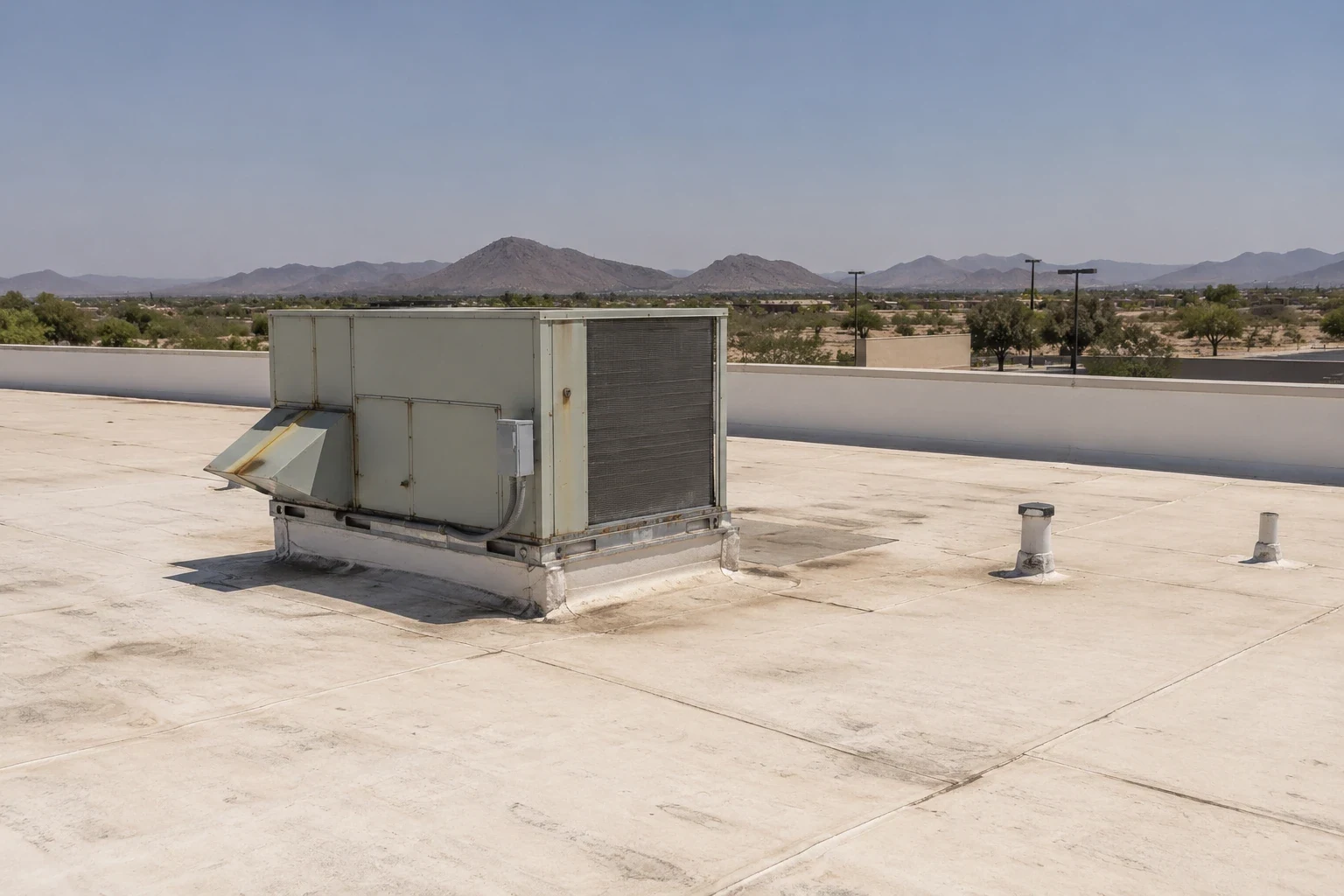
Commercial Roofing for Scottsdale Retail and Restaurant Chains
Home / Industries We Serve / Retail and Restaurant Chains
Scottsdale retail and restaurant chains can assess exhaust flashings, leak repairs and roof renewal. Coordinate store access, materials and equipment tasks.
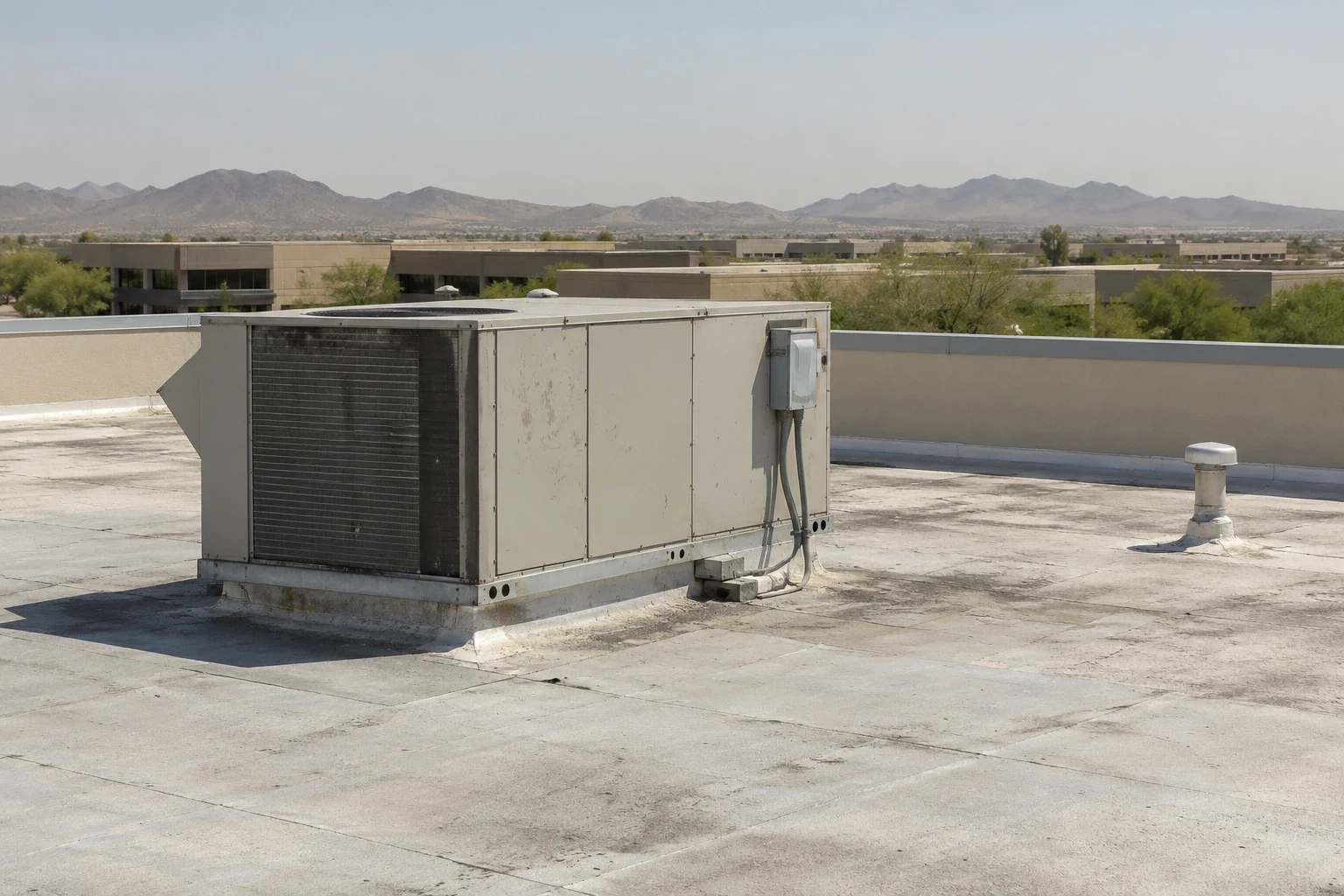
Changing a restaurant exhaust unit can leave the surrounding roof repair waiting for a curb decision. We examine the membrane transition and identify what the equipment representative must complete before new flashing connects. Retail and restaurant chains need that dependency in the proposed amount and work interval. A planned visit should have a receiving condition that allows the roofing operation to finish, with interim protection identified if equipment work remains separate.
Phoenix has employment centers and commercial corridors across the municipality. A chain with stores in Phoenix and Scottsdale can standardize its approval packet while keeping each site’s equipment and access arrangements specific to that roof. Before an exhaust or HVAC change, we inspect the curb, membrane transition, and support condition that will receive the flashing. The roofing scope names the work required after equipment is set and the temporary closure needed if the mechanical task finishes later. We coordinate a delivery route and protected work zone with the manager, then provide photos and a completed repair boundary for the store file. A phased plan can keep separate locations on different work dates without carrying assumptions from one property to another. Chandler has five employment corridors; a chain operator can standardize its reporting across locations while keeping each curb, roof assembly, and affected tenant area site-specific. At each location, we note which entrances, receiving areas, and tenant spaces remain active during the shift, then set the stop point for weather or an unresolved equipment handoff.
Exhaust transitions need compatible receiving material
Grease or other residue around an exhaust position can affect the material receiving a repair. Identify the covering and examine the contamination, existing connection and surrounding sheet. We explain cleaning and preparation supported by the selected material instructions. Where the affected sheet cannot provide a suitable connection, locate the removal and replacement needed. A new patch over an unsuitable receiving surface does not resolve that condition. Its correction needs to remain a defined operation in the amount.
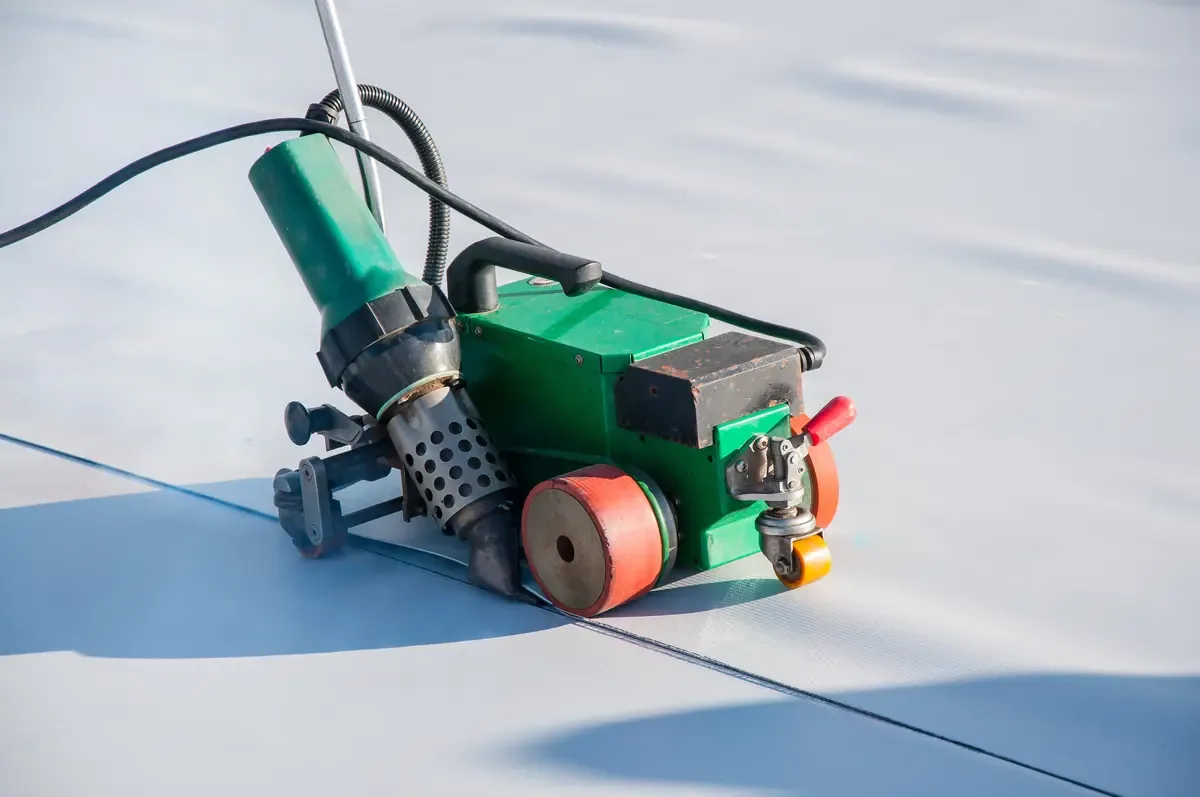
A membrane chosen for chemical resistance still needs its actual exposure and product suitability reviewed. For PVC roof work at the examined restaurant detail, identify the installed product and develop a compatible joining method. Do not treat all membrane or accessory products as interchangeable. Earlier repairs can introduce another material requiring removal or different preparation. We describe the receiving construction and repair boundary so the property contact can understand why work extends beyond the opening initially reported.
Ask the equipment representative to examine a suspected exhaust discharge or component issue separately. Its correction may need to precede permanent roofing preparation. We locate the roofing task without treating a surface repair as resolution of the equipment condition that could affect it again.
Reported water needs its roof connection examined
A ceiling drip inside a shop may appear away from the roofing entry. Supply its position, the timing of the report and recent roof or equipment alterations where known. We examine accessible covering, seams, penetrations and drainage details against that information. The visible interior position should guide the inquiry without selecting the exterior repair by itself. A further opening or component examination needs its purpose and responsible contact identified when the entry path remains unresolved.
Leak correction at the detail supported by the findings should explain preparation and the adjoining material needed to reconnect it. A puncture patch differs from reconstructing a separated seam or rebuilding a curb flashing. We distinguish those operations and identify another inquiry where concealed condition could change the work. The store contact can arrange access for a specific examination rather than another visit with an undefined repair extent.
Deliveries and tenant work need a shared interval
A roof delivery can need space also used for stock receiving or another property operation. Obtain the receiving directions from the responsible representative and review the unloading position and material movement. We describe the construction footprint so those directions can be considered against actual roofing work. Removal, preparation and permanent closure need enough active time in the agreed interval. A change in the delivery route can affect handling and production, which needs discussion before the original amount and sequence are relied upon.
At a requested worksite near Phoenix service area, identify the roof address separately from any management-office contact. Property management arranging occupied-area access can provide the applicable restrictions and approval representative. We explain which roof operation affects the area and when a component handoff is needed. Tenant access, stock receiving and equipment responsibilities belong to the arrangements supplied for that building rather than assumed across another store in the chain.
Store condition controls retention
One location selected for coating does not establish that another store has suitable retained construction. Identify each assembly and examine its relevant layers. A treatment needs compatible preparation and correction of failed connections before application. A recover option requires the layers left in place to suit the new attachment, perimeter and penetration construction. Replacement can involve different removal and support repairs. We compare those operations against the roof findings, keeping another concealed inquiry visible where it controls the choice.
For a chain approval shared with investors reviewing renewal construction, retain the building-specific removal extent and component tasks in the amount. Material availability can affect the interval once the method is selected. Grouped purchasing should still preserve the products appropriate to each assembly and connection. We explain what will be retained and what requires correction, so the approving contact sees the actual construction reason for a store having a different amount or sequence.
Drainage concerns also need their own examination. Removing outlet debris is a different operation from correcting its roofing transition or investigating retained water. Identify the condition supporting the proposed task. A coating application should not conceal an unresolved drainage or supporting question affecting suitability.
Each finished store needs a located account
A completed repair should remain traceable to the store and roof position. Record the installed material, reconstructed connection and useful preparation photographs. We distinguish the finished roofing from an interim treatment or equipment task still awaiting its representative. Review those positions with the receiving contact during the completion walk. A chain summary is more useful when it preserves the local construction that another visit may need to examine.
Multi-site roof work retaining individual material findings can group approvals while keeping unresolved tasks with their property. A later interior report should be assessed against the earlier repair account rather than automatically assigned the same correction as another location. We explain the observed condition and next operation supported by it. The manager can then arrange the relevant access and component contact, with a practical distinction between completed construction and work still being developed.
Commercial Roofing Questions
What can change a repair around restaurant exhaust equipment?
Residue, unsuitable adjoining sheet or a changed curb can affect preparation and removal. We identify the roofing correction and any preceding equipment task.
How should a management-office address be used for a roof request?
Provide the actual store worksite separately. The assessment and access arrangements need to follow the building whose roof requires work.
Can a chain choose the same treatment for every location?
Assess each retained assembly and its connections before selecting the operation. Different condition or products can require different preparation and renewal.
What receiving information helps arrange roofing delivery?
Supply the unloading position, applicable stock-receiving restrictions and contact resolving route changes. We review material handling against those property arrangements.
What should the chain retain after an exhaust flashing repair?
Keep the roof position, compatible products and useful photographs. Identify any separate equipment correction or temporary treatment still awaiting completion.
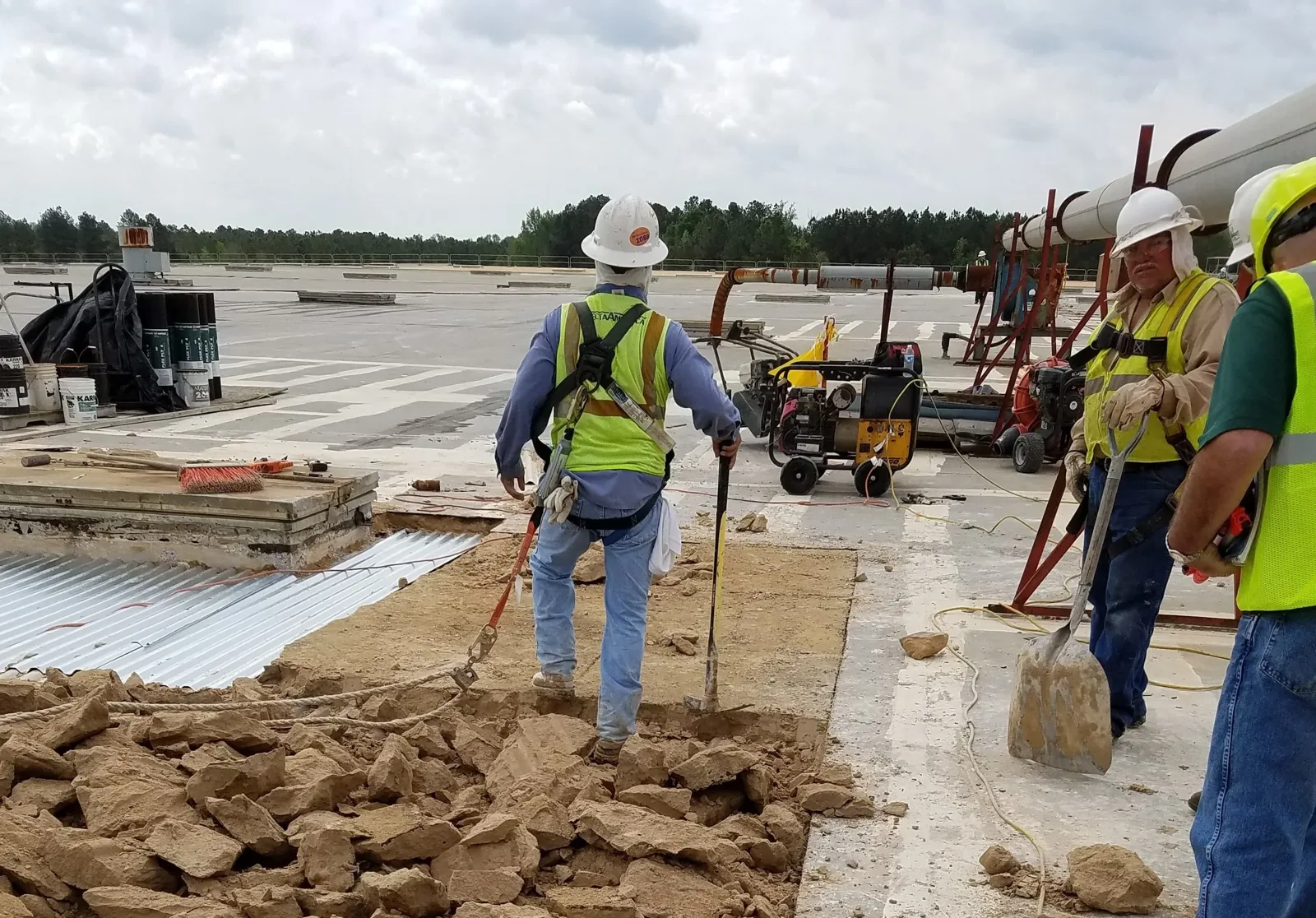

Arrange the store repair and equipment handoff
Send the store address, reported roof position and responsible property contact. We can assess the material correction and discuss access, delivery and preceding equipment work.
Call or Email
Helpful to have ready:
The property address and a building contact
Where water or damage shows up inside
The roof type and age, if you know them
Photos and any past roof reports